








Recent peer-reviewed studies conducted by international research teams indicate that human gait—the specific coordination of arm and leg swings—serves as a reliable biometric indicator of internal emotional states. By isolating body movement from facial expressions through point-light animation and machine-learning algorithms, scientists have demonstrated that observers can accurately identify emotions such as anger, sadness, and fear based solely on the magnitude and velocity of a subject’s stride. This research suggests that walking is not merely a functional motor task but a sophisticated channel for non-verbal communication, with potential applications ranging from public safety monitoring to the development of AI-driven mental health diagnostic tools.
KYOTO, Japan — While a “long face” or a furrowed brow have historically been the primary markers for identifying human emotion, a growing body of scientific evidence suggests that the way an individual traverses a room may be just as telling. New research published in Royal Society Open Science reveals that the mechanics of walking—specifically the synchronized swing of the limbs—provide distinct cues that allow others to perceive a person’s emotional state, often from a significant distance.
The study, led by Mina Wakabayashi at the Advanced Telecommunications Research Institute International in Kyoto, underscores the idea that walking is among the most practiced whole-body movements in the human repertoire. Because the movement is so ingrained, it becomes a sensitive barometer for physiological and psychological shifts.
The Mechanics of Emotional Expression in Gait
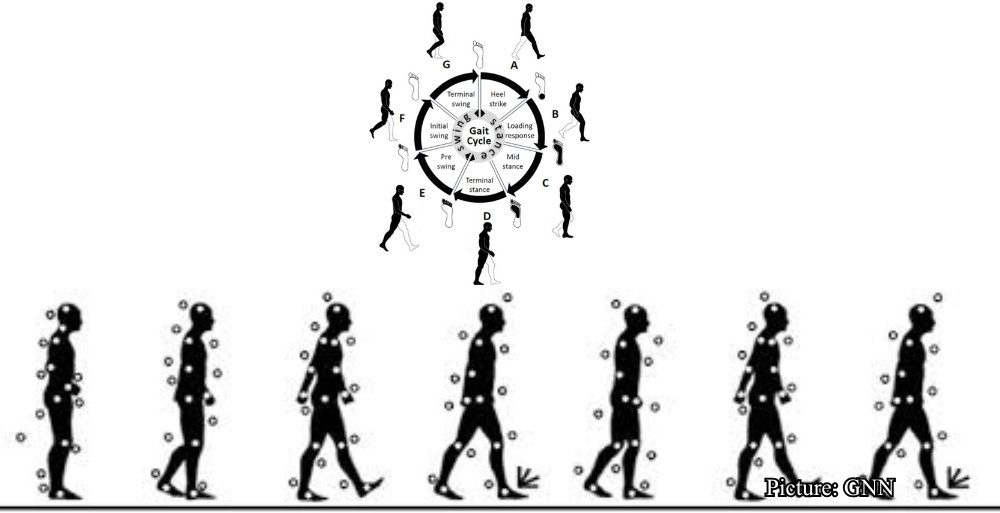
To isolate the specific movements that telegraph emotion, researchers employed a rigorous methodology involving “point-light” videos. In these experiments, actors were asked to recall specific life events that triggered four primary emotions: happiness, anger, fear, and sadness. While dwelling on these memories, the actors walked a short distance wearing tight-fitting clothing outfitted with reflective markers.
This technique allowed the researchers to strip away distracting variables such as facial expressions, clothing style, or body shape, leaving only the mathematical motion of the joints. When volunteers viewed these skeletal-motion clips, they were able to identify the intended emotion at a rate significantly higher than random chance.
The data points to a direct correlation between the “bigness” of a movement and the perceived intensity of the emotion. According to the study’s findings:
- Anger and Aggression: Characterized by larger, more forceful arm and leg swings with increased velocity.
- Sadness and Fear: Identified by restricted movement, shorter strides, and diminished arm swings.
- Neutrality: Served as the baseline for “normal” limb oscillation against which the other emotions were measured.
Experimental Manipulation and Perceptual Accuracy
To further validate these findings, the Kyoto team conducted a secondary experiment where they digitally manipulated videos of “neutral” walkers. By artificially exaggerating the swing of the arms and legs in a neutral gait, they found that observers began to perceive the walker as more aggressive or angry. Conversely, when the software dampened the limb swings, the perceived emotion shifted toward sadness or fear.
“In our results, movements with larger arm and leg swings were more likely to be perceived as angry,” Wakabayashi noted. This suggests that humans have evolved a specialized perceptual sensitivity to the kinetic energy of a walk, likely as a survival mechanism to assess potential threats or social needs before an individual is close enough for a verbal exchange.
The implications of this “perceptual tuning” are significant for social psychology. If the human brain is hard-wired to read gait, it suggests that emotional transparency is a default state of human physiology, even when an individual attempts to maintain a “poker face.”
Integration with Machine Learning and AI
The Japanese study coincides with parallel research emerging from the United States. Last month, bioengineers at the University of Texas at Dallas demonstrated that machine-learning algorithms could be trained to predict anger, sadness, joy, and fear from gait data.
Dr. Gu Eon Kang, a co-author of the Texas study, emphasized that while the accuracy of these algorithms is currently limited compared to human intuition, the potential for growth is substantial. One of the primary advantages of gait-based emotion detection is its resistance to deception.
“It may be harder to fake a gait than speech or facial expressions,” Dr. Kang noted. While a person can forced a smile or modulate their tone of voice, the complex, multi-joint coordination required for walking is largely governed by the autonomic nervous system and long-term motor memory, making it a “leakier” channel for true emotional state.
Ethical Considerations and Future Applications
As with any biometric breakthrough, the ability to “read” emotions from a distance carries profound ethical and practical implications. The researchers highlighted several potential avenues for the application of this data:
- Public Safety and Security: CCTV systems integrated with gait-analysis AI could theoretically identify individuals in a state of high agitation or distress, potentially flagging “threatening” behavior in high-security environments like airports or stadiums before an incident occurs.
- Mental Health Monitoring: Wearable devices equipped with accelerometers and gyroscopes—already present in most smartphones and watches—could monitor a user’s gait over time. A chronic shift toward smaller, restricted swings could serve as an early warning sign for depressive episodes or high anxiety, prompting the device to suggest therapeutic intervention.
- Virtual Assistants: Future AI-based virtual aids could interpret a user’s physical approach to a terminal or device, adjusting its tone and response style based on whether the user appears frustrated or calm.
Despite the promise of these technologies, the researchers remain cautious. The “limited accuracy” cited in the Texas study suggests that gait is a piece of the puzzle, rather than a definitive diagnostic tool. Cultural differences in walking styles, physical disabilities, and environmental factors like surface terrain also play significant roles in how an individual moves.
Conclusion and Historical Context
The study of body language, or kinesics, dates back to the mid-20th century, but the move toward quantifying “micro-motions” in gait represents a new frontier in behavioral science. Historically, Darwin noted in The Expression of the Emotions in Man and Animals (1872) that certain movements are inherently linked to internal states. The Kyoto and Dallas studies bring 19th-century observations into the 21st-century digital lab.
By identifying the “coordinated swing” as the key feature of emotional transmission, these scientists have provided a roadmap for how we might better understand our social environment. Whether it is a stranger approaching on a sidewalk or a patient walking into a clinic, the rhythm of their stride speaks volumes before they ever say a word.