







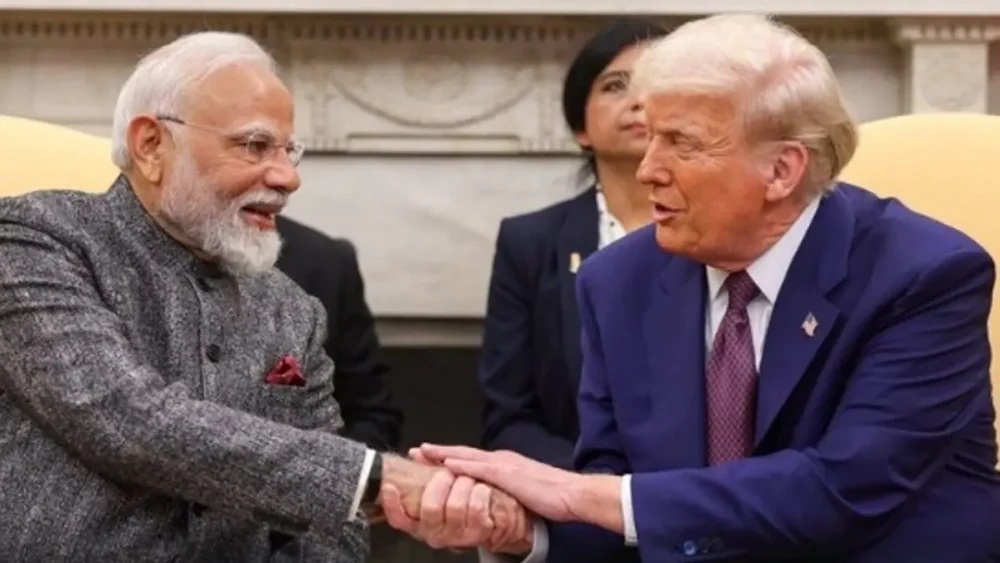
U.S. President Donald Trump on January 4, 2026, claimed that India has reduced its imports of Russian crude oil in recent months primarily to appease Washington and smooth the path toward a broader India–U.S. trade agreement. The remarks, made during a press interaction, underscore rising tensions between the two strategic partners as energy, sanctions, and tariffs become increasingly intertwined.
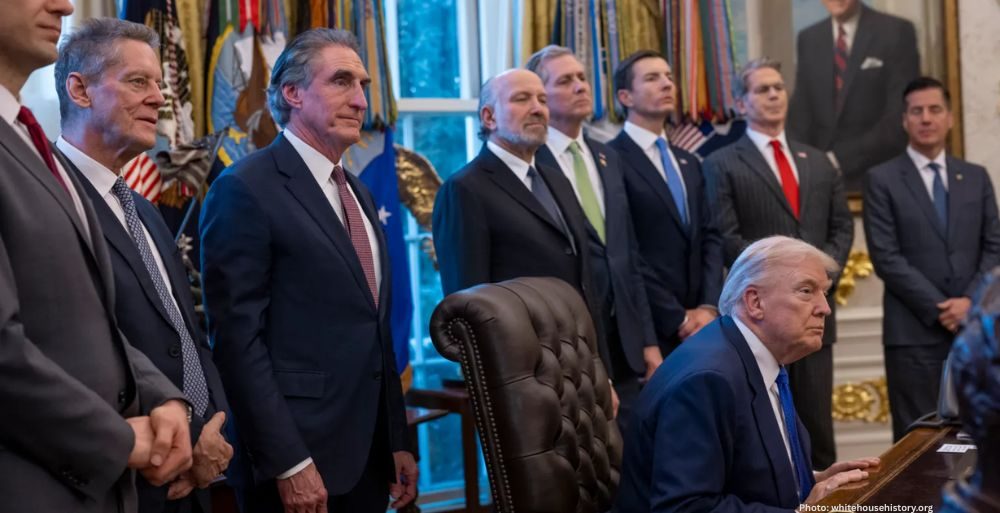
“They wanted to make me happy,” Trump said, referring to New Delhi’s alleged decision to scale back purchases from Moscow. Praising Prime Minister Narendra Modi as “a very good man,” Trump added that the Indian leader understood Washington’s displeasure over continued Russian oil imports. “He knew I was unhappy, and it was important to make me happy. They do trade with us, and we can raise tariffs very quickly — and it would be bad for them,” the President warned.
Trump further cautioned that additional tariffs could be imposed swiftly if India continues buying oil from Russia, reinforcing his administration’s hardline approach to countries maintaining energy ties with Moscow.
Senator Graham Backs Trump’s Assertion
Trump’s claim was publicly supported by U.S. Senator Lindsey Graham, who said India’s declining Russian oil imports were explicitly raised by India’s Ambassador to the United States, Vinay Kwatra, during a meeting in December 2025.
“I was at the Indian Ambassador’s house about a month ago, and all he wanted to talk about was how India is buying less Russian oil,” Graham said. According to the senator, the ambassador urged him to convey this to President Trump in the hope of securing relief from the 25% U.S. tariff imposed in addition to reciprocal duties.
“This stuff works,” Graham remarked, suggesting that trade pressure had influenced India’s energy decisions.
Data Shows Decline, but Context Matters
Trade data does indicate that India reduced its Russian oil imports, with a sharp drop of around 38% by value and 31% by volume in October 2025 compared to the previous year. However, analysts point out that India had already begun diversifying its crude sources well before the U.S. tariffs formally took effect.
Energy experts note that India’s oil procurement strategy is driven by a mix of price, supply security, refining compatibility, and long-term contracts — not solely by political pressure. The reduction in Russian crude, they argue, reflects market dynamics and risk management, rather than a unilateral policy shift aimed at Washington.
Sanctions Pressure Intensifies
The controversy comes as U.S. lawmakers push for tougher sanctions on Russia’s energy revenues. Senator Graham, along with Democratic Senator Richard Blumenthal, is a leading sponsor of a bill that proposes punitive tariffs of up to 500% on countries that continue purchasing Russian oil or uranium.
Both senators were part of a bipartisan U.S. Senate delegation hosted by Ambassador Kwatra at the Indian Embassy in Washington on December 2, 2025. The meeting highlighted growing U.S. pressure on major economies to further isolate Moscow economically.
India Maintains Strategic Autonomy
India’s External Affairs Ministry did not respond to requests for comment on Trump’s remarks. In earlier statements, however, New Delhi has criticized unilateral sanctions as an example of “double standards,” pointing out that several Western countries, including the United States, continue indirect trade in Russian energy, uranium, and critical minerals.
Indian officials have consistently emphasized that India’s energy policy is guided by national interest, affordability, and supply stability — especially given the country’s large and growing energy demand.
Trade, Energy, and Politics Collide
Trump has previously asserted that India promised to eliminate Russian oil imports altogether — a claim Indian officials have never publicly endorsed. The latest comments suggest that energy trade has become a bargaining chip in wider negotiations over tariffs, market access, and bilateral trade agreements.
As Washington escalates tariff threats and sanctions rhetoric, the episode highlights the fragile balance in India–U.S. relations: strong strategic alignment on many global issues, yet persistent friction when economic sovereignty and geopolitical pressure collide.
Whether India further reduces its reliance on Russian crude remains uncertain. What is clear is that oil, tariffs, and diplomacy are now deeply entangled, with consequences that extend well beyond energy markets.