









India has concluded its third free-trade agreement (FTA) of the year, sealing a landmark pact with New Zealand as New Delhi accelerates efforts to integrate more deeply with the global economy while firmly protecting politically sensitive sectors at home.
Under the agreement, India will reduce or eliminate tariffs on 95% of New Zealand’s exports to the South Asian nation, covering a wide range of goods including timber, wool, forestry products, coal and sheepmeat. However, the deal draws a clear red line around dairy — a sector New Delhi has consistently shielded from foreign competition despite sustained pressure from major trading partners.
Commerce and Industry Minister Piyush Goyal said the agreement reflects India’s long-standing position on agriculture. “India has protected the interests of its farmers, particularly in dairy and other sensitive agricultural products,” Goyal told reporters in New Delhi. “We are never going to open up our dairy sector under trade agreements.”
Dairy farmers form a crucial political constituency in India, where millions of smallholders operate on plots of less than two hectares. New Delhi’s resistance on dairy has also slowed trade negotiations with the United States, which has been seeking wider access to India’s farm market.
The New Zealand pact comes amid a renewed urgency in India’s trade strategy. Earlier this year, US President Donald Trump imposed tariffs of up to 50% on Indian goods — the steepest in Asia — squeezing exporters in labour-intensive sectors such as textiles and manufacturing. Against this backdrop, New Delhi has been eager to shed its reputation for protectionism by lowering both trade and non-trade barriers.
India has already concluded FTAs with Oman last week and the United Kingdom in May, marking a sharp uptick in deal-making momentum. Officials say the agreement with New Zealand is part of a broader push to diversify trade partners and reduce reliance on any single market.
New Zealand’s trade minister described the agreement as “historic,” noting that 95% of the country’s current exports to India will become tariff-free or subject to sharply reduced duties. Notably, India has also agreed to reduce tariffs on limited imports of apples from New Zealand — the first time New Delhi has made such a concession under any FTA, even as Washington continues to lobby for access for American apples.
In return, New Zealand will eliminate tariffs on all Indian exports and relax mobility rules for Indian students and professionals. According to Indian officials, the pact introduces a Temporary Employment Entry Visa programme allowing up to 5,000 Indian workers at any given time to live and work in New Zealand for periods of up to three years.
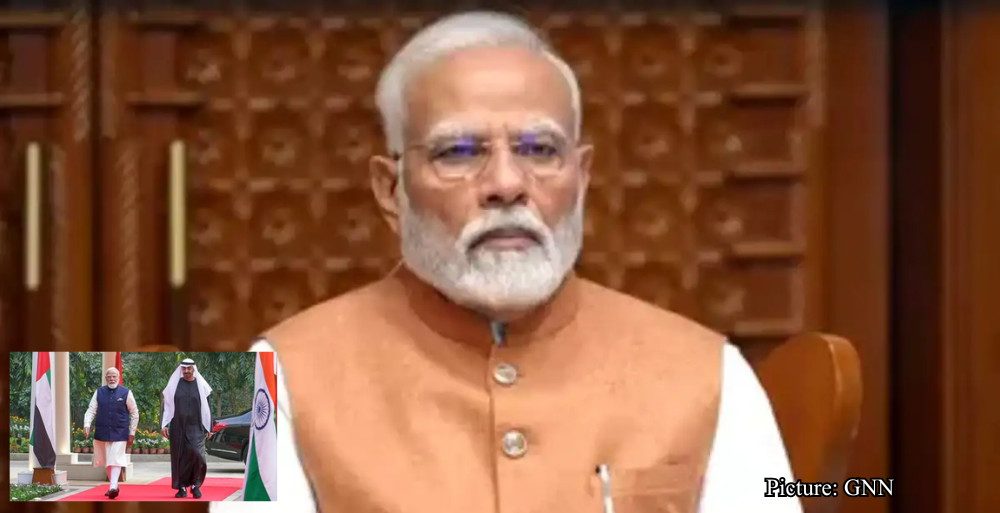
Prime Minister Narendra Modi spoke with his New Zealand counterpart Christopher Luxon on Monday, with both leaders expressing confidence that bilateral trade could double over the next five years. New Zealand has also committed to invest $20 billion in India over the next 15 years, New Delhi said.
Despite the optimism, the immediate economic impact is expected to be modest. Total bilateral trade between the two countries stood at $1.3 billion in 2024–25, with India exporting $711 million worth of goods and importing $587 million from New Zealand. Analysts note that the real value of the pact lies less in trade volumes and more in strategic alignment.
According to Ajay Srivastava, founder of the Global Trade Research Initiative, “The India–New Zealand FTA is less a trade breakthrough than a framework for deeper cooperation.” He added that while the agreement improves predictability across goods, services, mobility and investment, “its real impact will depend on how both countries translate it into practical economic partnerships.”
The agreement has already sparked political debate in New Zealand. New Zealand First, a junior coalition partner, has criticised the deal as overly generous on immigration while failing to secure meaningful dairy access. Party leader Winston Peters called it a “bad deal,” arguing it “gives too much away and does not get enough in return for New Zealanders.”
While the legislation to implement the FTA is expected to reach New Zealand’s parliament in 2027, Prime Minister Luxon has said he is confident of securing sufficient support. India, by contrast, requires only cabinet approval — a step already completed last week, according to Commerce Secretary Rajesh Agrawal.
As India pushes ahead with trade liberalisation on its own terms, the New Zealand agreement underscores a clear message: New Delhi is open for business — but not at the cost of its farmers.