







Recent developments suggest India and China are quietly moving toward a renewed diplomatic truce. Key among the sparks was a letter sent from China’s President Xi Jinping to President Droupadi Murmu earlier this year. The tone of the letter was cautious yet deliberate, expressing concern over mounting trade pressure from the United States and indicating a desire to explore more stable channels of engagement.
As trade tensions with Washington escalated, New Delhi began initiating back-channel outreach. By June, India and China made progress—most notably restarting dialogue over long-standing border disputes, marking the most substantial steps toward reconciliation since the tragic 2020 Galwan Valley clash.
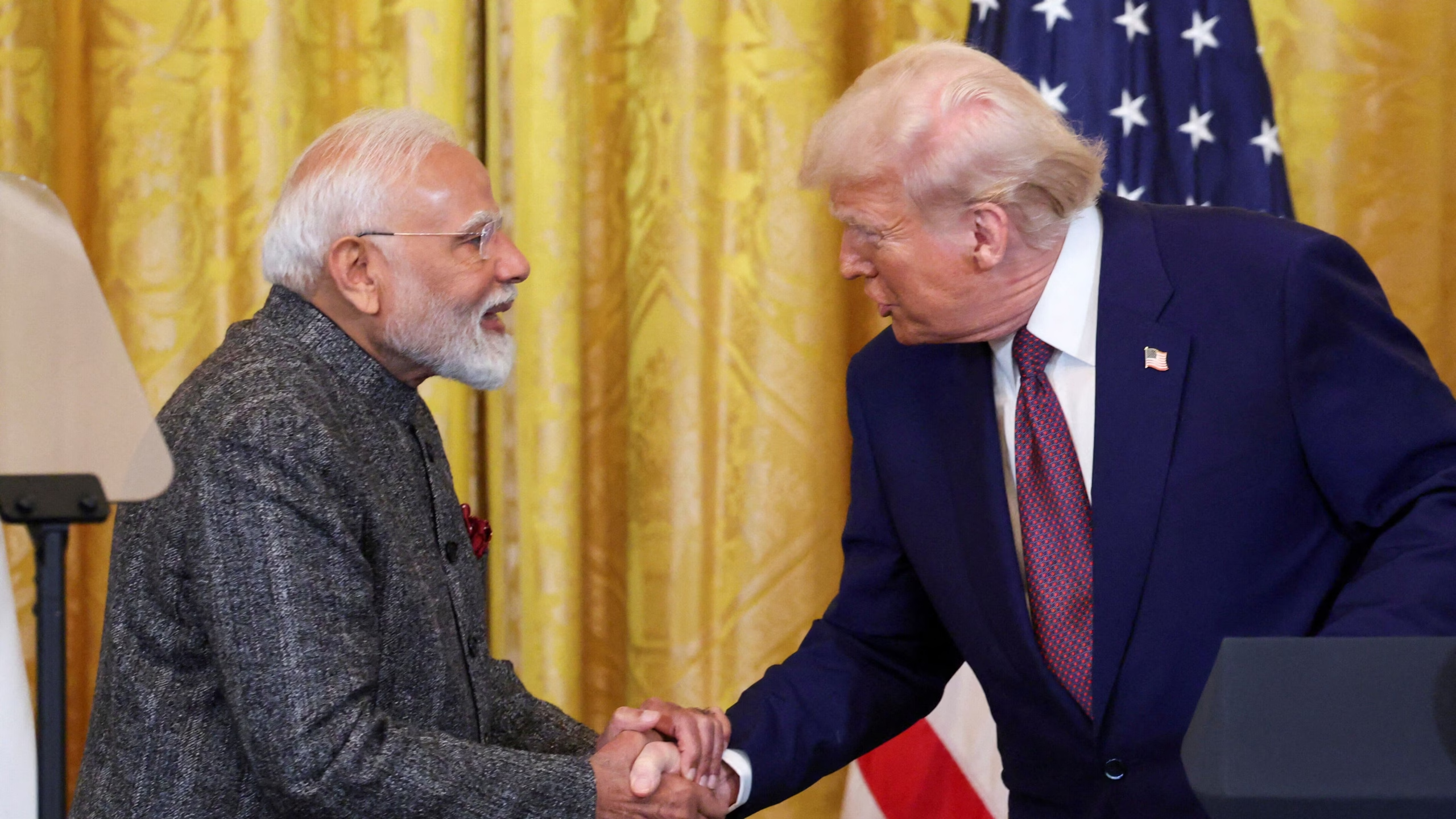
A major catalyst for this shift appears to be U.S. policy: imposing steep tariffs on many Indian goods—some reaching 50%—and enacting restrictions related to oil imports from Russia. These measures have pushed India to diversify its diplomatic balancing. The snap consequence is seen as an unintended but powerful outcome: what one analyst called Trump’s unplanned role in bringing India and China somewhat closer.
Business and diplomatic signals add weight to this rapprochement. Indian industrial giants are said to be exploring clean-energy and infrastructure ventures with Chinese firms. Meanwhile, talks are underway to restore people-to-people exchanges, including direct flights and tourist visa openings for Chinese citizens.
However, experts caution against celebrating this reset too readily. Trust deficits persist: deep suspicions over territorial integrity, divergent geopolitical goals, and concerns about China’s regional ambitions continue to cloud the relationship. Still, analysts describe recent steps as “recovery” rather than a full breakthrough.