









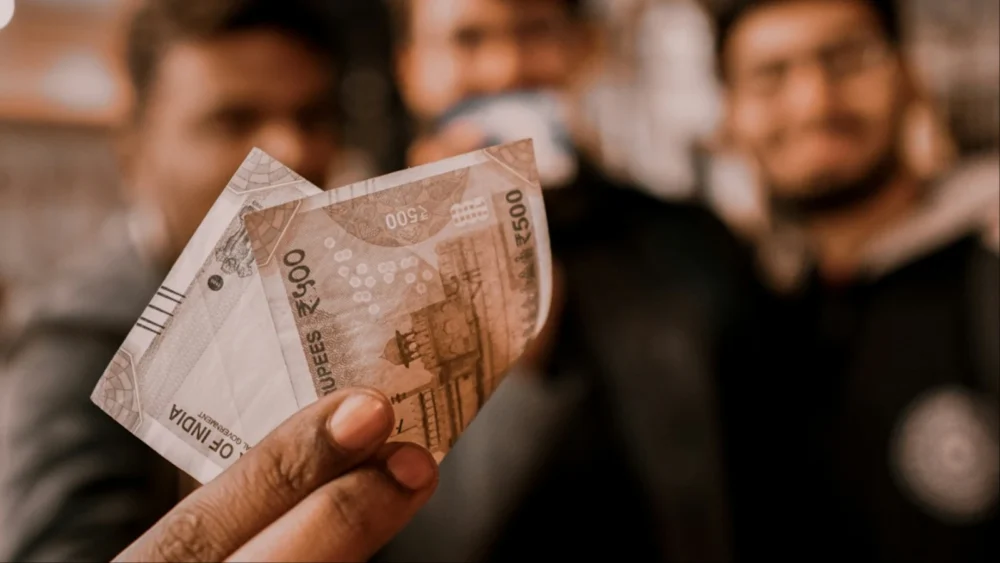
India’s emergence as the world’s fourth-largest economy has been celebrated as a landmark moment in the country’s post-independence economic journey. According to calculations outlined in the government’s latest end-of-year economic review, India’s nominal gross domestic product has expanded to approximately $4.19 trillion, surpassing Japan and positioning the country behind only the United States, China, and Germany in overall economic size.
Officials project that India could overtake Germany within the next three years, becoming the world’s third-largest economy. Yet beyond the headlines and global rankings, many Indians question what this achievement actually means for their daily lives.
For Ramesh Chandra Biswal, an entrepreneur from eastern India, the promise of economic growth remains largely abstract. Biswal left a career as a space scientist in the United States nearly a decade ago, motivated by optimism about India’s rising economic trajectory. He returned to his home village in Odisha to launch Villamart, an agriculture-focused startup aimed at improving rural livelihoods.
Nine years later, as India climbs global economic rankings, Biswal says the transformation he anticipated has yet to materialise.
“The hype around India becoming the fourth-largest economy is not grounded. People cannot relate to that,” he said. “We have a much larger population than Japan. Instead of celebrating rankings, we should be improving per-capita income.”
When Biswal launched his business in 2017, India’s economy was valued at roughly $2.6 trillion and ranked sixth globally. While national output has grown rapidly since then, Biswal says the expansion has had little direct impact on his business operations or financial security.
Still, he believes the symbolism of economic growth carries some value.
“People are trying,” he said. “As entrepreneurs, we are struggling every day to do something new. At least the idea that India is growing gives some motivation and social respect. That, in itself, becomes a driving force.”
For many workers in urban India, however, optimism is harder to sustain. Sarvesh Sau, a fruit seller in Delhi, says the widening gap between income growth and the cost of living has made survival increasingly difficult.
“Rich people are getting richer — those who already have resources,” Sau said. “But for low-income people like me, it is becoming harder to manage a decent life, even after working more than 12 hours a day.”
Sau is sceptical of international comparisons that place India alongside advanced economies.
“We are a big nation, so of course we look big,” he said. “But are we really comparable to Japan?”
India is now the world’s most populous country, with an estimated 1.46 billion people. Yet its GDP per capita, estimated by the World Bank at around $2,700, remains roughly 12 times lower than Japan’s. Economists note that while total output reflects scale, it says little about living standards.
Yogendra Kumar, a plumber in Noida, echoed similar concerns. Although his earnings have increased in recent years, inflation has eroded his purchasing power.
“I have heard that India has become the fourth-largest economy, but I don’t know how to react,” Kumar said. “It sounds good, but it makes no difference to our lives.”
Kumar pointed to everyday expenses as evidence of growing financial pressure.
“Ten years ago, mustard oil cost 50 rupees. Now it is 200. A cooking gas cylinder used to be 500 rupees; now it costs more than double,” he said. “Today I earn more, but inflation takes away everything.”
Such experiences highlight a persistent disconnect between headline growth and lived reality — a divide economists say is driven by structural imbalances within the economy.
While the government’s projections are awaiting formal confirmation from the International Monetary Fund, some experts are sceptical that India has truly overtaken Japan in real economic terms. Professor Arun Kumar, a development economist, argues that official GDP figures overstate the country’s true economic health.
“Our GDP data is suspect because it does not fully include the informal sector,” he said. “According to my estimates, India is still closer to being the seventh-largest economy.”
Kumar also questioned the sustainability of India’s reported growth rates, which officially range between 7 and 8 percent.
“People feel the economy is not growing well because it isn’t,” he said. “The growth we see is largely confined to the organised sector. The unorganised sector, which employs around 94 percent of the workforce, is actually shrinking.”
This imbalance, economists warn, limits the trickle-down effect of economic expansion. While corporate profits and infrastructure investment have surged, wage growth for informal workers has lagged behind inflation, intensifying inequality.
Despite these challenges, policymakers argue that India’s ascent in global rankings enhances its geopolitical influence and investment appeal. A larger economy strengthens India’s bargaining power in trade negotiations, boosts confidence among foreign investors, and reinforces its status as a major global player.
Yet for millions of Indians, the true measure of progress remains deeply personal — defined not by trillion-dollar milestones but by affordability, job security, and social mobility.
As India celebrates its new economic status, the question facing policymakers is whether growth can be translated into broad-based prosperity. Until per-capita incomes rise, inflation stabilises, and the informal sector regains momentum, many citizens may continue to view the country’s global ranking as impressive on paper, but distant from everyday reality.