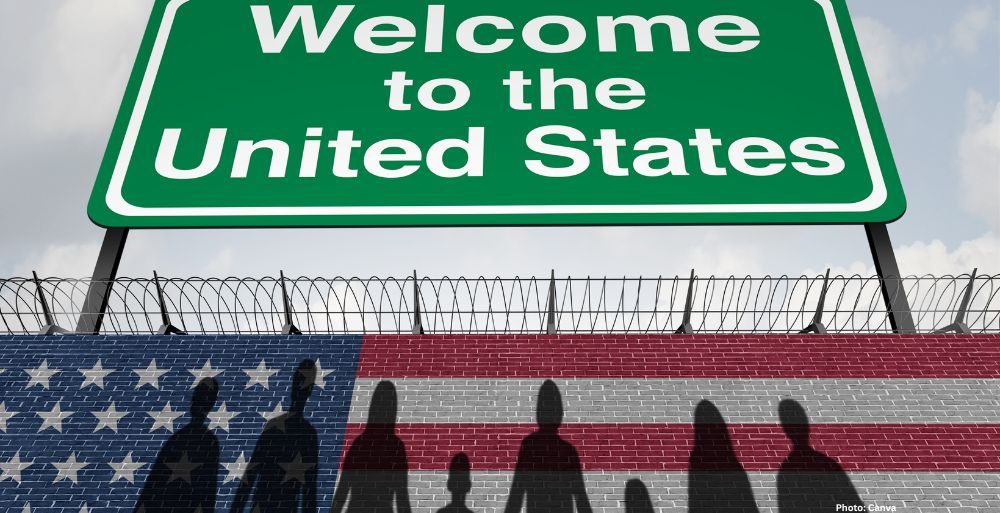










The United States has quietly expanded one of its most restrictive immigration measures, significantly raising the cost of entry for citizens of several developing nations. Under a new update implemented at the start of 2026, the Trump administration has added seven more countries to a list whose citizens must now post visa bonds of up to $15,000 to apply for entry into the United States — a move critics say could effectively shut out large sections of the global population.
According to an update published on the U.S. State Department’s travel website, the newly added countries are Bhutan, Botswana, the Central African Republic, Guinea, Guinea-Bissau, Namibia, and Turkmenistan. The requirement took effect on January 1, 2026, without a formal public announcement.
With this expansion, 13 countries are now subject to the visa bond rule, 11 of them located in Africa, making the policy one of the most geographically concentrated entry restrictions currently enforced by Washington.
What Is the Visa Bond Rule?
The visa bond requirement obliges applicants from designated countries to deposit between $5,000 and $15,000 as a financial guarantee when applying for certain U.S. visas. The stated goal is to ensure that visitors comply with visa terms and do not overstay their authorised period in the United States.
US officials argue that the bond acts as a deterrent against overstays and illegal residence. “These bonds are designed to encourage compliance with visa conditions,” a State Department official said previously, defending the policy as a targeted enforcement tool rather than a blanket ban.
Importantly, posting a bond does not guarantee a visa approval. If a visa is denied, the bond is refunded. If granted, the bond is returned only after the traveller demonstrates full compliance with visa conditions, including timely departure.
Critics Call It a ‘Pay-to-Enter’ Barrier
Immigration advocates and foreign policy analysts have criticised the expansion, warning that the rule effectively creates a wealth-based filter for US entry.
“For many applicants, especially from low-income or developing countries, a $10,000 or $15,000 bond is simply unattainable,” said a migration policy researcher based in Washington. “This isn’t just about security — it fundamentally changes who gets access to travel, education, and business opportunities in the United States.”
Several of the newly added African countries have low per-capita incomes, meaning the bond could equal several years’ worth of earnings for an average citizen.
Part of a Broader Immigration Crackdown
The visa bond expansion fits into a wider tightening of US immigration rules under President Donald Trump’s second term. Over the past year, the administration has rolled out several measures aimed at increasing scrutiny of foreign nationals, including:
- Mandatory in-person visa interviews for nearly all visa categories
- Expanded disclosure of social media histories covering multiple years
- Detailed background checks covering applicants’ family, travel, and residential history
Administration officials have framed these steps as essential to national security and immigration enforcement. “The United States must know who is entering and ensure they follow the law,” Trump said recently while defending stricter border and visa controls.
Countries Now Subject to the Bond Requirement
The seven newly added countries join Mauritania, Sao Tome and Principe, Tanzania, Gambia, Malawi, and Zambia, which were placed under the bond rule in August and October 2025.
Together, the list reflects a pattern that has raised diplomatic concerns, particularly among African nations, some of which view the policy as discriminatory or punitive.
Diplomatic and Global Implications
While the US government maintains that the policy is data-driven and temporary, foreign policy experts warn it could strain relations with affected countries and undermine America’s image as an open destination for study, tourism, and trade.
“This sends a message that mobility to the US is conditional not just on eligibility, but on financial capacity,” said a former US diplomat. “That has long-term implications for soft power.”
As global travel resumes its post-pandemic recovery and competition for international students and skilled workers intensifies, critics argue the bond rule could push potential visitors toward other destinations perceived as more accessible.
For now, the State Department has given no indication that the list will stop at 13 countries — leaving open the possibility that more nations could be added in the months ahead.