








The Trump administration is preparing to significantly escalate efforts to strip some foreign-born Americans of their U.S. citizenship, a move that immigration experts say could mark the most aggressive use of denaturalization powers in modern American history.
According to internal guidance obtained by The New York Times, U.S. Citizenship and Immigration Services (USCIS) has directed its field offices to dramatically increase referrals of potential denaturalization cases to the Justice Department during the 2026 fiscal year. The guidance calls for 100 to 200 cases per month, a target that far exceeds historical norms and has prompted warnings about politicization, fear, and civil liberties.
If implemented as outlined, the initiative would represent a sharp expansion of a legal tool that has traditionally been used sparingly and only in the most serious cases.
A Rare Tool, Now a Priority
Under federal law, denaturalization is permitted only in limited circumstances—primarily when citizenship was obtained through fraud, misrepresentation, or concealment of material facts. The burden of proof is high, and the government must demonstrate “unequivocal evidence” before a federal judge can revoke citizenship.
Despite those legal constraints, USCIS leadership has now elevated denaturalization to a formal agency priority.
“It’s no secret that U.S. Citizenship and Immigration Services’ war on fraud includes prioritizing those who’ve unlawfully obtained U.S. citizenship—especially under the previous administration,” said Matthew J. Tragesser, a USCIS spokesperson. “We will pursue denaturalization proceedings for those individuals lying or misrepresenting themselves during the naturalization process.”
The guidance appears in a broader USCIS planning document outlining priorities for fiscal year 2026, placing “pursue denaturalization” alongside internal management goals such as improving employee feedback and handling high-risk cases.
An Unprecedented Scale
The proposed targets represent a dramatic increase compared with historical trends. According to Justice Department data, just over 120 denaturalization cases were filed between 2017 and the present—total, not per year. By contrast, the new guidance seeks to generate that many cases every single month.
Former immigration officials say such numerical targets are troubling.
“Imposing arbitrary quotas on denaturalization risks turning a rare and serious legal remedy into a blunt enforcement instrument,” said Sarah Pierce, a former USCIS official. “Monthly goals that exceed recent annual totals by tenfold invite overreach and create unnecessary fear among millions of law-abiding naturalized citizens.”
Part of a Broader Immigration Crackdown
The denaturalization push is the latest escalation in a sweeping immigration campaign that has defined Trump’s second term. In recent months, the administration has:
- Blocked asylum access at the southern border
- Paused asylum applications inside the U.S.
- Expanded travel bans affecting predominantly African and Middle Eastern countries
- Reopened reviews of legal immigration approvals under the Biden administration
Officials argue these measures strengthen national security and restore integrity to the immigration system. Critics say they go well beyond targeting unlawful migration and risk undermining due process for legal immigrants.
“A campaign focused on stripping citizenship represents a new frontier,” said a former senior DHS official. “It sends a message that even naturalization is no longer final.”
Supporters: ‘We’re Not Going Far Enough’
Advocates of stricter immigration enforcement say the fears are overblown and argue that denaturalization has been underused.
“I don’t think we’re anywhere close to denaturalizing too many people,” said Mark Krikorian, president of the Center for Immigration Studies, which supports restrictive immigration policies. “We are so far from enforcing the law fully that this effort won’t sweep up people who shouldn’t be targeted.”
The Justice Department has echoed this view. In a June memo, the department instructed its Civil Division to “prioritize and maximally pursue denaturalization proceedings in all cases permitted by law and supported by the evidence.”
Eligible categories outlined by the department include individuals linked to gang activity, financial fraud, drug cartels, and violent crime—not solely paperwork-related misrepresentation.
Who Is at Stake?
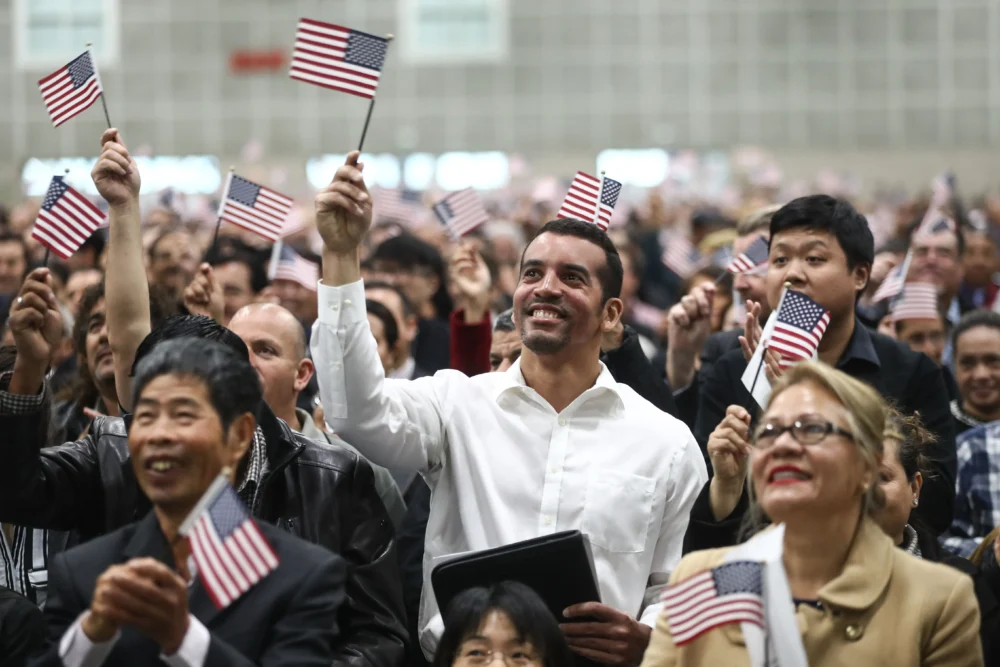
There are approximately 26 million naturalized U.S. citizens, according to the Census Bureau. In 2024 alone, more than 800,000 people became U.S. citizens, most originating from Mexico, India, the Philippines, the Dominican Republic, and Vietnam, USCIS data shows.
In most denaturalization cases, individuals revert to lawful permanent resident status rather than being rendered undocumented. Still, legal scholars emphasize that citizenship revocation carries enormous personal, legal, and psychological consequences.
“The Supreme Court has repeatedly said citizenship is too precious to be taken away lightly,” said Amanda Baran, a former senior USCIS official during the Biden administration. “Digging through Americans’ files instead of processing applications undermines both trust and efficiency.”
Legal Barriers Remain High
Despite the administration’s ambitions, experts say denaturalization will remain difficult to execute at scale.
All cases must proceed through federal court, where judges apply strict standards. In a landmark 2017 Supreme Court ruling, the court held that the government must prove not only that an applicant lied during the naturalization process but that the lie was material—that it actually influenced the decision to grant citizenship.
A Bloomberg Law analysis found that denaturalization cases peaked in 2018, when the government filed 90 civil and criminal cases combined—a figure still far below what the new guidance envisions.
This year, the Justice Department has filed 13 cases and won eight, according to agency spokesperson Chad Gilmartin.
Fears of Collateral Damage
Civil liberties groups worry that aggressive numerical targets could pressure officials to pursue borderline cases involving innocent mistakes rather than intentional fraud.
“My fear is that when agencies impose quotas, people who shouldn’t be swept up get swept up,” said Margy O’Herron, a senior fellow at the Brennan Center for Justice. “That could incite fear and terror among naturalized citizens—people who believed their status was secure.”
Those concerns echo past enforcement efforts, where quotas in arrest and removal operations led to documented errors and wrongful detentions.
A Precedent from Trump’s First Term
Denaturalization was also pursued aggressively during Trump’s first presidency. One high-profile case involved Baljinder Singh, a New Jersey man born in India, whose citizenship was revoked after the Justice Department alleged he entered the U.S. under a false identity.
Between Trump’s first term and the current administration, more than 100 cases were filed, compared with 24 during the Biden administration, according to Justice Department figures.
A Turning Point for Citizenship?
While it remains unclear whether USCIS can realistically meet its ambitious referral targets, immigration experts agree the policy signals a fundamental shift.
“This reframes citizenship from a permanent status to a conditional one,” said a constitutional law scholar. “Even if few cases succeed, the chilling effect may be profound.”
As the initiative moves forward, courts will likely become the ultimate arbiter. But for millions of naturalized Americans, the guidance has already unsettled a long-held assumption—that citizenship, once granted, is secure.