







The Trump administration has detailed a $400 million modernization plan that includes a 33,000-square-foot subterranean screening facility beneath Sherman Park. Designed to streamline security for thousands of annual visitors, the project coincides with a controversial 90,000-square-foot East Wing reconstruction featuring a new state ballroom.
The architectural footprint of the White House is poised for its most radical transformation in generations, as the Trump administration moves to formalize plans for a massive underground security screening center. The proposal, unveiled in a preliminary agenda released Friday by the National Capital Planning Commission (NCPC), details a 33,000-square-foot facility to be excavated beneath Sherman Park, just southeast of the Executive Mansion.
The project represents a definitive shift away from the “temporary” security infrastructure—often consisting of trailer-type structures and tents—that has defined the visitor experience for decades. By moving these operations underground, the administration aims to modernize the gateway to the “People’s House,” significantly reducing wait times and providing a more climate-controlled environment for tourists. The facility is designed to feature seven dedicated screening lanes, a move experts suggest is necessary to handle the logistical demands of a post-pandemic, high-security capital.
“For far too long, visitors to the White House have had a reduced experience where they were required to begin their tours by entering temporary trailers,” White House spokesman Davis Ingle stated, emphasizing that President Trump is committed to a modernization effort that spans “from beginning to end.”
The choice of location is as strategic as it is historic. Sherman Park, situated directly south of the Treasury Building, has historically served as the staging ground for White House tours. Under the new plans, the park’s surface would be restored following excavation, and the iconic monument to Union General William Tecumseh Sherman will remain undisturbed. This subterranean approach allows the administration to expand the high-tech security footprint without permanently scarring the visible historic landscape of the President’s Park.
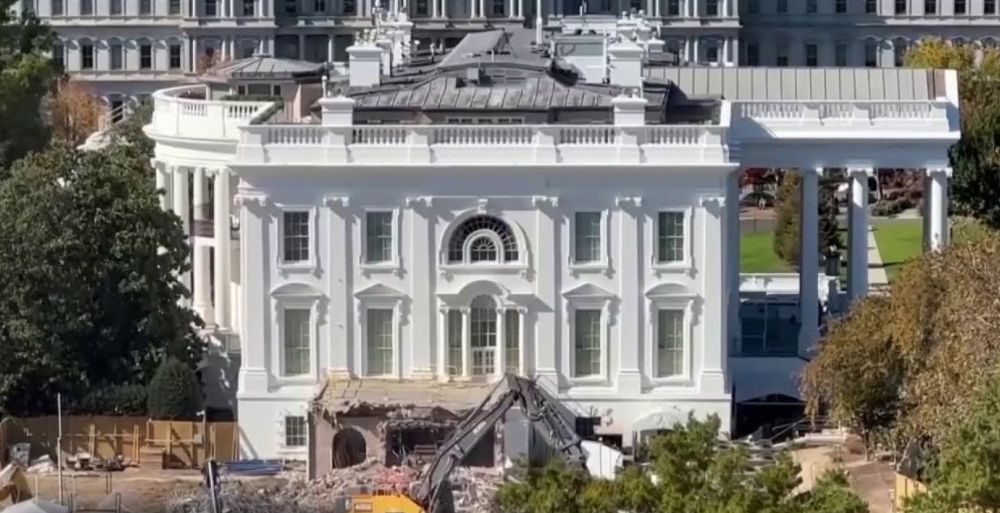
However, the screening center is only one piece of a much larger and more contentious puzzle. The same NCPC agenda for the upcoming April 2 meeting includes a final vote on the East Wing Modernization Project. This broader initiative involves the construction of a 90,000-square-foot building on the site of the former East Wing, which was demolished last fall. At the heart of this new structure is a state ballroom that President Trump has claimed will cost approximately $400 million, funded through a combination of private donations and existing maintenance accounts.
The demolition of the original East Wing, which previously housed the Office of the First Lady and various social offices, sparked a legal firestorm. Preservationist groups, including the National Trust for Historic Preservation, filed suit to halt the project, alleging a lack of transparency and a bypass of federal guidelines. However, in late February 2026, U.S. District Judge Richard Leon ruled that the construction could proceed, noting that the White House Office of the Executive Residence does not operate as a traditional government agency subject to the same administrative roadblocks.
Critically, the administration has framed the project as a gift to the nation, with funding reportedly sourced from major corporate donors including Lockheed Martin, Amazon, and Microsoft. This private-sector involvement has drawn scrutiny from ethics watchdogs, though the administration maintains that the use of private funds accelerates a timeline that would otherwise be mired in congressional budget negotiations. President Trump has frequently touted his ability to build “under budget and ahead of schedule,” promising that the ballroom will be “impenetrable” and capable of hosting events for up to 999 guests.
The logistical necessity for the new underground screening center became acute following the East Wing’s demolition. Visitors who once queued near the Treasury are currently being rerouted to Lafayette Park across Pennsylvania Avenue, creating a bottleneck that has frustrated both the Secret Service and the visiting public. The proposed facility would serve as the primary conduit for the hundreds of thousands of guests who participate in public tours each year, moving the initial ID checks and physical screenings into a secure, high-capacity hall.
Construction on the subterranean complex is slated to begin as early as August 2026. The administration has set an ambitious deadline of July 2028 for the facility to be fully operational—a date that falls exactly six months before the conclusion of President Trump’s current term. Achieving this timeline would require a nearly unprecedented pace for federal construction in the heart of Washington’s secure zone, where subterranean work must account for a maze of existing utilities, historical artifacts, and classified tunnels.
As the April 2 meeting of the NCPC approaches, the debate over the “modernization” of the White House is reaching a fever pitch. While the commission has received over 32,000 public comments—the “vast majority” of which are reportedly in opposition to the ballroom’s scale—the administration’s allies on the board are expected to push for a final green light. For the White House, the project is a necessary evolution of a 200-year-old campus; for critics, it is a permanent alteration of the nation’s most famous residence, conducted with a speed and source of funding that challenges traditional oversight.