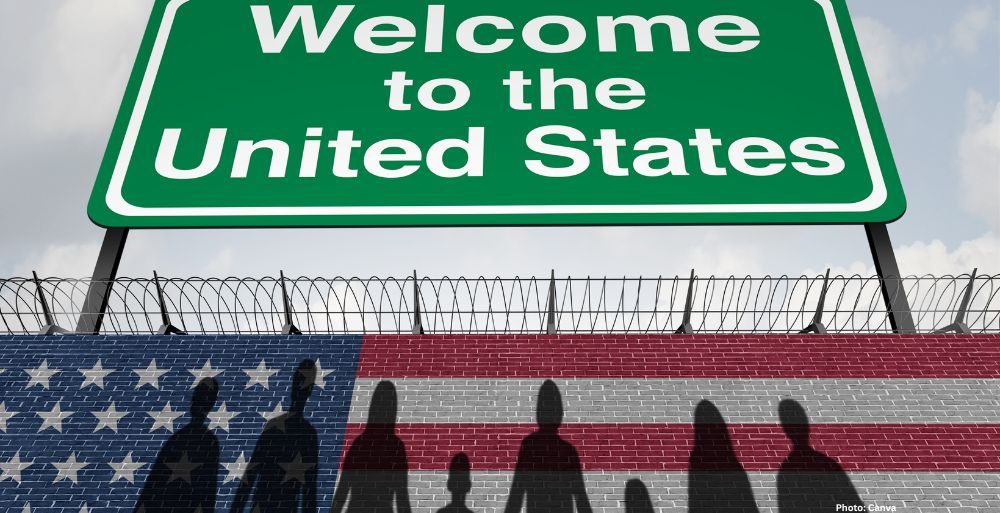








As Americans usher in the new year, millions of people across the globe are confronting a far harsher reality: the path to legally enter the United States has narrowed dramatically.
Under a newly expanded presidential Proclamation issued pursuant to Immigration and Nationality Act Section 212(f), the White House has imposed near-total entry restrictions on citizens of seven additional countries, significantly expanding a sweeping travel ban regime that now affects nationals from 26 countries in total.
Immigration advocates estimate that, taken together, the restrictions now block roughly one in five people worldwide who would otherwise qualify to immigrate legally to the United States. Hundreds of thousands more are expected to lose access to temporary visas for study, work, tourism, or family visits.
“This is one of the broadest and most punitive expansions of U.S. entry restrictions in modern immigration history,” said an immigration attorney with a Washington-based advocacy group. “It fundamentally alters who gets access to the United States — and who doesn’t.”
Seven New Countries Added to the Harshest Category
The new Proclamation, which builds on restrictions introduced in June 2025, elevates seven countries into the most severe classification: a complete suspension of both immigrant and non-immigrant visas.
Effective immediately, citizens of the following countries are now almost entirely barred from entering the United States:
- Burkina Faso
- Laos
- Mali
- Niger
- Sierra Leone
- South Sudan
- Syria
In addition, individuals traveling on Palestinian Authority–issued travel documents are now subject to full entry restrictions, effectively shutting off most visa access for PA document holders.
For nationals of these countries, entry is limited to rare, discretionary waivers granted only when deemed in the “national interest.”
“These are not temporary pauses,” said a former U.S. consular official. “They amount to blanket prohibitions with vanishingly small exceptions.”
Earlier Restrictions Remain in Force
The new measures do not replace earlier bans. Under the June 2025 action, 19 countries were already subject to broad visa limitations.
Twelve nations faced near-total bans on both immigrant and non-immigrant visas:
- Afghanistan
- Burma
- Chad
- Republic of the Congo
- Equatorial Guinea
- Eritrea
- Haiti
- Iran
- Libya
- Somalia
- Sudan
- Yemen
Seven additional countries were previously subject to a full ban on immigrant visas and a partial ban on temporary visas:
- Burundi
- Cuba
- Laos*
- Sierra Leone*
- Togo
- Turkmenistan
- Venezuela
(*Laos and Sierra Leone have now been moved into the strictest category.)
Turkmenistan is the only country to see a technical easing: while immigration remains prohibited, limited temporary visas are now theoretically available.
Partial Ban Category Widens Dramatically
The latest Proclamation also significantly expands the “partial ban” category — countries whose citizens are barred from immigrant visas and from the most common temporary visa classes, including:
- Business and tourist visas (B-1/B-2)
- Student visas (F and M)
- Exchange visitor visas (J)
The affected countries now include:
- Angola
- Antigua and Barbuda
- Benin
- Côte d’Ivoire
- Dominica
- Gabon
- The Gambia
- Malawi
- Mauritania
- Nigeria
- Senegal
- Tanzania
- Tonga
- Zambia
- Zimbabwe
along with Burundi, Cuba, Togo, and Venezuela, which remain under partial restrictions.
One of the most heavily impacted is Nigeria, Africa’s most populous country. Over the past decade — excluding pandemic disruptions — Nigerians received an average of 128,000 U.S. visas annually, both immigrant and non-immigrant.
“Under the new rules, nearly all of those legal pathways are now cut off,” said a Lagos-based migration researcher. “This will have ripple effects across education, business, and family life.”
Family Reunification Exceptions Eliminated
Perhaps the most consequential change lies in what the Proclamation removes.
Several long-standing humanitarian and family-based exceptions that softened earlier travel bans have now been eliminated. No longer exempt are:
- Immediate relatives of U.S. citizens, including spouses, parents, and minor children
- Children adopted abroad by U.S. families
- Afghans seeking Special Immigrant Visas for assisting U.S. armed forces
As a result, a U.S. citizen married to someone from countries such as Nigeria, Syria, or Eritrea may now be unable to sponsor their spouse or child — unless they secure a rare national-interest waiver.
“This dismantles one of the core pillars of U.S. immigration law: family reunification,” said a senior immigration policy analyst. “It separates families not because of individual risk, but because of nationality.”
Legal Authority, Broad Consequences
The administration has justified the measures under Section 212(f) of the Immigration and Nationality Act, which grants the president broad authority to suspend entry of foreign nationals deemed detrimental to U.S. interests.
While courts have upheld the use of this authority in the past, critics argue the scale and scope of the current Proclamation go far beyond targeted security concerns.
“These bans are sweeping, nationality-based, and largely untethered from individual conduct,” said a constitutional law scholar. “That raises serious questions about proportionality and fairness.”
A Global Impact with No Clear End
For affected communities, the consequences are immediate and deeply personal: students losing university placements, families facing indefinite separation, and workers seeing long-planned opportunities vanish overnight.
“This isn’t just policy,” said an advocate for refugee families. “It’s birthdays missed, weddings delayed, and parents unable to see their children.”
As the new year begins, there is no indication that the administration intends to roll back the restrictions. For millions around the world, the American door has not merely narrowed — it has effectively closed.