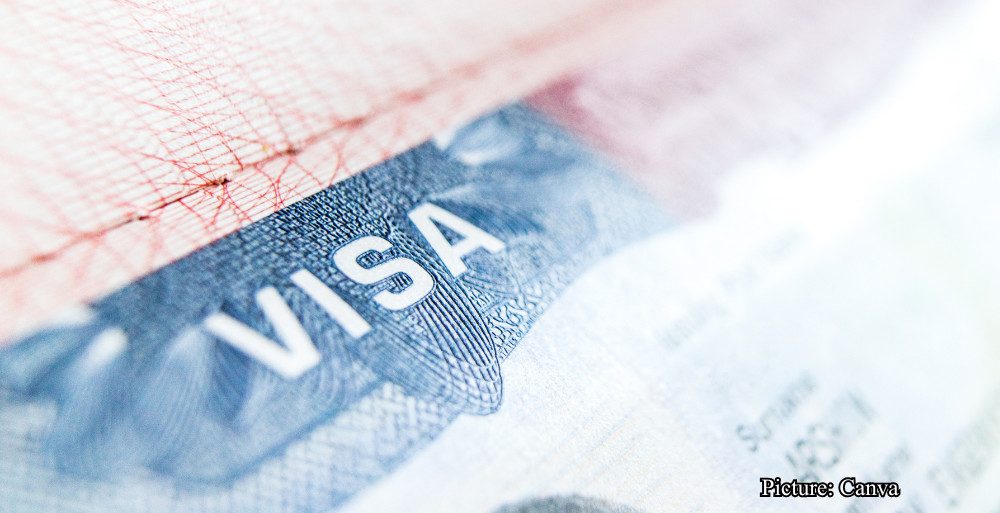








Thousands of Indian professionals seeking to work in the United States under the H-1B visa programme are facing severe processing delays, with visa appointment slots that were expected in January now being pushed as far as September. The backlog has deepened uncertainty for skilled workers and U.S. employers alike, amid tighter vetting procedures and sweeping policy changes introduced by the U.S. government.
Immigration lawyer Rajiv Khanna flagged the issue this week, noting a dramatic deterioration in appointment availability at U.S. consulates across India.
“H-1B India January visa appointments are being pushed to September,” Khanna said, describing the delays as unprecedented in recent years.
The problem primarily affects applicants who require in-person visa stamping at U.S. consulates in India, including first-time H-1B holders and those renewing visas after international travel. While visa backlogs have long been a feature of the system, legal experts say the current delays are unusually severe and appear to be driven by deliberate policy shifts rather than temporary operational constraints.
December Appointments Cancelled, Moved to 2026
The disruption has intensified following the cancellation of numerous H-1B and H-4 visa appointments originally scheduled for mid- to late-December 2025. Many applicants have received notices rescheduling their interviews to March 2026, further extending waiting periods.
According to U.S. consular officials, the cancellations are linked to a new online presence review requirement that came into effect on December 15. Under the updated rules, H-1B and H-4 applicants — including dependents — must make their social media profiles publicly accessible for review as part of enhanced background checks.
The policy, part of broader national security screening measures, has significantly slowed processing times. Consular posts have reduced the number of interviews conducted each day to accommodate the additional vetting, triggering a cascade of appointment cancellations and rescheduling.
“There isn’t much that can be done because this administration has created a systemic problem that appears deliberate,” Khanna said. “What was the extreme emergency that the social media vetting policy had to be changed and people’s lives upended overnight? This has become a universal problem for H-1B employees applying in India.”
Earlier Policy Changes Add to the Bottleneck
Legal experts point out that the current crisis did not emerge in isolation. Khanna noted that earlier restrictions introduced by the Trump administration have compounded the problem.
“Note also, the Trump administration had earlier announced a policy that you can only apply for a visa from your country of nationality or residence,” he said. “This edict, combined with the current delay fiasco, has built a ‘wall’ for employers and employees who are already in the process of stamping.”
Previously, many Indian H-1B holders were able to seek visa stamping at U.S. consulates in third countries to avoid long waits at home. That option has now largely disappeared, funneling nearly all applicants into already overstretched consular posts in India.
Impact on Workers and U.S. Employers
The extended wait times have disrupted travel plans, delayed joining dates, and stalled job transitions for thousands of professionals, particularly in the technology, healthcare, and engineering sectors.
Khanna emphasized that the consequences extend well beyond individual applicants.
“This has also been disastrous for U.S. businesses,” he said. “Most small businesses do not have the luxury of a vast workforce.”
Employers dependent on specialized talent face project delays, compliance risks, and rising costs as timelines stretch unpredictably. For Indian IT companies and startups that rely heavily on H-1B workers, the uncertainty has complicated workforce planning and client commitments.
Can Applicants Work While Waiting in India?
Applicants stranded in India while awaiting visa stamping have also sought clarity on whether they can continue working remotely for U.S. employers during the waiting period.
“One of the key issues I’ve been asked about is, can we work while we are in India? The answer is yes,” Khanna said.
However, he cautioned that applicants must remain mindful of tax obligations.
“Just be aware of the local tax filings — do you become subject to Indian taxes if you’re working from India?” he said. “But continuing to work from India while getting paid the H-1B wages is a definite choice if the employer permits it.”
Tax experts note that prolonged physical presence in India could trigger tax residency concerns, making professional advice essential.
Broader Changes Reshape the H-1B Landscape
The appointment backlog comes against the backdrop of broader structural changes to the H-1B programme. In early 2025, the U.S. government introduced modernization rules that tightened definitions of specialty occupations, strengthened degree relevance requirements, and increased employer compliance obligations.
In September 2025, authorities announced a one-time $100,000 fee for all new H-1B petitions — a move that has drawn criticism from industry groups and disproportionately affects Indian IT firms, which account for a significant share of H-1B filings.
Together, the stricter vetting, rising costs, and appointment delays have fundamentally altered the H-1B ecosystem.
“What we are seeing is not just a backlog, but a recalibration of the entire programme,” one immigration analyst said. “Longer timelines and greater uncertainty are becoming the new normal.”
For now, applicants and employers remain in limbo, waiting for relief in a system increasingly defined by tighter scrutiny and slower processing.