







WASHINGTON / SILICON VALLEY — Tech giants Google and Apple have issued internal advisories warning some employees on work visas not to travel outside the United States, citing “significant” delays at U.S. embassies and consulates that could leave travelers stranded abroad for months, according to documents reviewed by Business Insider.
The warnings underscore growing uncertainty around U.S. visa processing following the introduction of enhanced social-media screening and stricter vetting requirements, measures that immigration attorneys say are already reshaping travel decisions for thousands of skilled foreign workers.
Internal advisories flag delays of up to a year
Emails sent by outside immigration counsel to employees at both companies caution that routine international travel now carries substantial risk for visa holders who require a valid stamp to re-enter the U.S.
A memo circulated by BAL Immigration Law, which represents Google, warned that “some U.S. Embassies and Consulates are experiencing significant visa stamping appointment delays, currently reported as up to 12 months.” The firm advised employees to avoid leaving the country altogether, noting that international travel could “risk an extended stay outside the U.S.”
A similar advisory was sent to certain Apple employees by Fragomen, the law firm handling the company’s immigration matters. “Given the recent updates and the possibility of unpredictable, extended delays when returning to the U.S., we strongly recommend that employees without a valid H-1B visa stamp avoid international travel for now,” the memo said. Employees with unavoidable travel plans were urged to consult Apple’s immigration team in advance.
Neither advisory specified guidance for employees already outside the U.S. whose appointments may be postponed or canceled. Google declined to comment, while Apple did not respond to requests for comment.
New vetting rules strain consular capacity
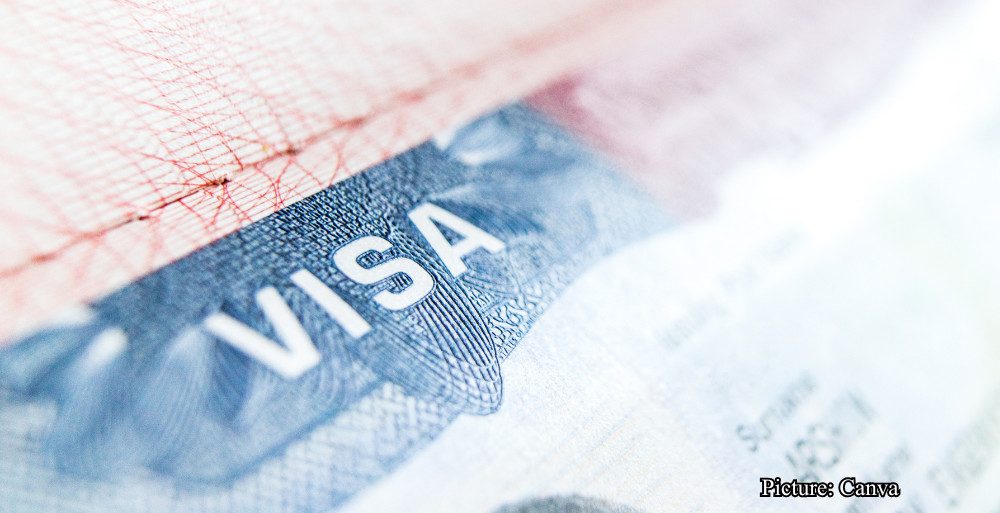
According to immigration lawyers and government officials, the delays stem largely from expanded “online presence reviews” now required for several visa categories. The policy applies not only to H-1B workers and their H-4 dependents, but also to students and exchange visitors on F, J, and M visas.
A spokesperson for the U.S. Department of State confirmed that consular posts worldwide are conducting enhanced reviews of applicants’ digital footprints. “While in the past the emphasis may have been on processing cases quickly and reducing wait times, our embassies and consulates are now prioritizing thoroughly vetting each visa case above all else,” the spokesperson said, adding that appointment availability may shift as staffing and resources change.
Immigration firms report that appointments have been postponed in countries including India, Ireland, and Vietnam, reflecting a broader global backlog. While applicants can request expedited processing, approvals are granted only on a case-by-case basis.
Routine travel now carries higher stakes
Under normal circumstances, foreign nationals with approved petitions can travel abroad and return to the U.S. if they hold a valid visa stamp and are not subject to entry restrictions. But immigration attorneys warn that enhanced vetting has introduced a new layer of uncertainty.
“If an H-1B worker leaves the U.S. to renew a visa stamp and their consular appointment is delayed or canceled, they may be stuck overseas until the visa is issued,” said Jason Finkelman, an attorney specializing in employment-based immigration. “My advice to clients right now is simple: if travel isn’t essential, it’s safer to stay put.”
The risk is compounded by broader policy shifts under Donald Trump, whose administration has framed the H-1B program as a threat to American jobs. Earlier this year, the White House announced a one-time $100,000 fee for new H-1B petitions and expanded travel restrictions affecting several countries, moves critics say have raised costs and uncertainty for employers and workers alike.
A critical pipeline for the tech sector
The H-1B program, capped at 85,000 new visas annually, remains a cornerstone of hiring for Silicon Valley and beyond. Companies such as Amazon, Microsoft, Meta, Google, and Apple routinely rank among the largest users of the program.
During the 2024 fiscal year, Alphabet — Google’s parent company — filed applications for more than 5,500 H-1B workers, while Apple submitted nearly 3,900 petitions, according to publicly available federal data. Many of these employees occupy highly specialized roles in software engineering, artificial intelligence, hardware design, and data science.
Industry groups argue that prolonged visa delays and stricter scrutiny risk undermining U.S. competitiveness by discouraging global talent. “The uncertainty alone is enough to disrupt teams, delay projects, and affect families,” said one immigration consultant who advises multinational firms.
Workers caught in limbo
For visa holders, the advisories highlight a difficult reality: travel that was once routine — visiting family, attending weddings, or handling emergencies — now carries the possibility of months-long separation from jobs and loved ones.
While the State Department maintains that visas are issued only when applicants meet all legal requirements, the absence of clear timelines has left many workers in limbo. As one attorney put it, “This isn’t just a bureaucratic delay. It’s a life decision.”
Until processing backlogs ease, Google and Apple’s message to affected employees is clear: international travel, for now, may be a risk not worth taking.