







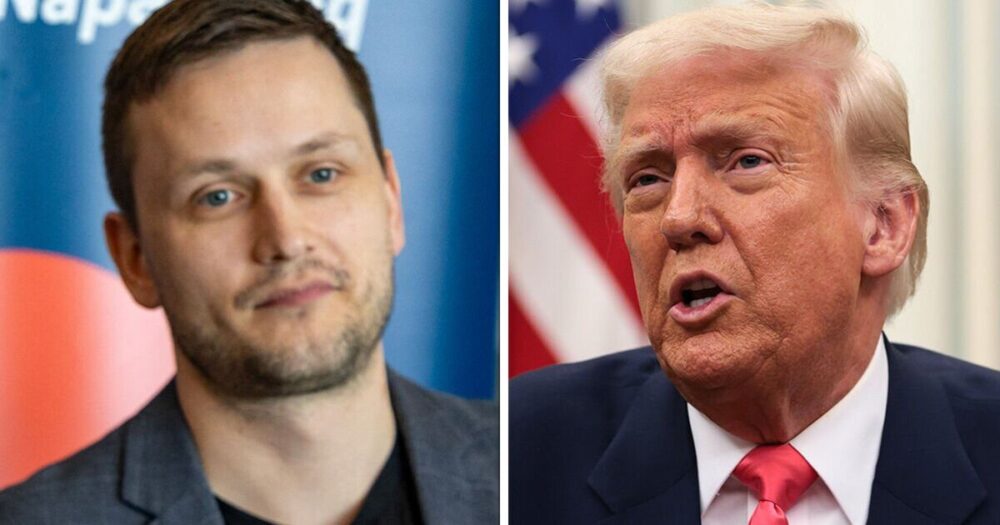
Greenland’s Prime Minister Jens-Frederik Nielsen has issued one of the strongest rebukes yet to renewed talk from US President Donald Trump about bringing the Arctic island under American control, drawing a firm line as Washington’s recent actions in Venezuela heighten international unease.
“Enough is enough,” Nielsen wrote in a sharply worded Facebook post. “No more pressure. No more hints. No more fantasies about annexation.” His remarks came days after Trump announced the appointment of a special US envoy to Greenland, a move that has reignited long-simmering fears on the island about American intentions.
Trump, who has openly expressed interest in acquiring Greenland since his first term, once again framed the issue as a matter of national security. Speaking to reporters aboard Air Force One, he said, “We need Greenland from a national security situation. It’s so strategic.” The comments landed with added weight after the US military’s dramatic weekend operation in Caracas, which resulted in the arrest of Venezuelan President Nicolás Maduro — a development that has made allies and adversaries alike question how far Washington is willing to go to assert its global ambitions.
Greenland, Denmark and the Question of Sovereignty
Greenland is an autonomous territory within the Kingdom of Denmark, exercising control over most domestic affairs since the late 1970s. Crucially, its people retain the right to decide their own future — whether to remain within Denmark, seek full independence, or pursue another arrangement entirely.
That decision, Greenlandic leaders insist, does not include joining the United States under pressure.
Denmark’s Prime Minister Mette Frederiksen underscored the seriousness of the moment, warning that Trump’s rhetoric “should be taken seriously.” She added, “Greenland has repeatedly said that it does not want to be part of the United States.” In a joint response with Nielsen, both leaders stressed that “national borders and the sovereignty of states are rooted in international law… You cannot annex other countries.”
The message reflects growing European concern that talk of annexation — once dismissed as rhetorical bravado — may now be accompanied by real political intent.
A Special Envoy and Growing Alarm
The unease intensified last month when Trump appointed Louisiana Governor Jeff Landry as special envoy to Greenland. Landry openly stated that his goal was to “make Greenland a part of the U.S.” For Greenlandic officials, the bluntness removed any lingering ambiguity about Washington’s objectives.
Public opinion on the island is equally clear. Polls indicate that 85% of Greenlanders oppose joining the United States, and nearly half describe Trump’s interest as a direct threat. Far from seeing American control as an opportunity, many residents fear it would erode their autonomy and environmental protections.
Why Greenland Matters So Much to Washington
Despite its tiny population of about 56,000 people, Greenland looms large in global geopolitics.
First, there is its sheer size. At more than 836,000 square miles, Greenland is the world’s largest island — more than three times the size of Texas. If acquired, it would instantly make the United States the second-largest country on Earth, behind only Russia.
Then there is location. Greenland sits astride critical Arctic sea routes linking North America and Europe. As climate change accelerates ice melt, new shipping corridors — including the future Transpolar Sea Route — are expected to open, dramatically reshaping global trade and military logistics. Control over Greenland would give Washington a decisive edge in Arctic competition with Russia and China.
The island already hosts a US missile defense base north of the Arctic Circle, capable of tracking potential missile launches toward the American mainland. As Arctic militarisation intensifies, Greenland’s strategic value is only set to increase.
Climate Change, Minerals and a New Frontier
Greenland is also at the heart of the climate crisis. Nearly 2,000 square miles of ice have vanished from its surface over the past four decades, making it a major contributor to global sea-level rise. Scientists have warned that the melting ice sheet could disrupt vital ocean currents, with far-reaching consequences for weather patterns worldwide.
Yet where climate scientists see alarm, some policymakers see opportunity. Beneath Greenland’s ice lie vast reserves of rare earth minerals — critical for smartphones, renewable energy systems, electric vehicles and advanced military technology. As the United States looks to reduce its dependence on China for these materials, Greenland’s mineral wealth has become increasingly attractive.
However, Greenland currently enforces strict mining regulations and has banned oil and gas extraction entirely on environmental grounds. Many Greenlanders view sustainable resource development as key to their economic future, but they remain wary of large-scale foreign exploitation. Even experts caution that Greenland’s harsh climate and rugged terrain may make mining prohibitively expensive, regardless of technological advances.
“The Right to Decide Our Own Future”
Trump has at times attempted to soften his message, telling Congress that he supports Greenlanders’ “right to determine your own future.” But such assurances have been undermined by subsequent remarks, including his claim that the US would acquire Greenland “one way or another,” and his refusal earlier this year to rule out the use of force.
For Greenland’s leadership, the line has now been drawn.
As Nielsen’s blunt declaration made clear, the island is not for sale, not for annexation, and not a geopolitical prize to be claimed. In an era of rising global tensions, Greenland’s response stands as a reminder that strategic value does not override sovereignty, and that even the world’s most powerful nations are bound — at least in principle — by international law.