







Despite a series of radical personnel and policy shifts aimed at “de-politicizing” federal medicine, a new comprehensive survey reveals that public confidence in health leadership has plummeted. While Health Secretary Robert F. Kennedy Jr. maintains that his disruptive approach is the only way to heal the post-pandemic divide, Americans are increasingly decoupling their trust in career scientists from the political appointees who oversee them.
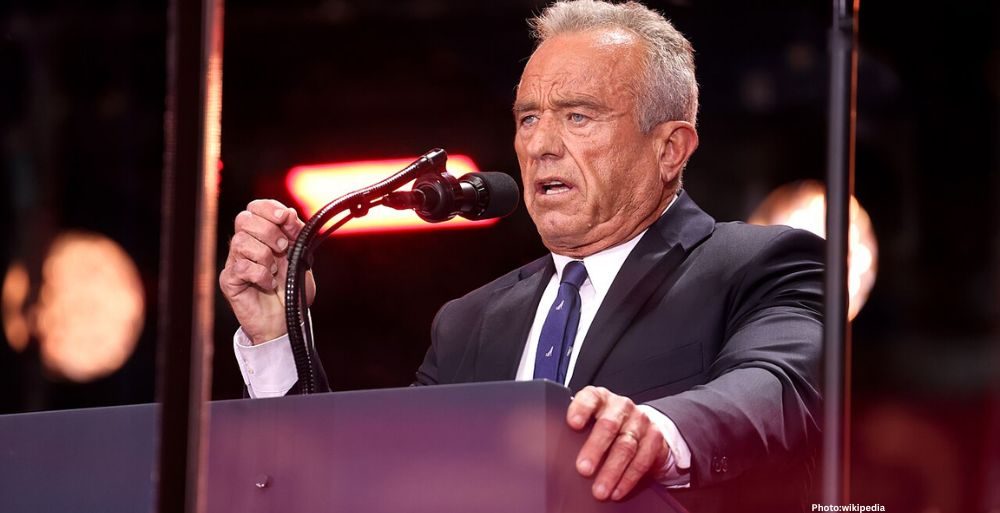
The central paradox of Robert F. Kennedy Jr.’s tenure as Secretary of Health and Human Services has been his insistent claim that he must tear down the existing public health infrastructure in order to save it. From the moment he took the helm of the nation’s largest civilian agency, Kennedy has framed his mission as a populist crusade against “captured” bureaucracy. However, new data suggests that the very medicine he is prescribing to the American public may be making the patient more wary of the doctor.
A sweeping survey of 1,650 adults conducted last month paints a sobering picture of a nation deeply divided between its respect for frontline medicine and its skepticism toward its new health leadership. While 86% of Americans express profound confidence in their own personal doctors and nurses, a mere 38% of surveyed adults view Secretary Kennedy as a trustworthy source of health information. This 48-point “credibility gap” highlights a growing friction between the Trump administration’s health agenda and the traditional foundations of medical authority.
The skepticism extends beyond the Secretary himself. Dr. Mehmet Oz, the high-profile head of the Centers for Medicare and Medicaid Services (CMS), fared only slightly better, with a 42% trustworthiness rating. Both figures trail significantly behind Dr. Anthony Fauci, who, despite being a lightning rod for criticism during the Covid-19 pandemic, maintained a 54% trust rating in retrospective polling. The data suggests that while the “Fauci era” was marked by intense partisan friction, the current era is defined by a more generalized erosion of institutional standing.
Kennedy has not been shy about his methods. Since his confirmation, he has moved with unprecedented speed to purge the federal health apparatus of what he terms “entrenched interests.” This summer, he took the radical step of firing all members of an influential vaccine advisory committee, asserting that the Department of Health and Human Services (HHS) was “prioritizing the restoration of public trust above any specific pro- or anti-vaccine agenda.” This was followed by the abrupt dismissal of CDC Director Susan Monarez after just 30 days in the role. In a recent editorial, Kennedy argued these moves were necessary because the agency had “squandered public trust” through years of opacity.
Yet, the survey indicates these “trust-building” exercises may be having the opposite effect. During the Biden administration, confidence in the CDC, FDA, and NIH remained relatively stable at approximately 75%. Since the start of the second Trump term and the subsequent reshuffling of these agencies, that figure has dropped to just over 60%.
“The public is differentiating the trustworthiness of career scientists in the CDC, NIH, and FDA from that of the leaders of those agencies,” said Ken Winneg, managing director of survey research. This distinction is critical: 67% of adults still say they trust career scientists to provide reliable information, even as they eye the political leadership with suspicion. It appears the American public is attempting to shield its faith in the scientific method from the volatility of the political cycle.
The tension reached a boiling point earlier this year when the administration made the controversial decision to alter the childhood vaccine schedule. By removing recommendations for flu, RSV, and hepatitis B shots, the administration broke with decades of established pediatric protocol. The backlash from the medical community was swift. The American Academy of Pediatrics (AAP), representing 67,000 physicians, has emerged as the primary institutional antagonist to Kennedy’s HHS.
The survey results confirm that in a head-to-head battle for credibility, the AAP is winning. 77% of respondents say they trust the AAP, a figure that dwarfs the support for the new CDC directives. In one of the most telling metrics of the report, when asked whom they would trust regarding the hepatitis B vaccine for newborns, 42% of Americans sided with the AAP, while a meager 11% chose the CDC.
This migration of trust from federal agencies to private professional organizations represents a fundamental shift in the American health landscape. Organizations like the American Heart Association (82% trust) and the American Medical Association (73% trust) are now functioning as the “true north” for a public disoriented by shifting federal guidance.
HHS spokesman Andrew Nixon defended the administration’s record, suggesting that the decline in trust is a hangover from the pandemic years rather than a reaction to current policies. “Secretary Kennedy was brought in to restore credibility through transparency, gold standard science, and accountability,” Nixon said in a statement. He emphasized that the department remains focused on ensuring decisions are driven by “rigorous evidence” rather than momentum.
However, critics argue that the administration is misreading the room. Dr. Richard Besser, president of the Robert Wood Johnson Foundation and a former acting director of the CDC, noted that the high level of trust in personal physicians is the most vital asset remaining in the public health toolkit. “This speaks to the importance of asking doctors to help interpret all of the noise that’s swirling around health in America,” Besser said.
As Kennedy continues his push to “Make America Healthy Again,” he faces an uphill battle that cannot be won solely through personnel changes or executive orders. The data suggests that trust is not something that can be mandated from the top down; it is a currency earned through perceived stability and alignment with the medical mainstream. For now, the American public seems content to listen to their local pediatricians and family doctors, while keeping the “reformers” in Washington at a very cautious distance.
The Credibility Gap: Kennedy’s Mandate to Restore Public Trust Met With Growing Skepticism