








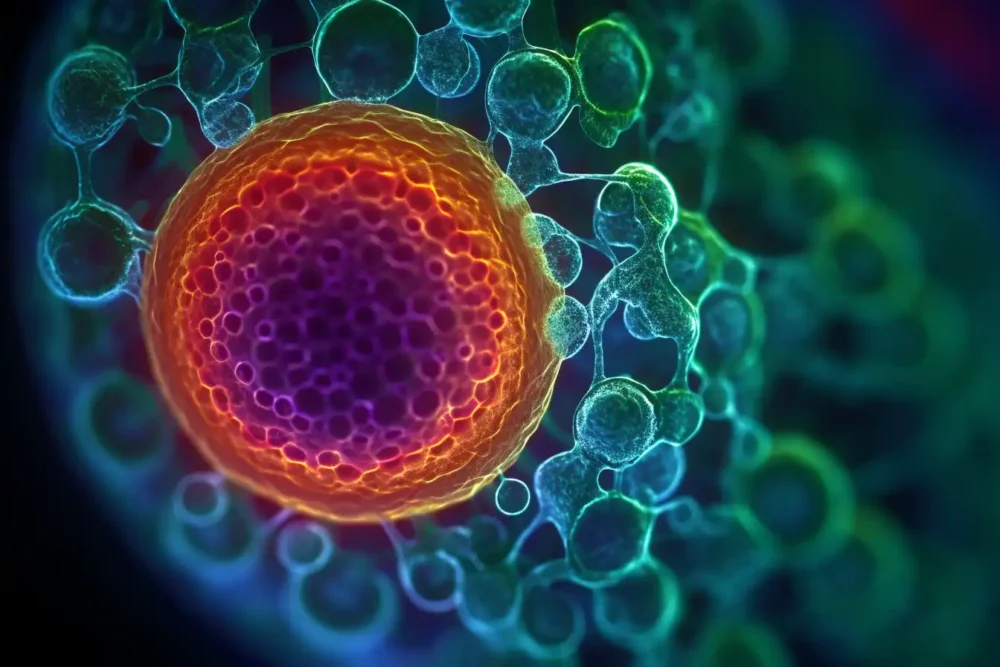
A recent scientific breakthrough has revealed a promising way to restore energy in aging human cells by replacing their internal power units, known as mitochondria. These microscopic structures are responsible for generating energy within cells, and their decline over time is closely linked to aging and various diseases affecting the heart, brain, and other vital organs.
As people grow older, the number and efficiency of mitochondria naturally decrease. When these cellular power producers weaken, cells lose their ability to function properly, leading to tissue damage and chronic health conditions. Addressing this decline has long been a major focus in medical research.
In the latest study, scientists from Texas A&M University introduced tiny flower-shaped particles called nanoflowers into human stem cells. These particles were designed to absorb harmful oxygen molecules that cause cellular stress. By removing these damaging molecules, the nanoflowers activated specific genes that stimulate the production of new mitochondria inside the stem cells.
What makes this discovery especially notable is that these energized stem cells were then able to transfer their newly formed mitochondria to neighboring aging or damaged cells. Instead of repairing old power units, the process works like a battery replacement system—restoring energy to cells that had nearly stopped functioning.
According to biomedical engineer Akhilesh Gaharwar, the team essentially trained healthy cells to donate their excess mitochondria to weaker ones. By increasing the mitochondrial count in donor cells, aging or injured cells were able to recover their strength without the use of genetic alteration or medication.
The nanoflowers used in the experiment were created from a compound called molybdenum disulfide and contained microscopic pores that allowed them to act like sponges for harmful reactive oxygen species. Once these toxic molecules were removed, the stem cells naturally increased mitochondrial production.
Stem cells already have the natural ability to share mitochondria, but in this study, they carried far more energy units than usual. This enhanced their ability to revive damaged cells. Researchers reported that nearly twice the normal amount of mitochondria was transferred. As a result, smooth muscle cells—especially those found in the heart—showed a three- to four-fold increase in activity. Heart cells damaged by chemotherapy also demonstrated a much higher survival rate after receiving the mitochondrial boost.
The research team believes this technique could potentially be used to restore cells in different parts of the body. For instance, it may benefit patients with heart disease by targeting heart tissues or help those with muscular dystrophy by focusing on weakened muscles.
While the results are highly encouraging, scientists emphasize that this work is still in its early stages. The current findings confirm that nanoparticles can enhance mitochondrial transfer in laboratory conditions. However, further testing in animals and humans is essential before it can be used in real-world medical treatments.
Future studies will help determine the safest dosage, ideal implantation sites, and long-term effects of the process. Researchers must also evaluate whether repeated treatments would remain effective and safe over time.
Gaharwar describes this advancement as an exciting early step toward restoring aging tissues using the body’s natural systems. If safely developed, this technology could one day slow down—or possibly reverse—some aspects of cellular aging.