








India’s relationship with sweets goes far beyond taste—it is deeply woven into culture, rituals, celebrations, and everyday life. From weddings and festivals to simple family gatherings, no Indian occasion feels complete without something sweet. Every region of the country proudly showcases its own signature desserts, shaped by local ingredients, climate, and culinary traditions. Yet, amid this rich diversity, one city stands out for its unmatched influence on India’s dessert culture, earning it the coveted title of the “Sweet Capital of India.”
That city is Kolkata.
Renowned for its soulful cuisine, artistic spirit, and literary legacy, Kolkata’s love for sweets is nothing short of legendary. The city’s dessert culture is not a side note—it is a defining identity. Walk through any neighbourhood, and you’ll find historic sweet shops that are generations old, still drawing crowds with recipes perfected over decades.
“Kolkata doesn’t just make sweets; it preserves emotion, memory, and tradition in every bite,” a veteran Bengali confectioner once remarked.
Why Kolkata Is Called the Sweet Capital of India
Kolkata’s reputation stems from its extraordinary range of traditional Bengali sweets, most of which are crafted from chhena (fresh cottage cheese). Unlike many Indian desserts that rely heavily on milk reduction, Bengali sweets focus on delicate textures, subtle sweetness, and freshness.
The use of natural ingredients such as chhena, date palm jaggery (nolen gur), milk, and light sugar syrups gives these desserts a refined character. The emphasis is not on overpowering sweetness, but on balance and finesse.
Food historians often note that the evolution of Bengali sweets accelerated during the colonial era, when local sweet makers adapted European techniques while retaining indigenous flavours. The result was a dessert tradition that felt both innovative and deeply rooted.
Today, Kolkata’s sweet shops are cultural institutions, not just food outlets. They are places where families bond, festivals begin, and nostalgia is served warm.
Five Iconic Desserts That Define Kolkata
1. Rosogolla
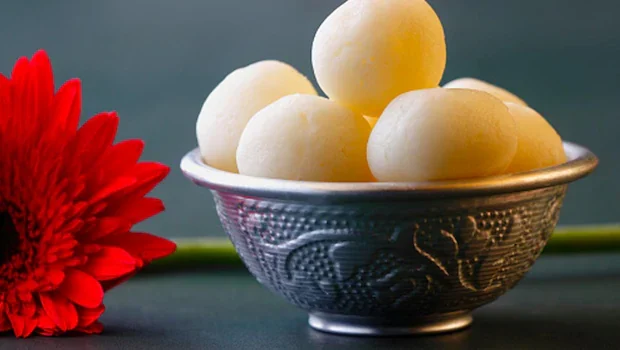
Perhaps the most famous Bengali sweet worldwide, Rosogolla is a symbol of Kolkata’s culinary pride. Made from soft chhena balls cooked in light sugar syrup, it is known for its airy texture and melt-in-the-mouth experience.
“This sweet proves that simplicity can be extraordinary,” a food critic once said. The dessert’s cultural value is underscored by its Geographical Indication (GI) tag, cementing its association with Bengal.
Best places to try:
K.C. Das, Balaram Mullick & Radharaman Mullick
2. Sandesh
Elegant and understated, Sandesh reflects the refined side of Bengali cuisine. Prepared from fresh chhena and lightly sweetened, it comes in flavours like saffron, pistachio, and even chocolate.
Often decorated with nuts or silver leaf, Sandesh is commonly exchanged during festivals and ceremonies, symbolising purity and goodwill.
Best places to try:
Girish Chandra Dey & Nakur Chandra Nandy, Balaram Mullick & Radharaman Mullick
3. Mishti Doi
A dessert that feels like comfort in a bowl, Mishti Doi is sweetened yoghurt slowly fermented in earthen pots. The caramelised sugar gives it a rich, earthy flavour, while the clay pot enhances its aroma.
“It’s not just dessert; it’s an emotion for Bengalis,” as locals often say.
Best places to try:
Bhim Chandra Nag, Mithai
4. Chomchom
Bright, festive, and indulgent, Chomchom is an oval-shaped chhena sweet soaked in syrup and often coated with coconut flakes or khoya. Its vibrant appearance makes it a staple during celebrations and weddings.
Best places to try:
Balaram Mullick & Radharaman Mullick, Gupta Brothers
5. Nolen Gur Sweets
Winter in Kolkata brings with it the much-awaited arrival of Nolen Gur, a fragrant date palm jaggery. Sweets made from this ingredient—such as Nolen Gur Sandesh and Nolen Gur Rosogolla—offer a smoky, complex sweetness found nowhere else.
“These sweets define the soul of Bengali winters,” a local sweet shop owner explained.
Best places to try:
Balaram Mullick & Radharaman Mullick, K.C. Das
A City That Celebrates Sweetness
Kolkata’s sweet culture is a living testament to India’s culinary heritage. It is not about excess, but about craftsmanship, patience, and tradition passed down through generations. For anyone with a sweet tooth—or a curiosity about India’s food history—Kolkata remains an unmissable destination.
In every spoon of Mishti Doi and every bite of Rosogolla, the city tells its story—slow, sweet, and unforgettable.