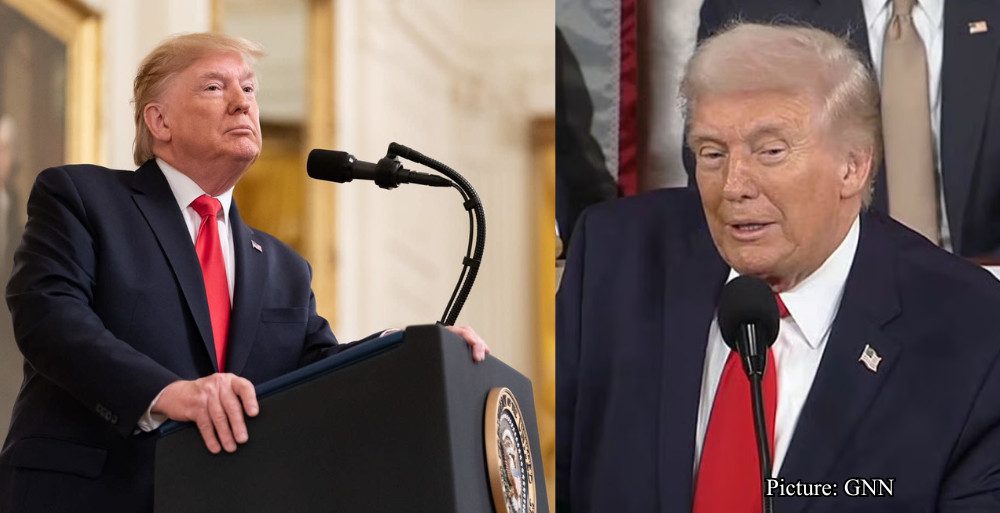








United States President Donald Trump declared on Friday that Washington will accept no diplomatic resolution to the escalating West Asia conflict except the “unconditional surrender” of the Iranian government, while Israeli forces launched a massive wave of airstrikes against Tehran and Beirut.
The demand for total capitulation comes as the United States military intensifies its maritime campaign, with a confirmed strike on an Iranian drone carrier and the sinking of a frigate earlier this week. The United Nations refugee agency on Friday designated the regional crisis a major humanitarian emergency, citing the displacement of hundreds of thousands of civilians and the collapse of essential services across multiple borders.
In a statement released on March 6, 2026, President Trump asserted that the current military operations aim to fundamentally dismantle the existing power structure in Tehran. “There will be no deal with Iran except UNCONDITIONAL SURRENDER,” the President stated, adding that only after such a surrender and the subsequent “selection of a GREAT & ACCEPTABLE Leader” would the United States and its partners work to rebuild the nation.
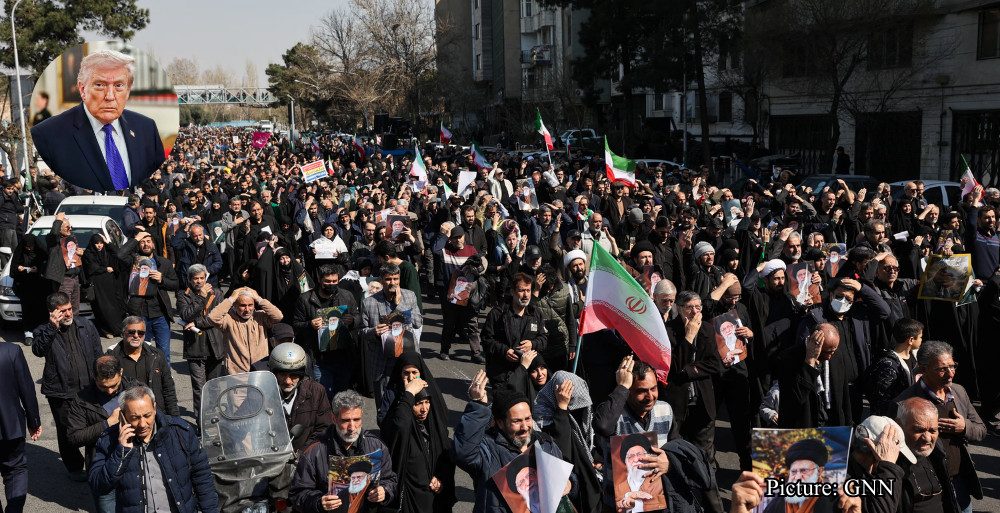
The diplomatic ultimatum was met with immediate defiance from Tehran. Iran’s permanent envoy to the United Nations rejected what he characterized as illegal American interference in the sovereign succession of the Islamic Republic. The envoy accused Washington of attempting to dictate the internal political future of Iran while concurrently carrying out military strikes that he alleged constitute war crimes and crimes against humanity.
On the ground, the Israeli military confirmed it has initiated a broad-scale offensive targeting the Iranian capital. According to military reports, recent sorties have destroyed most of Iran’s air defenses and missile launchers, significantly degrading the ability to respond to aerial incursions. Witnesses in Tehran reported a series of massive explosions that rattled residential districts, while similar strikes were reported in the city of Kermanshah, a known hub for Iranian ballistic missile infrastructure.
The maritime theater has seen a similar escalation in hostilities. U.S. Defense Secretary Pete Hegseth confirmed that the U.S. Navy successfully targeted the IRIS Shahid Bagheri, a converted container ship functioning as a drone carrier. High-ranking military officials described the vessel as being roughly the size of a World War II aircraft carrier and confirmed it was left ablaze following the engagement.
This naval strike follows the Wednesday sinking of the Iranian frigate IRIS Dena off the coast of Sri Lanka. The vessel, which had recently participated in the multilateral Milan naval exercises and the International Fleet Review in India, was struck by a torpedo fired from a nuclear-powered submarine. According to statements from the Defense Secretary, the Dena “thought it was safe in international waters” before it was struck by a torpedo, an event characterized as a “quiet death.”
The sinking of the IRIS Dena resulted in the deaths of at least 83 Iranian sailors, though some reports place the figure higher. Search-and-rescue operations retrieved 32 survivors and transported them to medical facilities in Galle. Iranian officials condemned the sinking of the vessel, which they described as an “unarmed” training ship, and stated that “attacking such a ship is a war crime.”
In New Delhi, the Indian government moved to distance itself from the naval engagement following rumors that Indian intelligence had assisted the United States in locating the Iranian frigate. Officials on Friday described the allegations as “baseless,” emphasizing that India provided no data or logistical support for the strike. A senior naval official noted that existing bilateral agreements do not automatically apply to such situations and require case-by-case approval.
The humanitarian fallout of the week-long campaign has prompted the UNHCR to issue an urgent appeal for international aid. The agency told a press briefing in Geneva that the crisis has triggered significant population movements that the current infrastructure is ill-equipped to handle. It was reported that approximately 100,000 people have been displaced within Lebanon, while tens of thousands of Syrian refugees have been forced to flee back across the border.
Medical officials in the region have expressed growing concern over the risk of disease outbreaks. Experts noted that the mass displacement and lack of adequate water and sanitation are creating conditions for a public health catastrophe. According to recent figures, the conflict has already claimed the lives of over 1,300 civilians in Iran and more than 120 in Lebanon.
Military analysts suggest the conflict is entering a new, more volatile phase. On Friday, Iran reportedly launched retaliatory strikes using drones and missiles against neighboring countries that host U.S. military installations, including Kuwait, Qatar, Saudi Arabia, and Bahrain. While no immediate casualties were reported from these specific counter-attacks, the expansion of the war zone has rattled global financial markets and disrupted international air travel and oil supply routes.
Secretary Hegseth has signaled that the American-led pressure campaign is unlikely to abate in the near term. During a Pentagon briefing, he warned that the frequency and intensity of strikes against Iranian targets were “about to surge dramatically.” The Secretary emphasized that the administration is not adhering to conventional rules of engagement, but is instead focused on a decisive military victory.
As the bombardment of Tehran continues, the international community remains divided on the legality and long-term strategic viability of the U.S. demands. While Washington insists on a total overhaul of the Iranian leadership, humanitarian organizations warn that the mounting civilian toll and the collapse of regional stability may lead to a crisis that transcends the borders of West Asia.