






On Saturday, December 13, 2025, the Global Organization of People of Indian Origin (GOPIO) hosted a powerful virtual discussion titled “Coping with Technological Challenges and Changes,” marking the culmination of its year-long webinar series focused on pressing global issues facing the Indian diaspora. This session brought together leaders, technologists, community organizers, and innovators from around the world to explore how rapid technological evolution — from artificial intelligence to digital platforms — is reshaping society, work, education, culture, and community resilience.
The webinar was part of GOPIO’s monthly virtual forum initiative, launched earlier in 2025 to provide a global platform of learning, dialogue, and community building for people of Indian origin scattered across continents. According to the organization’s published schedule, the series covered a range of themes throughout the year — from immigration and health to future technologies — culminating in this deep dive into technological disruption and adaptation.
Hosted on Zoom with participants joining at various global time zones, the session was moderated by seasoned community leaders and featured an impressive lineup of distinguished speakers. These panelists shared insights on emerging tech trends, the opportunities and risks presented by digitization, and strategies that individuals and diaspora communities can adopt to remain competitive, connected, and resilient in the face of change. Facebook
The discussion opened with a welcome from GOPIO’s leadership, who emphasized how technology — while unlocking unprecedented opportunities — also poses significant challenges for communities if not understood and harnessed wisely. “Technology isn’t merely a tool; it’s a force that is redefining our societies,” one of the organizers remarked. This resonated deeply with many participants, especially those balancing professional careers, entrepreneurship, and cultural commitments across borders.
A recurring theme throughout the webinar was the need for “smart adaptation”: understanding not only the technical aspects of new technologies but also their social, economic, and ethical dimensions. Speakers underscored that while artificial intelligence and automation can improve productivity, education, healthcare, and business outcomes, they also raise questions about equity, job displacement, data privacy, and cultural continuity.
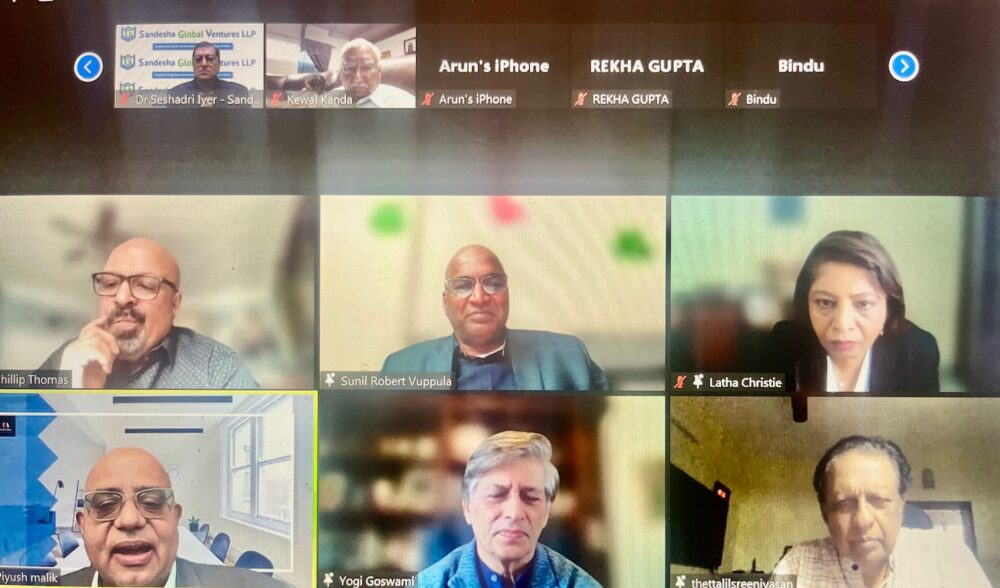
Photo: Chief Guest, Moderator and Speakers at the GOPIO Webinar on Coping with New Technological Changes are Challenges, Top row, Philip Thomas, Sunil Vuppala, Dr. Latha Christies; Bottom row: Piyush Malik, Prof. D. Yogi Goswami, and Amb. T.P. Sreenivasan
One expert noted that digital literacy must become as foundational as traditional literacy for the next generation. As technology evolves faster than formal education systems, informal learning and community knowledge networks are key to equipping youth and professionals alike with the skills needed to thrive. This includes not only coding and data fluency, but also critical thinking, creativity, ethical judgment, and cross-cultural communication — competencies essential in an interconnected world.
Panelists also explored how the diaspora can leverage its global footprint to bridge innovation ecosystems between countries. Indian origin professionals, entrepreneurs, and academics have made considerable contributions in fields such as software development, cloud computing, biotechnology, and digital governance. These networks, speakers argued, can be leveraged to benefit communities both in their countries of residence and in India by fostering collaboration, mentorship, and knowledge exchange.
The session didn’t shy away from discussing challenges associated with rapid change, such as automation-driven job market shifts and socio-economic inequalities exacerbated by digital divides. Discussions emphasized that technological advancement must be accompanied by inclusive policies, accessible education, and community support systems to ensure that no one is left behind as industries transform.
Beyond the technical and economic dimensions, the webinar also touched on community values and identity in a tech-driven era. Several participants reflected on how the diaspora can maintain cultural cohesion while embracing innovation. They proposed initiatives such as tech-infused cultural platforms, digital heritage archives, and online mentorship programs that connect youth with elder community leaders.
The event concluded with an interactive question-and-answer segment, where attendees from diverse geographies posed thoughtful inquiries about career pathways, ethical AI, lifelong learning, and the role of community organizations in supporting adaptation. The conversation reinforced the idea that coping with technological change is not only an individual challenge but also a collective mission that requires empathy, education, and ongoing collaboration.
As the webinar wrapped up, GOPIO announced plans to continue its educational outreach in 2026, with proposals for international symposiums, deeper technical workshops, and cross-community innovation hubs — all aimed at empowering the global Indian diaspora to not just cope with change, but to lead it with purpose and wisdom.
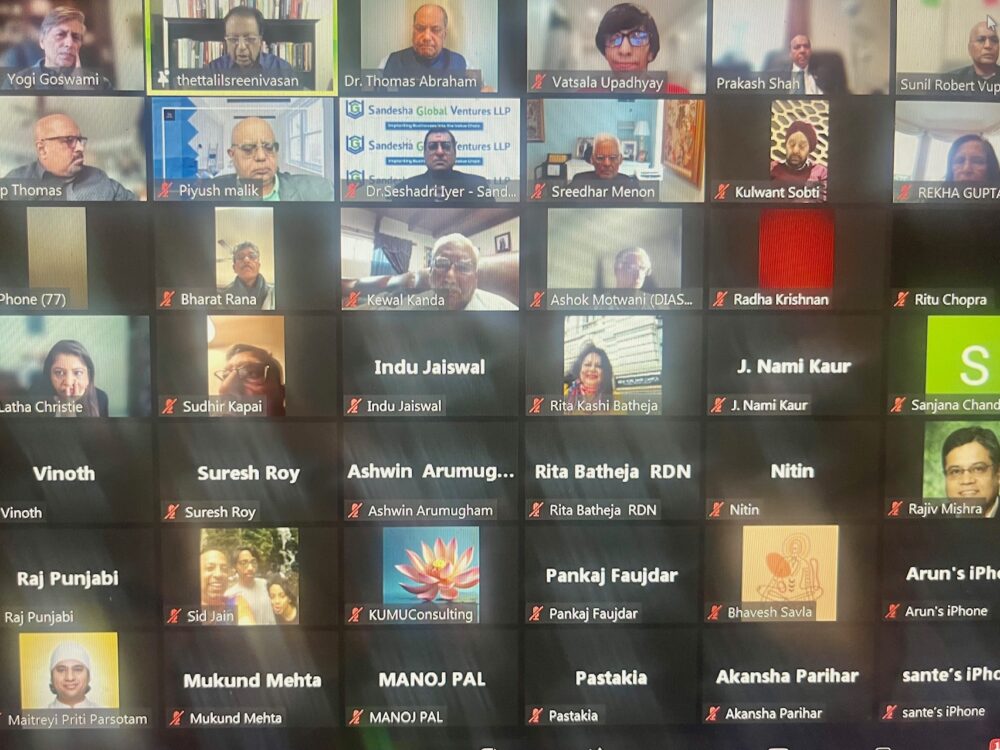
Photo: Coping with Technological Changes and Challenges – A Section of the Audience
The program ended with a vote of thanks by GOPIO Secretary Siddarth Jain. Technical support for the Zoom meeting was provided by GOPIO Associate Secretary Vatsala Upadhyay.
For more info on GOPIO contact Sid Jain at +1 (201) 889-8888 or email at Secretary@GOPIO.net
About GOPIO – Founded in 1989, GOPIO is a non-partisan, not-for-profit, secular organization with Individual Life Members and chapter delegates from over 100 chapters in 36 countries. GOPIO’s volunteers are committed to enhancing cooperation and communication between NRIs/PIOs and the local communities, building networks, bonds, friendships, alliances, and the camaraderie of citizens and colleagues alike. GOPIO volunteers believe that when they help network the global Indian community, they facilitate making tomorrow a better world for the Indian Diaspora, the countries they live in and India.