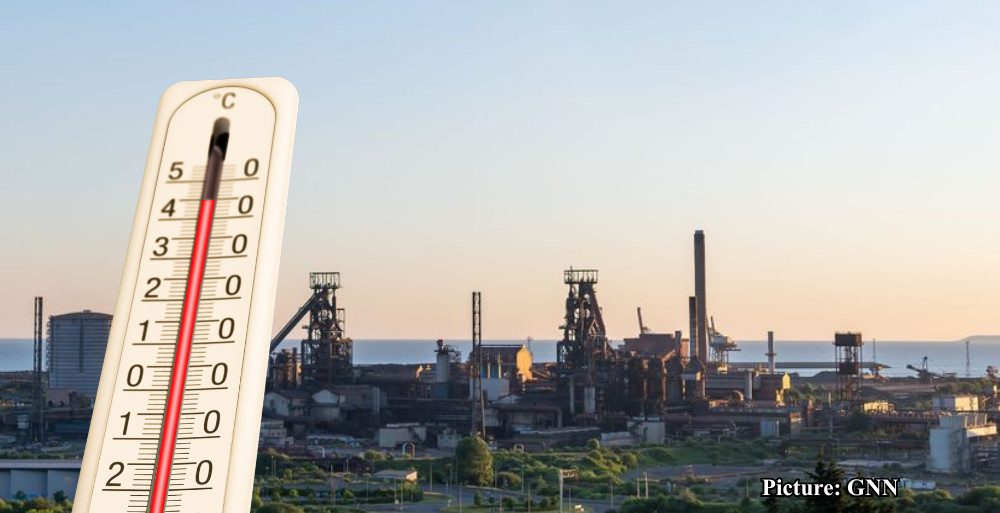








The International Court of Justice reaffirmed in 2025 that the 1.5 degree Celsius limit remains the primary agreed target for nations under the Paris Agreement framework. However, a decade of record-breaking global temperatures has placed the planet on a trajectory to exceed this threshold within the next few years. This shift marks the formal entry into an era defined by climate overshoot, a period where global temperatures temporarily or permanently surpass the established safety limits set by international consensus. This development has prompted leading researchers to demand a fundamental revaluation of how climate accountability and scientific modeling are applied to global policy.
In a newly published commentary in the journal Nature, experts from the International Institute for Applied Systems Analysis, the Humboldt University of Berlin, the Potsdam Institute for Climate Impact Research, and the Grantham Research Institute on Climate Change and the Environment argue that current climate strategies are inadequate. They contend that the existing frameworks were not intentionally designed for a world that has already failed its primary temperature goal. The transition into an overshoot reality necessitates a rethink of how the international community handles the scientific and political consequences of this breach.
Keywan Riahi, the director of the Energy, Climate, and Environment Program at the International Institute for Applied Systems Analysis, notes that exceeding the 1.5 degree limit represents a collective failure to prevent dangerous human interference with the climate system. This interference was a specific benchmark established through the United Nations science-policy process. According to Riahi, this failure should serve as a catalyst for the scientific community to reflect on whether current methodologies are fit for purpose. There is a growing concern that existing approaches might inadvertently support a backsliding of targets rather than enforcing the rigorous action needed to navigate an overshoot scenario.
While much of the current climate discourse focuses on technical solutions to bring temperatures back below the 1.5 degree threshold, researchers argue that a retrospective analysis is equally vital. Gaurav Ganti, a researcher at Humboldt University, emphasizes that understanding the historical decisions that led to the current situation is necessary for establishing future accountability. Scientific evidence must now be used to clarify the options that were lost because of delayed action. By identifying the specific factors and actors responsible for the lack of early, feasible intervention, the international community can better understand the equity and fairness implications of the warming that has already occurred.
The call for increased accountability comes as the Intergovernmental Panel on Climate Change prepares its Seventh Assessment Report. The authors of the commentary are urging the panel to firmly anchor the 1.5 degree limit in its assessments to provide a clear roadmap for overshoot policy. This includes a robust quantification of the burdens placed on developing nations and an integrated perspective on the various remedies available to the global community. These remedies include carbon dioxide removal, support for adaptation, and the financing of loss and damage for regions most impacted by the warming breach.
The transition to an overshoot era does not imply that the goals of the Paris Agreement are obsolete, but rather that the task of climate stabilization has become significantly more complex. Carl Schleussner, a lead researcher on integrated climate impacts, suggests that the breach of the 1.5 degree mark requires more climate action rather than less. Navigating a world where the primary target has been exceeded demands a heightened focus on the relationship between different climate responses. For instance, the reliance on carbon removal technologies cannot be viewed in isolation from the urgent need for immediate emissions reductions and financial support for vulnerable populations.
Historically, climate modeling has focused on various pathways to stay within specific temperature limits. However, the reality of overshoot introduces new variables regarding the duration and magnitude of the temperature spike. The longer the world stays above the 1.5 degree threshold, the greater the risk of triggering irreversible tipping points in the Earth’s ecosystem. These include the melting of permafrost, the collapse of major ice sheets, and the degradation of biodiversity hotspots. Consequently, the policy shift toward overshoot management must prioritize the minimization of the duration of this breach.
The legal dimensions of this era are also evolving. The 2025 reaffirmation by the International Court of Justice provides a legal basis for holding states accountable for their contributions to global warming. As the physical reality of overshoot becomes undeniable, the legal pressure on high-emitting nations is expected to increase. This pressure is tied to the concept of historical responsibility, where nations that have benefited the most from industrialization are expected to lead the efforts in both mitigation and the provision of financial remedies for the resulting damages.
Furthermore, the scientific community is being asked to provide more granular data on the impacts of overshoot at the regional level. Global averages often mask the extreme volatility experienced in specific geographic areas. For many small island states and low-lying coastal regions, an overshoot of even a few tenths of a degree can mean the difference between manageable sea-level rise and the total loss of habitable land. The focus on equity in the Seventh Assessment Report is intended to address these disparities by highlighting how the costs of overshoot are disproportionately borne by those who contributed the least to the problem.
Transitioning the global economy to meet these new challenges requires a massive reallocation of capital and a rapid phase-out of fossil fuel infrastructure. The researchers point out that the window for feasible action is narrowing, and the choices made in the next five years will determine the severity of the overshoot period. By integrating accountability into the heart of climate policy, the aim is to ensure that future actions are transparent and that progress is measurable against the original goals of the international community.
The move toward an overshoot-specific policy framework also highlights the necessity of carbon removal technologies. While emissions reductions remain the priority, the scientific consensus suggests that returning to 1.5 degrees will likely require drawing carbon dioxide out of the atmosphere on a massive scale. This introduces new ethical and practical questions regarding land use, energy consumption, and the permanence of carbon storage. Policy experts argue that these technologies should complement, not replace, aggressive decarbonization efforts to avoid moral hazard.
As the world navigates this transition, the communication of climate risks is also undergoing a change. The message from the scientific community is no longer just about prevention, but about management and recovery. This requires a nuanced public discourse that acknowledges the gravity of the situation without lapsing into defeatism. The goal of staying below 1.5 degrees was always an ambitious one, and while the temporary breach of that target is a setback, it reinforces the urgency of the broader mission to stabilize the global climate.
In conclusion, the entry into the overshoot era marks a turning point for global climate governance. The focus on accountability, equity, and integrated remedies reflects a maturing of the climate movement in response to the physical realities of the planet. As the Seventh Assessment Report approaches, the international community faces the dual challenge of acknowledging past failures while mobilizing for the unprecedented effort required to bring global temperatures back within safe limits. The path forward is difficult, but the scientific and policy frameworks being developed today are essential for navigating the complexities of an overshoot world.