








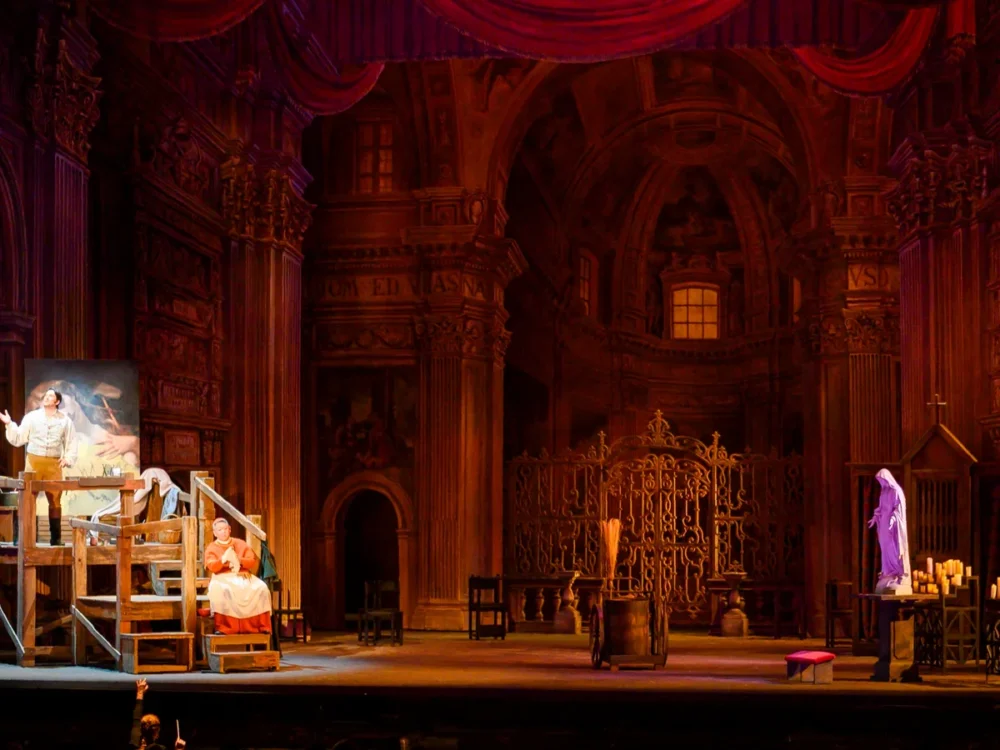
The Washington National Opera (WNO), one of America’s most prestigious cultural institutions, is set to leave the Kennedy Center, marking a historic break after more than five decades of association. The decision comes amid sweeping changes at the iconic arts venue following President Donald Trump’s takeover of its leadership and programming direction, a shift that has sparked controversy across the U.S. cultural landscape.
Confirming the development on Friday, a spokesperson for the Kennedy Center said the separation was driven by financial and strategic considerations.
“After careful consideration, we have made the difficult decision to part ways with the WNO due to a financially challenging relationship,” the spokesperson said.
They added that the move was intended to safeguard the institution’s future, noting,
“We believe this represents the best path forward for both organizations and enables us to make responsible choices that support the financial stability and long-term future of the Trump Kennedy Center.”
For the Washington National Opera, the decision represents a dramatic turning point. In a separate statement, the opera company said it had chosen to seek an early and amicable end to its long-standing affiliation agreement with the Kennedy Center.
“The Washington National Opera has announced its decision to seek an amicable early termination of its affiliation agreement with the Kennedy Center and resume operations as a fully independent nonprofit entity,” the company said.
End of a 50-Year Cultural Partnership
The move brings to a close a relationship that began more than 50 years ago, during which the WNO became synonymous with opera at the Kennedy Center. Over decades, the company staged acclaimed productions, nurtured emerging talent, and played a central role in shaping Washington, D.C.’s cultural identity.
Arts observers say the split underscores the depth of unease sweeping through the U.S. arts community since the Trump administration initiated an overhaul of the Kennedy Center earlier this year. Several artists and performers have already canceled appearances at the venue, citing concerns over artistic freedom, governance, and political interference.
The administration has reportedly restructured programming priorities and imposed new restrictions on performances deemed “inappropriate,” fueling fears of ideological influence over what has traditionally been a nonpartisan cultural space.
Leadership Changes and Internal Disagreements
The Kennedy Center is currently overseen by Richard Grenell, a longtime Trump ally, who has taken a leading role in supervising annual programs and institutional direction. His appointment, along with other governance changes, has drawn criticism from artists, donors, and lawmakers.
Tensions were also evident within the Washington National Opera itself.
“There were disagreements among the Board on whether to disaffiliate or not. Some WNO Board members are resigning,” a WNO spokesperson said, indicating internal strain as the organization weighed its future.
Arts management experts say the decision to leave may give the WNO greater autonomy at a time when artistic independence has become a defining issue. Operating as a standalone nonprofit could allow the opera company to seek new venues, donors, and partnerships without the constraints of a politically charged environment.
Controversy Over Renaming the Kennedy Center
The WNO’s exit comes against the backdrop of another highly contentious move: the Kennedy Center Board’s recent vote to add President Trump’s name to the venue. The rebranding has triggered sharp opposition from Democratic lawmakers, who argue that the decision violates federal law governing the institution.
Representative Joyce Beatty of Ohio, an ex-officio member of the Kennedy Center Board, has filed a lawsuit seeking to block the name change and remove Trump’s name from the venue. Critics say the move undermines the legacy of the Kennedy Center as a national cultural institution dedicated to artistic excellence rather than political branding.
“This is not about partisanship,” a Democratic aide familiar with the lawsuit said privately. “It’s about preserving the integrity of one of America’s most important cultural spaces.”
What Lies Ahead for the Opera and the Center
For the Washington National Opera, independence may offer both opportunity and uncertainty. While leaving the Kennedy Center means losing a historic home, it also opens the door to reinventing its identity at a time when many arts organizations are rethinking traditional models.
Meanwhile, the Kennedy Center faces a period of transition marked by political scrutiny, artist backlash, and questions about its future role in American cultural life. The departure of a flagship resident company like the WNO is widely seen as a symbolic blow — and possibly a sign of further exits to come.
As debates over governance, funding, and artistic freedom continue, the split between the Kennedy Center and the Washington National Opera highlights a broader reckoning underway in the U.S. arts world: one that pits tradition and independence against political influence and institutional transformation.