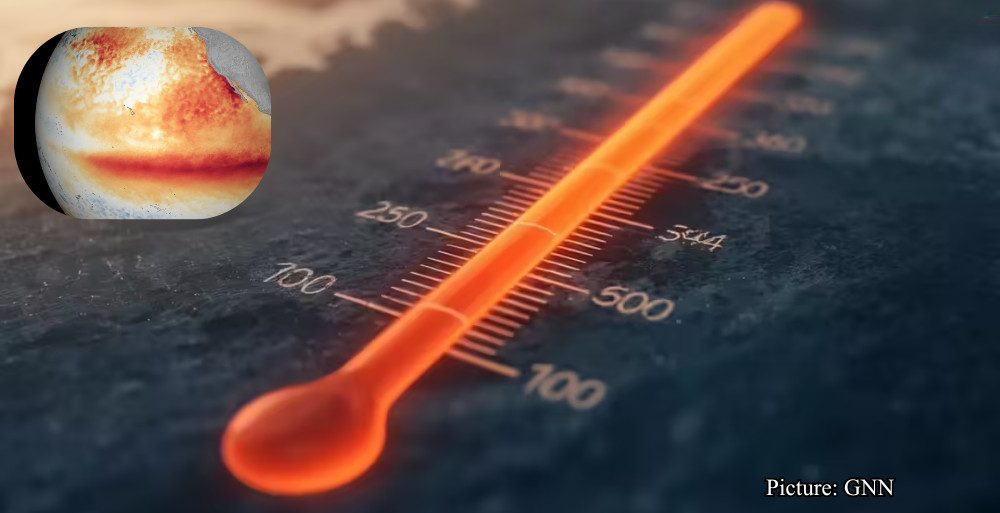








Global meteorologists are sounding the alarm as a powerful El Niño pattern prepares to emerge this summer, potentially setting the stage for record-shattering global temperatures by 2027. With a 62% probability of development by August, the phenomenon threatens to upend weather patterns, shifting the jet stream and triggering extreme climate events from the Gulf Coast to the Pacific.
Climate scientists and federal forecasters are bracing for a massive shift in the Earth’s atmospheric plumbing. After a brief residency in the cooling “La Niña” phase, the tropical Pacific Ocean is showing definitive signs of a rapid warming trend. The National Oceanic and Atmospheric Administration (NOAA) announced on Tuesday that there is now a 62% chance of an El Niño event emerging between June and August, a transition that could fundamentally alter the trajectory of global heat through the end of the decade.
The El Niño-Southern Oscillation (ENSO) is more than just a change in ocean temperature; it is a global engine of climate variability. During this warm phase, the typical easterly trade winds weaken, allowing warm water to migrate toward the eastern equatorial Pacific. This oceanic shift forces the Pacific jet stream to move south of its neutral position. For the United States, this repositioning typically results in a warmer, drier Pacific Northwest and an increased risk of severe flooding across the Gulf Coast and the Southeast.
While a standard El Niño event is defined by sea surface temperatures rising 0.9°F above the long-term average, forecasters at AccuWeather are warning of a “Super El Niño.” This rare and extreme iteration occurs when temperatures breach the 3.6°F (2°C) threshold. “Intensity is uncertain, but there is potential for a moderate to possibly strong El Niño this fall into winter,” noted Paul Pastelok, a lead long-range forecaster at AccuWeather. The firm currently estimates a 15% probability of this “supercharged” state by November.
The timing of this cycle is particularly critical for global temperature records. The planet is still reeling from the record-breaking heat of 2024, which was fueled by an El Niño that narrowly missed the “super” designation. While 2026 is unlikely to surpass 2024—primarily because the year began in a cooling La Niña state—climate experts are looking toward 2027 with significant concern.
Zeke Hausfather, a prominent climate scientist and energy systems analyst, highlighted the “historical lag” between ENSO cycles and surface temperatures. Writing on the social media platform X, Hausfather noted that while 2026 will see a temperature bump, the true impact of the upcoming warming will likely peak in 2027, making it “very likely to be the warmest year on record.”
The impact of this shift will also be felt in the Atlantic and Pacific hurricane basins. Historically, El Niño acts as a stabilizer in the Atlantic, creating vertical wind shear that “tears apart” developing storms, leading to less active seasons. Conversely, it acts as an accelerant in the Central and Eastern Pacific, where warmer waters provide the thermal energy necessary for more frequent and intense hurricane activity.
However, scientists caution that El Niño is not the only driver of the current climate crisis. The baseline temperature of the planet has risen so significantly due to human-induced climate change that even “cool” years now often rank warmer than the “warm” years of the 20th century. “The planet is already warming… and will continue to do so, regardless of what ENSO is doing,” the report emphasized, suggesting that the natural cycle is now acting as a multiplier on top of an already dangerous global warming trend.
As the tropical Pacific begins its transition from the cold La Niña phase—marked by temperatures falling 0.9°F below average—to this new warming period, global agricultural and energy sectors are on high alert. From drought-stricken regions in the Northern U.S. to flood-prone coastal communities, the arrival of the “warm phase” is no longer a matter of if, but a matter of how intense the heat will become.
The Return of the Heat: Scientists Warn of ‘Super El Niño’ Threat in 2026