


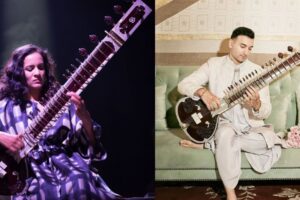




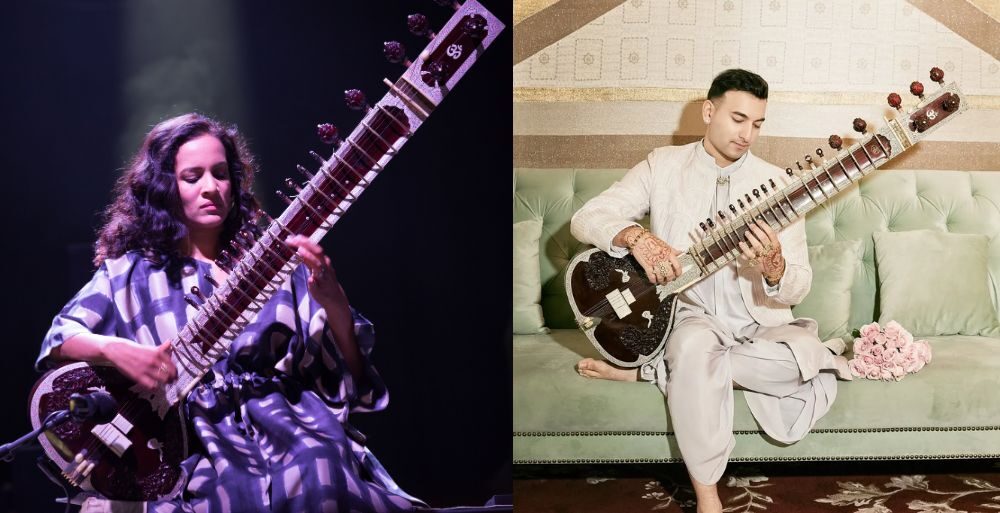
In the world of classical music, where the lineage of mentorship is often as significant as the music itself, a recent claim has stirred the waters. Anoushka Shankar, the renowned sitar virtuoso and daughter of the legendary Ravi Shankar, has publicly refuted claims made by Rishabh Rikhiram Sharma, who has been asserting his position as the last disciple of her father. Anoushka, currently on her Chapters Tour 2026 in India, a tour that commemorates her 30-year journey in music, took to social media to clarify the situation. Her statement was clear and unequivocal: \”My father was never his guru.\”
The claim by Sharma is not just a personal assertion; it touches upon the deeply ingrained guru-shishya tradition that is the bedrock of Indian classical music. This tradition, which dates back centuries, is not merely about the transmission of musical knowledge but also about a profound spiritual and personal bond between the teacher and the student. It is this sacred relationship that Anoushka Shankar is defending, not just for her father\’s legacy, but also for the integrity of the tradition itself.
Ravi Shankar, who passed away in 2012, was not only a towering figure in Indian music but also a global ambassador for Indian culture. His collaborations with Western musicians such as George Harrison of The Beatles brought the sitar and Indian classical music to a worldwide audience. His influence on music was so profound that it transcended cultural and geographical boundaries, making him an icon in both the East and the West. It is perhaps this global stature and the mystique surrounding his life that has led to various claims about his discipleship.
Anoushka Shankar\’s response is not just a personal defense but a broader commentary on the need for authenticity in the arts. In an era where social media can often blur the lines between fact and fiction, her statement is a reminder of the importance of truth and integrity. As she continues her tour, celebrating three decades of her own contributions to music, she carries forward the legacy of her father not just through her performances but also through her commitment to upholding the values he cherished.
The issue also highlights a broader trend in the music industry, where the narrative of mentorship and lineage is increasingly being scrutinized. As more artists emerge in the digital age, the traditional pathways of learning and recognition are evolving. While this democratization of music has allowed for greater access and diversity, it has also led to challenges in verifying claims and preserving the sanctity of historical traditions.
Anoushka\’s assertion is a poignant reminder of the responsibilities that come with carrying a legacy. For her, the journey in music is not just about personal achievement but about honoring the past and ensuring its rightful representation. Her Chapters Tour 2026, thus, becomes more than just a series of concerts; it is a celebration of a legacy, a reaffirmation of values, and a personal journey of an artist who has carved her own path while staying true to her roots.
In the end, the discourse sparked by Sharma\’s claims serves as a valuable conversation about the cultural and ethical responsibilities of artists today. It underscores the need for transparency and respect in a world where the lines between homage and appropriation can often blur. Anoushka Shankar\’s response, with its blend of candor and respect, is a testament to her role not just as a musician but as a steward of a rich and vibrant tradition.