







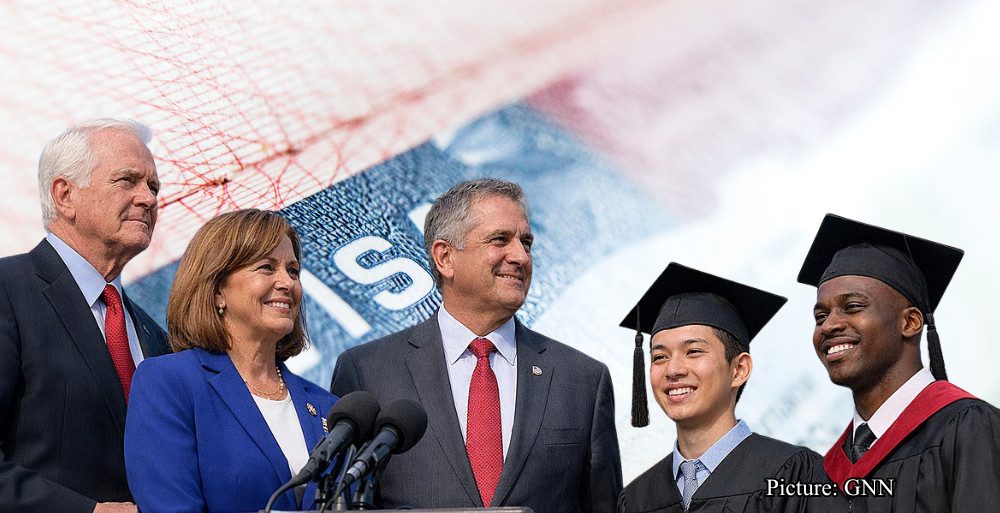
A bipartisan group of U.S. lawmakers has introduced the ‘Keep Innovators in America Act’ to safeguard the Optional Practical Training (OPT) program, allowing international students to gain vital work experience in the U.S. post-graduation.
A bipartisan coalition of U.S. lawmakers introduced the ‘Keep Innovators in America Act’ on October 2, 2023, aimed at providing statutory protection to the Optional Practical Training (OPT) program. This legislative initiative emerges amid growing concerns over the future of post-study employment regulations impacting international students, particularly those from India, who constitute a significant portion of OPT participants.
The OPT program currently permits international students holding F-1 visas to work in the United States for up to 12 months following graduation. Graduates in Science, Technology, Engineering, and Mathematics (STEM) fields can apply for a further two-year extension, making OPT a critical pathway to longer-term work visas, such as the H-1B visa. The introduction of this bill marks a significant legislative effort to ensure stability and predictability for international students, educational institutions, and employers alike, as they navigate an increasingly complex immigration landscape.
Context and Significance
According to the 2024-25 Open Doors report, approximately 363,019 Indian students were enrolled in U.S. higher education institutions, with about 143,740 of them participating in the OPT program. This figure underscores a notable increase in the number of Indian students opting for post-study work opportunities, reflecting the program’s importance in their educational and professional journeys.
Supporters of the ‘Keep Innovators in America Act’ argue that retaining graduates educated in the U.S. is vital for maintaining the country’s competitiveness, particularly in technology, research, and innovation sectors. The legislation is seen as a proactive measure to prevent abrupt policy changes that could disrupt the U.S. talent pipeline, which increasingly relies on international contributions. In recent years, the OPT program has come under scrutiny, with calls for reform and reassessment of immigration policies affecting international students.
Statements from Key Stakeholders
The Presidents’ Alliance on Higher Education and Immigration expressed strong support for the bill, emphasizing that codifying the OPT program would allow international students to gain the practical training necessary to contribute effectively to the U.S. economy. The Alliance warned that uncertainty surrounding OPT could diminish the appeal of the U.S. as a destination for international students compared to other countries, particularly as nations like Canada and Australia enhance their immigration pathways for skilled workers.
In a statement, the Alliance noted, “International graduates play a crucial role in research, innovation, and workforce development,” and highlighted the importance of protecting the OPT program not only for universities but also for employers seeking highly skilled global talent. They pointed out that abrupt changes in immigration policy could lead to a decline in the number of international students, which would subsequently harm U.S. universities and the economy.
Organizations such as FWD.us have also rallied behind the bill. Todd Schulte, the president of FWD.us, stated, “Ensuring that international students who study at U.S. universities are able to stay and work after they graduate is not just common sense; it is essential to our country’s long-term economic strength and global competitiveness.” Schulte emphasized that the OPT program serves as a vital bridge from academic learning to a skilled workforce, thereby benefiting American society as a whole.
Benjamin Johnson, Executive Director of the American Immigration Lawyers Association (AILA), echoed similar sentiments, asserting that international students contribute over $40 billion annually to the U.S. economy and support hundreds of thousands of American jobs. He remarked, “By coming together across party lines, lawmakers are recognizing a simple truth: welcoming global talent is a practical investment in American innovation, economic growth, and global competitiveness.” Johnson’s comments reflect a growing consensus among lawmakers, educators, and employers regarding the necessity of fostering an inclusive environment for international talent.
Implications for Indian Students and Future Aspirations
The proposed legislation is expected to be closely monitored by aspiring Indian students and their families, as the availability of the OPT program often serves as a decisive factor in their decision to pursue higher education in the U.S. This is particularly true for those seeking degrees in STEM fields, as they typically seek work experience that complements their academic qualifications. The increase in Indian students opting for OPT is indicative of a broader trend where international students are looking for programs that offer practical experience, a critical component of their educational journey.
As discussions around immigration and work policies continue to evolve, the outcome of the ‘Keep Innovators in America Act’ will likely have significant implications for the future of international students in the U.S. and the broader landscape of higher education and employment opportunities. Lawmakers’ efforts to provide a stable and welcoming environment for international talent reflect an understanding of the critical role these individuals play in driving innovation, economic growth, and diversity within the American workforce.
In conclusion, the bipartisan nature of the ‘Keep Innovators in America Act’ underscores a shared recognition among lawmakers of the importance of international talent in bolstering the U.S. economy and maintaining its position as a leader in education and innovation. The act aims not only to protect the OPT program but also to enhance the overall educational experience for international students, ensuring that the U.S. remains a top destination for those seeking advanced degrees and professional development opportunities.