







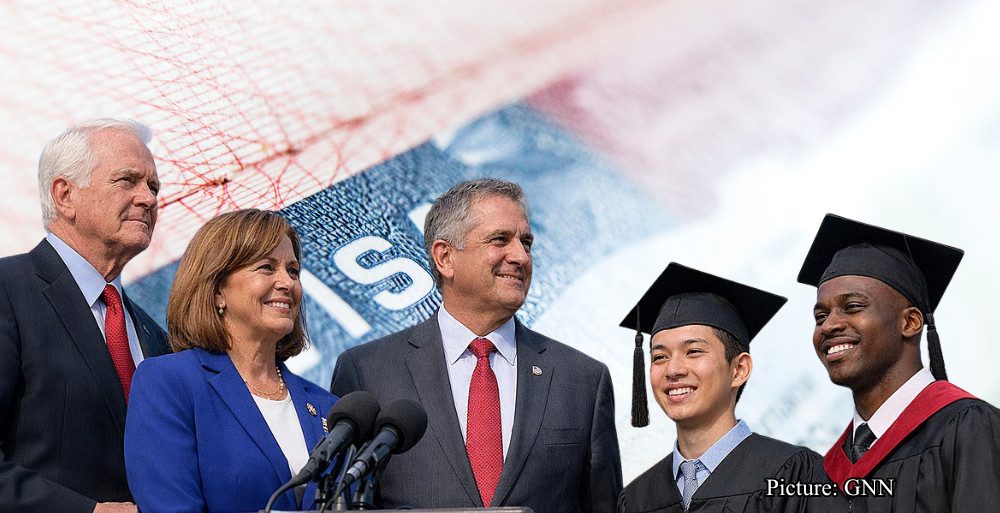
A bipartisan coalition of U.S. lawmakers has introduced the Keep Innovators in America Act, aiming to codify the Optional Practical Training (OPT) program. This legislation seeks to secure a vital employment pathway for international students, ensuring they can gain essential work experience in the U.S. amid increasing global competition for talented individuals.
A bipartisan group of U.S. lawmakers has introduced the Keep Innovators in America Act, a legislative initiative designed to codify the Optional Practical Training (OPT) program, a crucial work pathway for international students. Representatives Sam Liccardo of California, Jay Obernolte of California, and Indian American Raja Krishnamoorthi unveiled the bill, which seeks to amend the Immigration and Nationality Act to ensure that international students can continue to gain practical work experience relevant to their fields of study after completing their degrees.
The OPT program has served as a vital bridge for many international students, particularly from countries like India, which is one of the largest sources of such students in the United States. With competition intensifying globally for skilled talent, this legislative move reflects the urgency of retaining qualified individuals who contribute significantly to the U.S. economy.
Historical Context of the OPT Program
For over three decades, the OPT program has operated under executive rulemaking, enabling international students to work in the U.S. for up to 12 months after graduation, with an additional 24-month extension available for those in STEM fields. The program has been maintained through various presidential administrations, regardless of party affiliation. Lawmakers supporting the Keep Innovators in America Act argue that formalizing the program into law will provide long-term stability and safeguard against sudden policy changes that could disrupt opportunities for thousands of international graduates.
“We have a choice: educate the best and brightest students in the U.S. to help America succeed, or send them home to China, India, and other rivals to launch companies to compete against us,” Liccardo stated, highlighting the importance of retaining talent that could bolster the U.S. economy. This sentiment underscores a broader concern that without supportive legislation, the U.S. risks losing innovative minds to other countries.
Clarifying U.S. Immigration Policy
The introduction of this legislation comes in the wake of previous signals from the Trump administration, which had indicated that the OPT program could be subject to elimination. This uncertainty raised alarms among universities, employers, and students alike, all of whom rely heavily on the program as a pathway to longer-term employment opportunities. Obernolte emphasized that codifying the OPT program would bring much-needed clarity and accountability to a widely utilized system. He stated, “Codifying the Optional Practical Training program provides needed clarity and accountability for a program that allows students to gain practical experience in their field of study.”
The Economic Impact of International Students
International students are not only vital to the academic landscape but also represent a significant economic force within the United States. According to recent estimates, during the 2024–2025 academic year, international students contributed approximately $42.9 billion to the U.S. economy, supporting businesses, research institutions, and local communities. In that same period, more than 290,000 students participated in the OPT program, with many pursuing degrees in critical fields such as science, technology, engineering, and mathematics (STEM), which are currently experiencing persistent worker shortages.
The economic implications of retaining international talent are profound. Industry groups, educational advocates, and economic analysts have underscored the importance of the OPT program in maintaining the U.S.’s competitive edge in the global marketplace. Jill Welch from the U.S. for Success Coalition stated that Congress has “an opportunity to provide clarity and stability by codifying OPT and ensuring the United States remains the world’s leading destination for global talent.” This perspective reflects a growing consensus on the necessity of maintaining and enhancing the OPT program as an essential component of U.S. immigration and economic policy.
Support from Industry Leaders
The proposed legislation has garnered support from various industry leaders and advocacy groups. Linda Moore, president and CEO of TechNet, characterized the bill as “a smart, bipartisan step to strengthen U.S. innovation and competitiveness.” Similarly, Todd Schulte of FWD.us remarked that allowing graduates to work after finishing school “is not just common sense, it is essential to our country’s long-term economic strength.”
Comments from Benjamin Johnson, executive director of the American Immigration Lawyers Association, further emphasize the role of international students as “a cornerstone of America’s innovation pipeline and a powerful driver of local economies.” These endorsements highlight a broad consensus on the importance of the OPT program in fostering innovation and supporting economic growth across the nation.
Looking Ahead
As the Keep Innovators in America Act moves through the legislative process, its proponents face the challenge of securing bipartisan support to ensure its passage. The implications of this legislation extend beyond the immediate benefits of retaining talent; it also reflects a strategic approach to maintaining the U.S.’s status as a global leader in innovation and economic development.
Should the bill pass, it would mark a significant step in U.S. immigration policy, potentially reshaping the landscape for international students and reinforcing the commitments of American lawmakers to foster a welcoming environment for global talent. As the debate continues, the focus remains on balancing the needs of the domestic workforce while embracing the contributions of international graduates who are poised to drive future economic growth.