






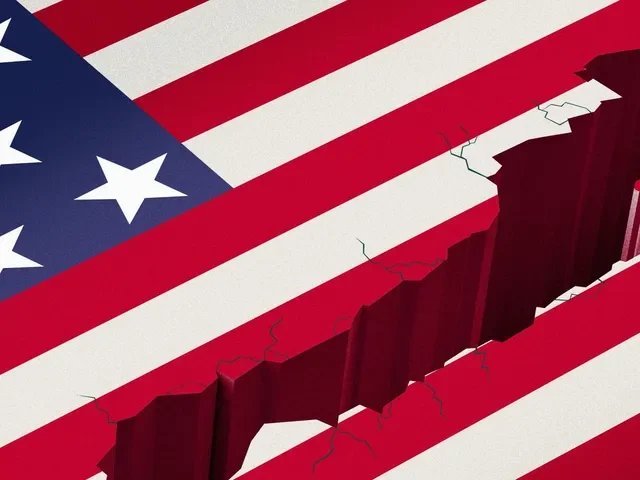
Inside Silicon Valley’s fear that this is the last chance to build generational wealth before AI rewrites the rules of money
For more than a century, the American Dream has been anchored in a simple promise: work hard, take risks, and prosperity will follow. But in the heart of the world’s most influential innovation hub, that belief is eroding. Across Silicon Valley, a quiet but profound anxiety is taking hold — a sense that the traditional pathways to success are collapsing just as artificial intelligence accelerates toward an uncertain future.
What was once a culture defined by optimism and moonshot ambition is now marked by urgency, even desperation. Founders, engineers, and investors increasingly fear that the window to build generational wealth is closing, and that AI may soon reshape the economy so dramatically that money itself becomes less meaningful.
A New Gold Rush — With a Countdown Clock
Silicon Valley has always thrived on the idea of outsized opportunity. But today’s rush into AI startups, foundation models, and automation tools feels different. It’s not just enthusiasm — it’s a race against time.
Many in the tech world believe that AI will concentrate economic power in unprecedented ways. If a handful of companies control the most advanced models, they may also control the future of productivity, labor, and value creation. In that scenario, the ladder of opportunity narrows dramatically.
This belief is fueling a frantic push to stake claims now — to build, invest, or acquire before AI systems become so capable that human-driven entrepreneurship loses its edge.
The Fear Beneath the Optimism
Publicly, Silicon Valley celebrates AI as a force for progress. Privately, conversations sound more existential.
- Will AI eliminate entire categories of high‑skill work?
- Will wealth creation become decoupled from human effort?
- Will only those who already hold capital benefit from the next wave of innovation?
For many, the fear isn’t just economic — it’s philosophical. If AI can generate code, design products, write content, and optimize businesses faster than humans, what happens to the idea that individuals can build their own destiny?
The American Dream depends on agency. AI threatens to rewrite the script.
A Generation Trying to Get In Before the Door Closes
Younger founders and engineers feel this pressure most acutely. They see AI accelerating faster than any previous technological shift — faster than mobile, faster than cloud, faster even than the early internet.
The result is a mindset that blends ambition with anxiety:
- Start a company now, before AI automates the opportunity.
- Invest now, before valuations explode beyond reach.
- Earn now, before AI reshapes the meaning of labor and compensation.
This is not the optimism of the 2010s. It’s the urgency of a generation that fears being left behind by the very tools it is building.
The Paradox of Abundance
Ironically, the same technology that inspires fear also promises abundance. If AI dramatically increases productivity, society could theoretically enjoy lower costs, shorter workweeks, and greater prosperity.
But Silicon Valley knows that abundance doesn’t automatically translate into equality. Without thoughtful policy, broad access, and intentional design, AI could deepen divides rather than bridge them.
This tension — between abundance and inequality — is at the heart of the tech world’s unease.
Is the American Dream Really Dying?
The American Dream has survived industrial revolutions, world wars, and economic upheavals. It may yet survive the age of AI. But Silicon Valley’s anxiety reveals something deeper: a fear that the future is arriving too quickly for society to adapt.
Whether AI becomes a tool that expands opportunity or a force that concentrates it will depend on choices made now — by technologists, policymakers, and the public.
For the moment, the tech world is racing ahead, driven by a belief that this may be the last great chance to build something meaningful before the rules of wealth, work, and value are rewritten.
And in that race, the American Dream feels less like a promise — and more like a countdown.