







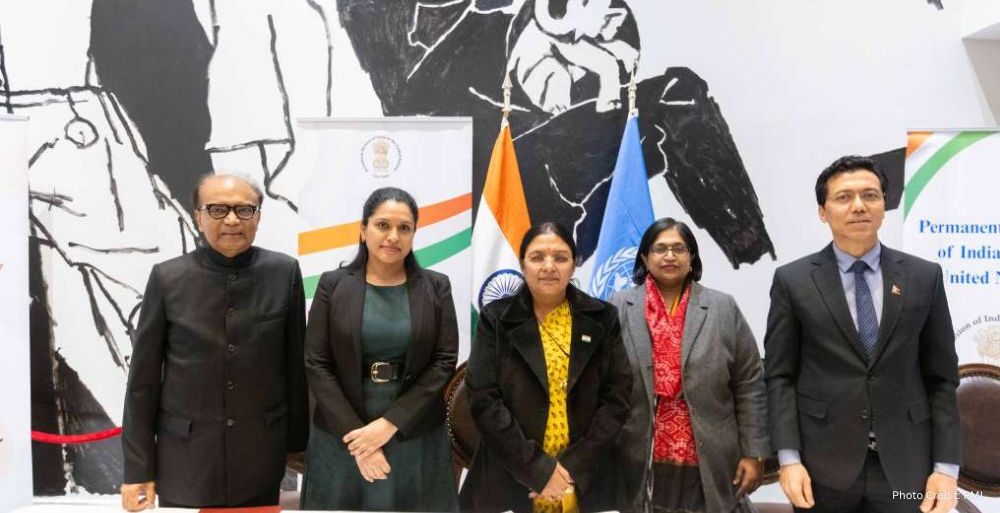
The Permanent Mission of India to the United Nations recently celebrated World Hindi Day in New York to showcase the language’s expanding international footprint and cultural significance.
The Permanent Mission of India to the United Nations hosted a high-level commemorative event on February 2, 2026, to mark World Hindi Day at its official premises in New York. The gathering brought together a diverse group of diplomats, international civil servants, and representatives from the Indian Diaspora to reflect on the linguistic heritage and the modern evolution of Hindi as a global medium of communication. The event served as a platform to discuss the strategic initiatives aimed at elevating the language within the framework of international diplomacy and technological integration.
India’s Minister of State for Women and Child Development, Savitri Thakur, attended the proceedings as the Chief Guest. In her keynote address, Minister Thakur emphasized the profound popular appeal that Hindi maintains both within the borders of India and among millions of speakers across the globe. She detailed the various initiatives undertaken by the Government of India to further popularize the language, specifically noting the necessity of integrating modern technologies and digital tools to streamline the learning process for new speakers. The Minister further underscored the vital role of the Indian Diaspora in maintaining linguistic traditions and fostering strong cultural linkages through the continued use of Hindi in professional and social settings abroad.
Ambassador Yojna Patel, the Deputy Permanent Representative of India to the UN, highlighted a significant milestone in the language’s diplomatic journey. She noted that through the persistent efforts of the Permanent Mission, Hindi has been officially included in the list of non-official languages at the United Nations. This inclusion represents a major step toward greater linguistic inclusivity at the world body. Ambassador Patel described Hindi as being synonymous with the vibrant and multifaceted cultural landscape of India. She also drew attention to the ongoing webcast of UN News in Hindi, a collaborative initiative between the Government of India and the United Nations Department of Global Communications. To date, the Indian government has contributed more than USD 8 million to ensure the sustainability and reach of this project, ensuring that the work of the UN is accessible to a broader audience.
The event also featured perspectives from international representatives, illustrating the cross-border influence of the language. Permanent Representative of Nepal, Ambassador Lok Bahadur Thapa; Permanent Representative of Mauritius, Ambassador Milan Jaya Meetarbhan; and Deputy Permanent Representative of Guyana, Ambassador Trishala Simantini Persaud, shared insights into how Hindi has shaped the socio-cultural fabric of their respective nations. Each speaker reflected on the historical and personal significance of the language, characterizing it as more than just a tool for dialogue, but as a repository of shared values and collective memory that transcends geographic boundaries.
Ambassador Thapa of Nepal provided a particularly detailed account of the language’s role in his country, which shares deep historical and cultural ties with India. He stated that for a nation as diverse as Nepal, the observance of World Hindi Day serves as a profound affirmation of shared heritage and a commitment to multiculturalism. He described Hindi as a connecting thread that links different generations and regions. According to recent statistical data shared by the Ambassador, approximately 100,000 people in Nepal speak Hindi as their mother tongue, while an additional 225,000 utilize it as a secondary language. This placement makes Hindi one of Nepal’s top 20 national languages out of the approximately 140 spoken within the country.
The socio-economic implications of linguistic commonality were also a focal point of the discussion. Ambassador Thapa noted that Hindi acts as an enabler of economic opportunities between India and Nepal by facilitating smoother trade, promoting tourism, and easing interpersonal communication. He pointed to the common linguistic roots in Sanskrit and the shared use of the Devanagari script as foundational elements that have forged enduring bonds between the two nations. As Hindi currently stands as the third most widely spoken language globally, its relevance is expanding rapidly, driven by its presence in cinema, music, literature, and everyday commerce.
The cultural representatives from Mauritius and Guyana echoed these sentiments, highlighting how the language has been preserved through generations in the Caribbean and the Indian Ocean regions. In these nations, Hindi remains an indispensable part of a multicultural society, finding expression through traditional festivals and contemporary media. The speakers noted that the language provides a sense of belonging and identity for the descendants of the Indian indentured laborers who traveled to these regions over a century ago, serving as a vital link to their ancestral roots and a source of inherited wisdom.
The celebration also served as a moment to recognize the broader implications of the Hindi@UN Project. By bringing the voice of the United Nations closer to people in their native tongue, the project promotes the principle of global multilingualism. This initiative is viewed by many in the diplomatic community as a commendable effort to democratize information and ensure that the humanitarian and developmental goals of the United Nations are communicated effectively to one of the world’s largest linguistic demographics. The presence of senior UN officials and members of the diplomatic corps at the event signaled a growing recognition of the need for such inclusive communication strategies.
The history of World Hindi Day, also known as Vishwa Hindi Diwas, dates back to January 10, 2006, when the Government of India officially designated the day to strengthen efforts for the global promotion of the language. Since its inception, the anniversary has been commemorated annually by Indian embassies and missions worldwide. The choice of January 10 marks the anniversary of the first World Hindi Conference held in Nagpur in 1975, which laid the groundwork for international cooperation in linguistic preservation. Over the last two decades, the observance has grown from a localized celebration into a significant international event that attracts attention from academics, technologists, and policymakers alike.
In addition to formal speeches, the event in New York featured discussions on the future of the language in the age of artificial intelligence and globalized digital media. Participants noted that the proliferation of Hindi-language content on streaming platforms and social media has created new pathways for cultural diplomacy. This soft power, backed by official government support and institutional recognition at the United Nations, is expected to continue driving the language’s global reach. The event concluded with a consensus that the preservation and promotion of Hindi are essential components of a broader commitment to global diversity and the enrichment of the international community’s collective cultural experience.
As the ceremony drew to a close, attendees emphasized that language is the identity of who a people are and the wisdom they pass forward. The successful hosting of the event by the Permanent Mission of India underscores the country’s proactive stance in cultural diplomacy and its desire to see Hindi take a more prominent place on the world stage. With continued investment in translation services and digital education, the reach of Hindi is poised to grow, further bridging the gap between local heritage and global participation.
The 2026 commemoration stands as a testament to two decades of dedicated efforts to honor the language. By reflecting on the progress made since the first World Hindi Day in 2006, the participants in New York reaffirmed their dedication to ensuring that the language remains a vibrant and essential part of the global dialogue for generations to come. The event served not only as a celebration of the past but as a strategic roadmap for the future of Hindi in an increasingly interconnected world.