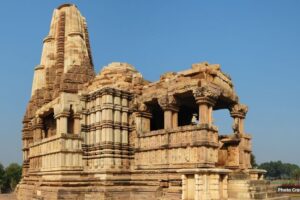







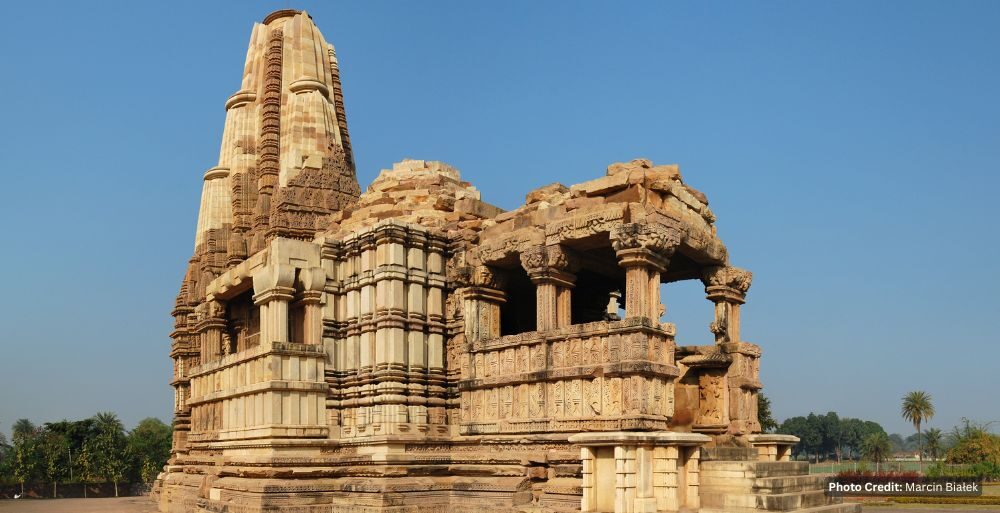
On a mildly cold morning in February 1838, Captain Thomas Seymour Burt, serving with the Royal Bengal Engineers of the East India Company, stood speechless before a set of multiple temples deep in the forests of Central India. The Plymouth-born engineer was on a surveying expedition in the flat-topped hills of the Central Indian plateau, between the towns of Eran and Saugar (Sagar), during a devastating famine. Provoked by his Palki (palanquin) bearers to see the hidden ruins, the thirty-three-year-old British officer ventured into the impenetrable jungle. The distant calls of birds echoed through the forests, and the earthy scent of moss hung in the air. Surrounded by dense foliage and inhabited by wildlife, Burt came upon several crumbling temples, badly ravaged by vandals, lightning, and neglect. With the rustle of leaves overhead, he advanced curiously towards the deserted places of worship. His eyes saw that the outer walls of the magnificent temples were decorated with hundreds of intricately sculpted figures in fine pink sandstone depicting deities, Apsaras, processions with horses and elephants, soldiers, hunters, musicians, and dancers. Some of the sculptures portrayed amorous couples engaged in various acts of lovemaking. Unlike the rest of the world, the physical intimacy presented here was marked by rare openness, embodying a natural, realistic attitude. The daylight filtered through the temple\’s perforated stone openings at specific points as Burt mounted the elevated stone platform. The inner chambers, conversely, remained largely unadorned, with only a few statues.
Burt had accidentally reached Khajuraho, one of the world’s architectural marvels. He was not the first Britisher to visit the spectacular temples. Cornet James Franklin, another military surveyor, had identified the site as Kajrow in 1819. Nevertheless, the erudite Burt, who wrote poetry and travel books, vividly reported the existence of these temples in a detailed account for the Journal of the Asiatic Society of Bengal in 1839. He recorded that the majestic temples were “most beautifully and exquisitely carved as to workmanship”. The imagery on the temples shocked the Victorian sensibilities of the British officer who described the motifs as “extremely indecent and offensive…”. This publication sparked further interest. Major General Sir Alexander Cunningham, often called the “Father of Indian Archaeology”, arrived at the obscure site in 1852 to conduct a systematic scientific study. After examining the inscriptions over three visits, Cunningham concluded that most of the temples dated from the Chandela era of the tenth and eleventh centuries. He, too, was dismayed by the multiple statues of entwined lovers. He wrote, “everywhere there are a number of female figures who are represented dropping their clothes, and thus purposely exposing their persons”. Nevertheless, his descriptions, detailed plans, and archaeological rigor brought the temples back from the brink of oblivion. The Chandela temples now gained their historical significance as one of the finest examples of medieval art in India after almost a millennium of abandonment.
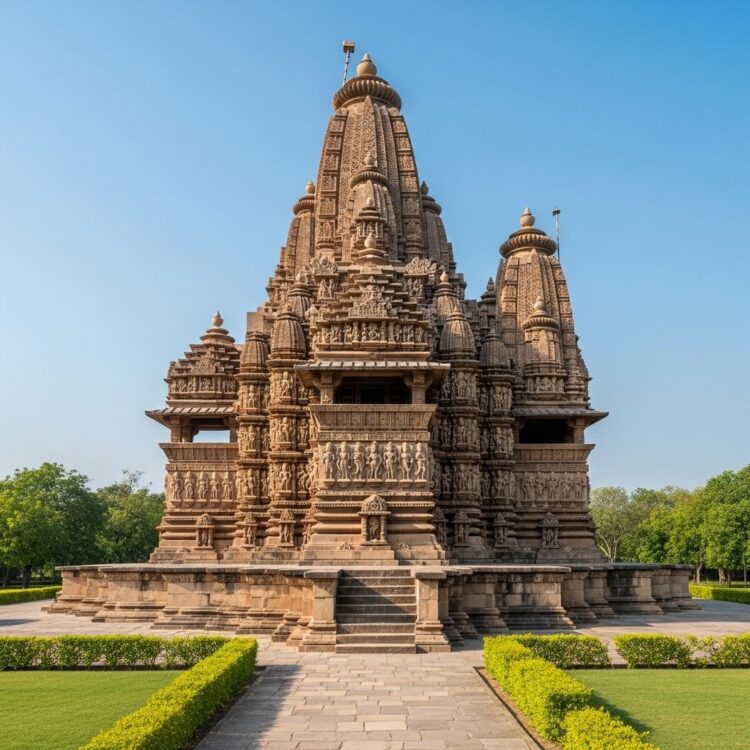
The Chandela Rajput dynasty ruled over a vast region of central India, strategically situated between the Ganga River and the Vindhya mountain range, from 900 to 1150 CE. The valiant armed forces of the Chandelas dominated vital passages to central and southern India, including the region’s waterways and the diamond mines of Panna. This cultural golden age, characterized by peace, prosperity, a stable government, and thriving arts like literature, theater, dance, music, sculpture, and architecture, lasted more than 250 years. In this period, the Chandela kings embarked on an ambitious temple-building spree around Khajuraho. They constructed as many as eighty-five temples in the Nagara style, including Jain temples, by assembling blocks without mortar or plaster as architectural tributes to the gods. The crown jewel of the temples – Kandariya Mahadev Temple, dedicated to Lord Shiva, boasts 870 sculptures, and its over 30-meter-high shikhara evokes Mount Kailasa (Shiva’s abode). The high-quality sandstone found in the area responded so well to the chisel that skilled temple artists created exquisite sculptures with intricate details, including strands of hair, manicured nails, and ornaments. The sculptors’ artistic hands freely depicted the four goals of life – Dharma (duty), Kama (desire/pleasure), Artha (prosperity/purpose), and Moksha (liberation). The temples elevated all facets of human experience, including desire, passionate love, and procreation, to a divine plane. and demonstrated that the spiritual and sensual realms coexisted harmoniously. Khajuraho, adorned by temples and lakes, attained prominence as a sacred centre and was mentioned in accounts by travellers of the period.
As the news of the stunning temples and the kingdom’s immense wealth spread, invading armies from across the Khyber Pass made their way into Central India. There were multiple standoffs, sieges, and bloody battles to defend the temples. Eventually, persistent incursions culminated in the extensive desecration of the temple city and the ransacking of its treasures by marauders, invaders, and zealots. Over the centuries, the surrounding foliage and the presence of fierce tigers prevented further destruction and pilferage of its works of art. At the time of India’s independence in 1947, just over twenty of these architectural masterpieces, spread across six square kilometers, had withstood the test of time.
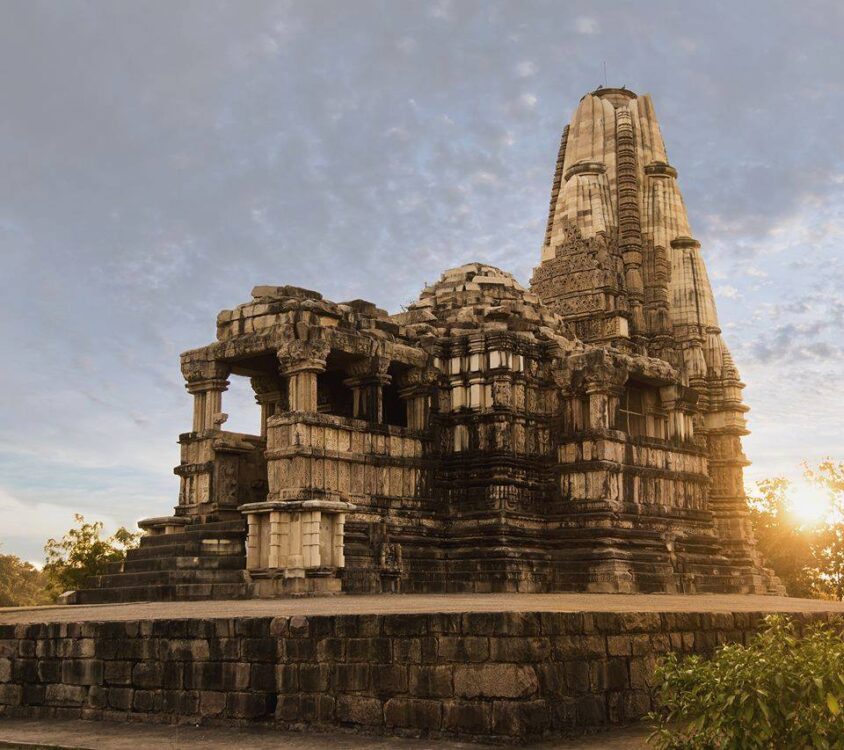
In mid 1955, Jai Krishna Chowdhry, an Indian Administrative Service officer and the Commissioner of the Bundelkhand division, received an important dispatch that the Prime Minister of India would be visiting the Chandela temple complex. Chowdhury set off for sleepy Khajuraho, only to find the temples in a state of dilapidation, overgrown with vegetation, and overrun by Bats. A massive effort was undertaken to spruce up the entire area before Jawaharlal Nehru’s trip. On September 12, 1955, the PM’s cavalcade arrived in Khajuraho, with Nehru’s two fingers bandaged after his right hand had accidentally gotten caught in the car door. Disregarding the intense throbbing pain, he readily accompanied Chowdhury on the tour of the temples. Nehru, with his global perspective and profound understanding of history, instantly appreciated the Chandela era’s artistic talent and spiritual dedication. For him, the Khajuraho temples, dedicated to Shiva, Vishnu, Surya, Shakti, and Jain tirthankaras, ranked among India\’s most significant monuments. Following Nehru’s orders, Bharat Sarkar promoted Khajuraho as a major tourist destination and showcased it internationally as India\’s unique gift to the world.
A few years later, a distinguished European dignitary visited Khajuraho, drawn by its renowned temples. In response, the State Government hurriedly invited Acharya Rajneesh (later known as Osho), an accomplished Professor of Philosophy from Sagar University, to guide the tour. Acharya Rajneesh, familiar with Khajuraho and noted for his intellectual prowess, provided the important visitor with a comprehensive overview, highlighting the temple architectural principles and the tantric doctrines of ancient India, as well as Buddhism and Jainism. He interpreted the symbolism present throughout the temples, from the exterior walls to the east-facing inner sanctums, and elaborated on the concept of uniting the external and inner selves to represent cosmic harmony. The visitor left enthralled by the depth of the Indian spiritual wisdom.
Since 1986, Khajuraho, the storehouse of India’s spiritual splendor, has been a UNESCO World Heritage Site for its “creative genius”. After assuming office in 2014, Prime Minister Narendra Modi made it his mission to bring back works of art that were looted from India before and after British colonialism. In 2011, the Department of Canadian Heritage seized a 900-year-old Nayika (heroine) statue, also known as the Parrot Lady, from the UNESCO-protected site of Khajuraho, in Edmonton, Alberta. In line with the 1970 UNESCO Convention, the sandstone sculpture was returned to Prime Minister Narendra Modi on April 15, 2015, by Canadian Prime Minister Stephen Harper at the Canadian Parliament Library. Meanwhile, the 11th-century sandstone idol of Harihara, believed to originate from Khajuraho, remains on display at the British Museum in London.
In February 2026, exactly 188 years since Burt stumbled upon the magic of the Chandela Temples, the Airbus softly lands on the tarmac, and scores of tourists make their way into the chrome and glass airport terminal of Khajuraho. At first glance, Khajuraho appears as an idyllic Indian village of just 20,000 inhabitants, surrounded by low-lying hills, forests, waterbodies, and lush green agricultural fields. The timeless expanse of the three groups of temples rises at a distance not as monuments but as a living philosophy. As the sun goes down, a son et lumière, under vibrant floodlights, accompanied by the dramatic baritone of Amitabh Bachchan, transports tourists to a different time and place. The annual Khajuraho Dance Festival, held in the last week of February, is now over half a century old, and the best exponents perform in the precincts of the Western group of temples. The walkable town also features the Archaeological Museum, the Adivart State Museum of Tribal and Folk Art, and a few world-class resort hotels that attract destination weddings. The small army of multilingual tourist guides and cab drivers is at hand to help international travelers navigate the temples and nearby attractions such as the Chandela forts, Bageshwar Dham, and the Panna Tiger Reserve. Despite the magnetism of the perfect fusion of art, history, and mysticism in the heart of India, surprisingly fewer than 500,000 Indian and international tourists visit Khajuraho annually. The unparalleled craftsmanship and the sublime beauty of Khajuraho’s temples must be fully explored by global travelers. For every visitor, Khajuraho remains a homage to India’s artistic, intellectual, and spiritual expression.
Source Credit: Business World