







Chennai: In a significant milestone for cultural preservation and academic collaboration, The Centre for South African Heritage was formally inaugurated in Chennai at La Woods Hotel, marking a new chapter in documenting and celebrating the history of Indians of African descent living in South Africa.
The Centre was officially opened by South African representatives Selvan Naidoo, Verushka Pather, and Dinesh Naidoo, alongside Indian dignitaries K. M. Gopinath, Thiru Karunanidhi Duraimanickam, and Agnesh S.K. The gathering brought together scholars, community leaders, and members of the Indian and South African diaspora, underscoring the Centre’s role as a bridge between the two nations.
A Living Archive of South African Indian History
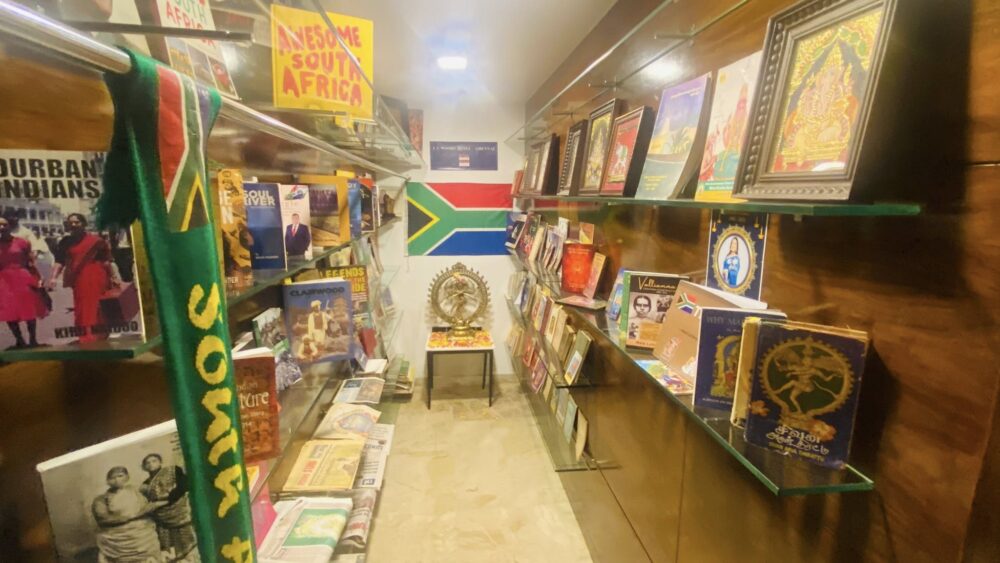
Conceived as a repository of collective memory, the Centre for South African Heritage houses an extensive collection of books, rare publications, newspapers, and research material chronicling the social, cultural, and political journey of South African Indians. The initiative is the brainchild of K. M. Gopinath, whose personal archive forms the foundation of the Centre.
Over the years, Gopinath’s collection has served as a vital academic resource for Indian students, South Africans visiting Chennai, and doctoral researchers—particularly those associated with the Jawaharlal Nehru University Department of African Studies. By making these materials publicly accessible, the Centre enables deeper scholarly engagement with the South African Indian experience, an area often underrepresented in mainstream historical narratives.
“The Centre is not merely an archive; it is a space for dialogue, research, and remembrance,” said one attendee at the inauguration. “It preserves stories of migration, resistance, identity, and resilience that link India and South Africa across generations.”
A Legacy Rooted in Language and Learning
Gopinath’s commitment to South African Indian heritage is deeply intergenerational. His father, Vidwan, ‘Saiva Pulavar’ K. M. Krishnamurthy, and his grandfather, Prof. K. M. Venkataramaiah, played pivotal roles in supporting South African Tamil organizations and stalwarts such as N. C. Naidoo, Dixon Pillay, and V. M. Reddy. Together, they assisted in publishing and refining Tamil-language educational materials crucial for South African schools and cultural institutions.
Among the most notable contributions were Tamil learning resources such as “Tamil Primer,” “Easy Way to Tamil,” and “Speak in Tamil.” Gopinath himself was instrumental in compiling, transliterating, proofreading, and printing these works, ensuring linguistic continuity for generations of South African Tamils navigating life far from their ancestral homeland.
From Railways to Diaspora Service
Gopinath’s professional journey further reflects his lifelong dedication to the diaspora. After a distinguished career with Southern Railways, where he served as a Superintendent, he opted for voluntary retirement to devote himself fully to community service connected to South Africa. This decision, inspired by his father’s legacy, reinforced his role as a cultural connector between continents.
Today, Gopinath serves as Vice President at Welcome Tours – La Woods Hotels Group, an organization recognized for its warm engagement with diaspora Indians. Observers note that this role aligns seamlessly with his mission, offering new avenues to host, support, and connect South Africans and other members of the global Indian diaspora visiting Chennai.
Cultural Diplomacy in a BRICS Era
The opening of the Centre for South African Heritage comes at a time when India and South Africa are deepening cooperation within the BRICS framework. Beyond economics and geopolitics, the Centre highlights the importance of people-to-people connections in shaping global partnerships.
By anchoring South African Indian history in Chennai, the Centre creates a symbolic and practical space for ongoing cultural exchange. Scholars believe it will encourage collaborative research, student exchanges, and cultural programming that reflect shared histories of colonialism, migration, and resistance.
“This Centre reinforces the idea that diaspora histories are not peripheral—they are central to understanding our global present,” said a South African participant at the event.
As Chennai welcomes this new institution, the Centre for South African Heritage stands poised to become a hub for learning, memory, and collaboration—honoring the past while building stronger cultural ties between India and South Africa for generations to come.