






President Donald Trump has sharply escalated pressure on Venezuela, bringing Washington closer to a potentially serious confrontation with the South American nation and its strongman leader, Nicolás Maduro. In recent days, the US seized a massive oil tanker believed to be carrying Venezuelan crude to Cuba and imposed additional sanctions on Maduro’s inner circle, signalling a renewed and more aggressive phase in the administration’s campaign.
The seizure of the sanctioned vessel, Skipper, marks the latest move in what US officials describe as a multi-front effort against a government they label “illegitimate.” The Trump administration has repeatedly accused Maduro of presiding over a narco-state, enabling mass migration to the United States, and undermining regional stability.
Trump has also authorised lethal military strikes against alleged drug-smuggling boats operating near Venezuelan waters, expanded US military deployments in the Caribbean and Latin America, and openly suggested that Maduro’s time in power is limited. “Maduro’s days are numbered,” Trump has said on multiple occasions, while declining to rule out military action inside Venezuela.
When asked this week whether the campaign is driven by oil interests or drug enforcement, Trump suggested it was about much more. “Well, it’s about a lot of things,” he told reporters at the White House. “But one of the things it’s about is the fact that they’ve allowed millions of people to come into our country from their prisons, from gangs, from drug dealers and from mental institutions.”
Analysts say Trump’s Venezuela strategy is being shaped by four overlapping factors: migration, drugs, energy resources, and the long-standing goal of removing Maduro from power.
Migration Pressures
Migration remains one of Trump’s most frequently cited justifications for confronting Venezuela. He has repeatedly blamed Maduro for what he claims is a deliberate export of criminals and prisoners to the United States.
“We just have to take care of Venezuela. They dumped hundreds of thousands of people into our country from prisons,” Trump said last month.
Venezuela remains one of the world’s largest sources of migrants, driven by economic collapse and political repression. However, most Venezuelan migrants—over 80 percent—live elsewhere in Latin America and the Caribbean. According to the Migration Policy Institute, around 770,000 Venezuelan immigrants lived in the US as of 2023, accounting for less than 2 percent of the total immigrant population.
Still, the growth has been dramatic. The Venezuelan-born population in the US rose from about 33,000 in 1980 to 770,000 in 2023. Following an October Supreme Court ruling, more than 250,000 Venezuelans lost Temporary Protected Status (TPS), leaving many vulnerable to deportation after the programme expired in November.
Drugs and Maritime Strikes
Trump has also framed Venezuela as a major hub for narcotics trafficking, accusing the Maduro regime of flooding the US with illegal drugs. This narrative has been used to justify a lethal maritime campaign targeting suspected drug-smuggling vessels.
Since early September, the US military has conducted at least 22 strikes in the Caribbean and eastern Pacific, killing at least 87 suspected traffickers, according to administration officials. Defense Secretary Pete Hegseth has come under intense scrutiny after reports that survivors of a September strike were later killed—an incident Democrats have described as a potential war crime. Hegseth has denied ordering the killings.
Administration officials argue the strikes save American lives. “Every vessel we stop prevents thousands of deaths,” a senior official said. However, lawmakers briefed on the operations have noted that the boats were believed to be transporting cocaine, not fentanyl—the drug driving the US overdose crisis. Colombia, not Venezuela, remains the world’s largest cocaine producer.
Trump has nonetheless touted the campaign as a major success. “If you look at drug traffic, drug traffic by sea is down 92 percent,” he said Thursday, adding that enforcement operations could soon expand “on land too.”
Oil, Minerals and Economic Leverage
Venezuela’s vast oil reserves—among the largest in the world—remain a critical factor. Oil accounts for nearly 90 percent of the country’s export revenues, making tanker seizures a powerful economic weapon.
The Skipper, previously sanctioned in 2022 and sailing under a different name, was reportedly carrying more than 1 million barrels of oil and falsely flying Guyana’s flag. Experts say continued seizures could cripple Venezuela’s ability to import food, purchase weapons, and maintain basic government functions.
“So you could get a complete collapse in Venezuelan oil exports if the US does this,” said Francisco R. Rodríguez, senior research fellow at the Center for Economic and Policy Research. “It would be equivalent to imposing a de facto naval blockade of Venezuela.”
While analysts believe a formal blockade is unlikely—given international backlash and US reliance on Venezuelan oil imports—incremental tanker seizures could achieve similar results.
The Push to Oust Maduro
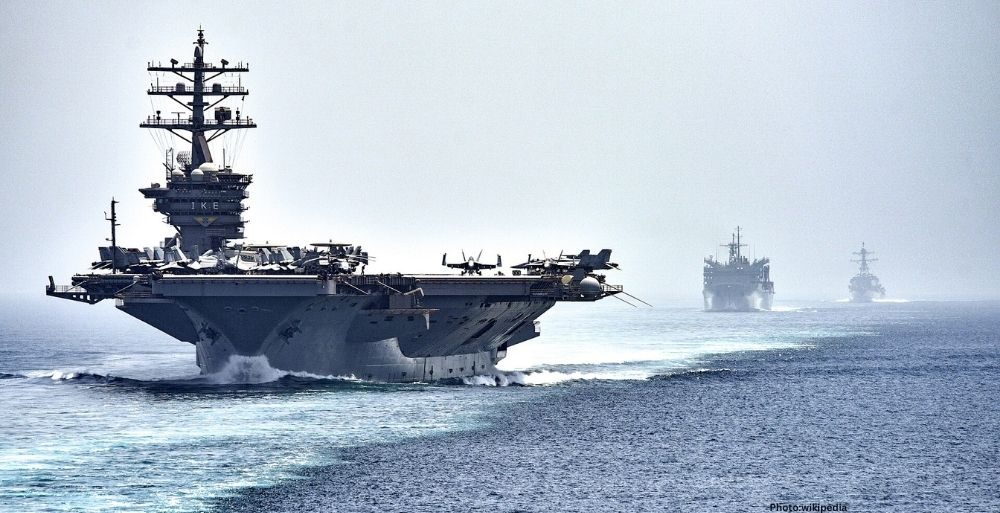
Underlying all these measures is the long-standing objective of weakening or removing Maduro. Trump has not ruled out deploying US troops and has dramatically expanded the American military footprint in the US Southern Command (Southcom) region, including F-35 fighter jets, warships, Marines, surveillance aircraft, submarines, and the aircraft carrier USS Gerald R. Ford.
Though Trump has hinted that strikes inside Venezuela could come “soon,” he has also left the door open to negotiations, saying he recently spoke with Maduro.
Secretary of State Marco Rubio, who also serves as Trump’s national security adviser, has denied that the US is pursuing regime change but has expressed scepticism about any deal with Caracas. “At the end of the day with Maduro, if you wanted to make a deal with him, I don’t know how you’d do it,” Rubio said on Fox News. “He’s broken every deal he’s ever made.”
Rubio, a long-time Cuba hawk, sees weakening Maduro as a strategic blow to Havana. According to reports, the seized tanker was part of Venezuela’s efforts to financially support Cuba.
As tensions rise, analysts warn that Trump’s escalating pressure campaign risks tipping into open conflict—one that could reshape regional geopolitics and further destabilise Venezuela’s already fragile economy.