









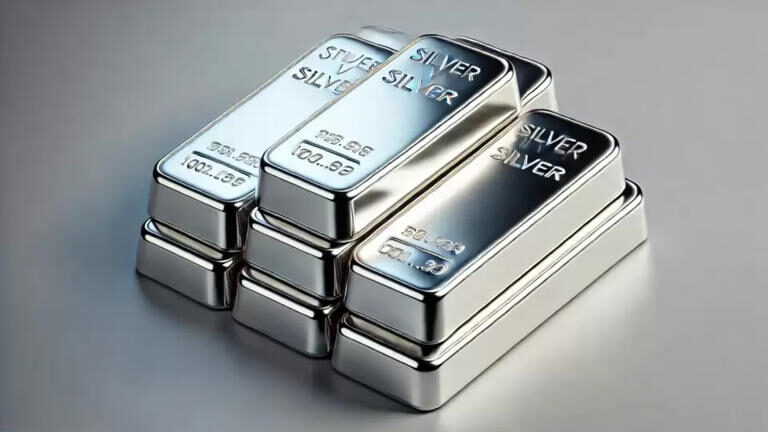
Silver emerged as one of the most extraordinary performers in global commodity markets in 2025, registering a price surge of over 160% within a single year. The momentum has not faded with the calendar change either. In the first week of 2026 alone, silver prices climbed more than 7%, underscoring that the rally is not merely speculative excess but the result of deeper structural forces reshaping the global economy.
While 2025 was also a historic year for gold — which repeatedly touched record highs — silver’s ascent tells a more complex and compelling story. It is a narrative shaped by financial uncertainty, shifting monetary policy, and, crucially, the accelerating global transition toward clean energy and advanced technology.
“Silver is no longer just a precious metal,” a commodities strategist observed. “It has become a strategic industrial resource, and markets are beginning to price it that way.”
Monetary Uncertainty and Investor Anxiety
One of the primary tailwinds for silver in 2025 was the same force that propelled gold: eroding investor confidence. Global trade tensions, persistent geopolitical conflicts, and supply-chain realignments unsettled markets throughout the year. At the same time, the US Federal Reserve continued its easing cycle, reinforcing fears of prolonged low interest rates and currency debasement.
“In an environment where cash yields little and inflation risks linger, hard assets regain appeal,” a senior market analyst noted. “Silver benefited from this shift just as much as gold, if not more.”
Unlike equities or bonds, precious metals are not tied to corporate earnings or government debt. As a result, both institutional and retail investors turned to silver as a hedge against volatility and policy uncertainty.
Where Silver Differs From Gold
Despite sharing safe-haven status, silver differs fundamentally from gold in one crucial respect: industrial demand.
Gold is primarily accumulated as a store of value — purchased by households, investors, and central banks. Silver, by contrast, is deeply embedded in the real economy. Its unique physical properties — high electrical conductivity, thermal efficiency, and antimicrobial qualities — make it indispensable across a range of industries.
“Silver sits at the intersection of finance and manufacturing,” an industry expert said. “That dual identity is what makes its price movements so powerful.”
The Green Energy Revolution Effect
The explosive growth of renewable energy played a defining role in silver’s 2025 rally. Solar panels, electric vehicle batteries, and advanced energy storage systems all rely heavily on silver. As governments worldwide doubled down on climate commitments and net-zero targets, demand for these technologies surged — and silver demand rose alongside them.
The solar sector, in particular, emerged as a major driver. Each photovoltaic panel requires silver for efficient electricity transmission. With global solar installations expanding at record speed, consumption of the metal soared.
“Every clean-energy milestone translates into higher silver usage,” a renewable energy researcher explained. “This isn’t a cyclical trend — it’s a structural one.”
Supply Constraints Add Fuel
On the supply side, silver markets faced growing pressure. Mining output struggled to keep pace with rising industrial demand, while years of underinvestment in new silver projects limited supply expansion. Environmental regulations, rising production costs, and geopolitical risks in key mining regions further constrained output.
This imbalance between supply and demand amplified price movements. “When industrial demand accelerates faster than production capacity, prices don’t just rise — they leap,” a mining sector analyst said.
Why the Rally Hasn’t Ended in 2026
The strong start to 2026 suggests that markets are reassessing silver’s long-term value rather than reacting to short-term news. As interest rate uncertainty persists and clean-energy investments accelerate, silver continues to benefit from both financial hedging demand and real-world consumption.
Moreover, with global electrification, battery innovation, and solar deployment expected to expand further, analysts believe silver’s strategic importance will only grow.
“Silver is quietly becoming one of the most critical metals of the modern economy,” a global commodities fund manager said. “The 2025 rally may not be the end of the story — it could be the beginning.”
As investors and industries alike recalibrate their priorities, silver’s remarkable surge appears to reflect not just market enthusiasm, but a profound shift in how the world values this once-underestimated metal.