







The paper is an embarrassment. It’s, I think, the worst paper I’ve ever seen in the history of the Federal Reserve System… the people associated with this paper should presumably be disciplined.
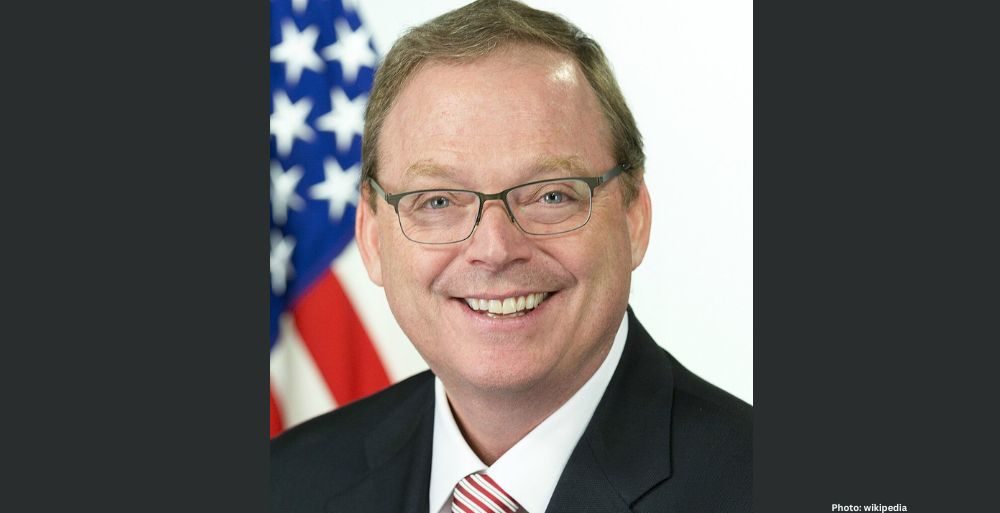
White House National Economic Council Director Kevin Hassett issued a sharp public rebuke of the Federal Reserve Bank of New York on Wednesday, calling for the formal discipline of researchers who authored a paper concluding that American businesses and consumers bear the overwhelming majority of the cost of President Trump’s global tariffs. Speaking to CNBC, Hassett characterized the scholarship as partisan and fundamentally flawed, contradicting the administration’s long-standing assertion that foreign exporters absorb the bulk of import tax costs through price reductions. The director’s comments represent a significant escalation in the tensions between the executive branch and the quasi-independent Federal Reserve System, particularly regarding the methodology used to calculate the domestic impact of the 10% to 25% baseline tariffs implemented earlier this year.
The disputed research, published by the New York Fed’s Center for Microeconomic Data, indicates that the average U.S. tariff rate rose from 2.6% to 13% over a twelve-month period, leading to immediate domestic economic pressure. According to the analysis, American entities bore 94% of the tariff burden between January and August, with the figure settling at approximately 86% by November. These findings align with recent data from the Congressional Budget Office (CBO) and a separate study from the JPMorganChase Institute, which found that tariffs paid by midsized U.S. firms tripled during the same timeframe. Hassett, however, dismissed the study’s findings as an ideological “embarrassment,” asserting that the authors failed to account for shifts in global supply chains and falling import prices that occurred during the first half of the year.
The controversy centers on the “pass-through” rate of tariffs—the degree to which an import tax is added to the final price of a product. While the Trump administration has frequently argued that foreign countries “pay” the tariffs by lowering their prices to remain competitive in the U.S. market, the New York Fed researchers found no evidence of such a trend. Instead, their data suggests that prices for goods leaving foreign ports remained stable, meaning the tax was added on top of the existing price once the goods reached U.S. Customs. This resulted in an estimated $40 billion annual increase in costs for U.S. businesses and households, a figure the administration disputes as a static analysis that ignores dynamic market adjustments.
“The paper is an embarrassment. It’s, I think, the worst paper I’ve ever seen in the history of the Federal Reserve System… the people associated with this paper should presumably be disciplined.”
Hassett’s demand for professional repercussions for non-partisan researchers has drawn sharp criticism from economists and former Fed officials, who view the move as an attempt to politicize economic data. The New York Fed is one of 12 regional banks in the Federal Reserve System and operates with a high degree of autonomy to provide objective data to the Board of Governors. By calling for the “discipline” of these authors, Hassett is challenging the traditional “firewall” that separates the White House from the central bank’s technical staff. This rhetoric comes at a sensitive time for the Federal Reserve, as it navigates a complex inflationary environment while attempting to maintain its reputation for independence from the prevailing political cycle.
The administration continues to defend its trade policy as a necessary mechanism to revitalize domestic manufacturing and reduce the national trade deficit, which reached record highs in previous quarters. Hassett argued that the New York Fed’s study ignored the “deterrence effect” of tariffs, which he claims has forced companies to move production back to the United States. He suggested that by focusing only on the price of imported goods, the researchers missed the broader macroeconomic benefits of the policy. However, critics point out that the Manufacturing Purchasing Managers’ Index (PMI) has shown volatility since the tariffs were enacted, suggesting that the “reshoring” of industry has been slower and more costly than the administration initially projected.
The timing of this dispute is critical, as the Supreme Court prepares to rule on whether the president exceeded his legal authority by using emergency powers to bypass Congress to impose these baseline taxes. The legal challenge, brought by a coalition of retailers and trade groups, argues that the administration used an overly broad interpretation of the International Emergency Economic Powers Act (IEEPA). If the New York Fed’s data is used in legal briefs to prove “irreparable harm” to the American economy, it could weaken the government’s defense. Hassett’s public dismissal of the report may be seen as a preemptive effort to delegitimize the study before it can influence judicial or public opinion.
Furthermore, the economic impact of the tariffs has created a rift within the private sector. Large multinational corporations with diversified supply chains have managed to mitigate some costs, but small and medium-sized enterprises (SMEs) report being “crushed” by the sudden increase in input costs. The JPMorganChase Institute report highlighted that firms in the Midwest and South—regions critical to the administration’s political base—have seen the sharpest rise in tariff-related expenditures. These firms often lack the leverage to negotiate lower prices from foreign suppliers, forcing them to either reduce profit margins or pass the costs directly to consumers, contributing to the 3.4% rise in the Consumer Price Index (CPI) observed in the most recent fiscal quarter.
Despite the internal and external pushback, the White House shows no signs of tempering its trade stance. Hassett reiterated that the administration remains committed to a “reciprocal” trade model, regardless of the short-term friction reflected in regional Fed reports. He suggested that the Federal Reserve leadership should take immediate steps to ensure that future publications from the regional banks align more closely with “rigorous” economic standards, which he defines as those accounting for the administration’s stated goals of industrial realignment. The standoff highlights a fundamental disagreement over whether the role of the Federal Reserve is to report raw economic outcomes or to interpret data through the lens of current executive policy.
As the debate over tariff efficacy continues, the market remains on edge. Investors have expressed concern that the public attacking of Federal Reserve staff could lead to a loss of confidence in U.S. economic institutions. If the independence of the Fed’s research is perceived to be compromised by political pressure, it could affect the credibility of U.S. Treasury bonds and the stability of the dollar. For now, the New York Fed has not officially responded to Hassett’s call for disciplinary action, maintaining its policy of allowing its researchers to publish peer-reviewed findings based on available trade and customs data.