






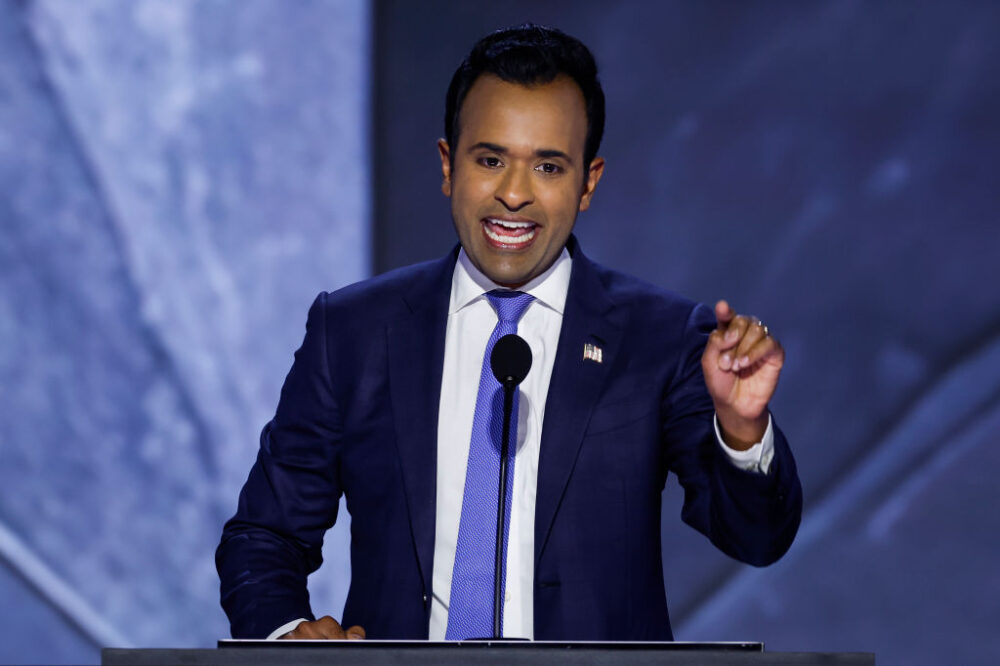
Once known for incendiary rhetoric and confrontational politics, Vivek Ramaswamy is now attempting a strategic reinvention—casting himself as a “conservative without being combative” as he eyes the Ohio governor’s race and seeks to redefine his role within a Republican Party deeply divided over identity, extremism and tone.
Ramaswamy, the biotech entrepreneur-turned-politician who burst onto the national stage during the 2023 Republican presidential primaries, built his early political brand on provocation. He spoke of a “cold cultural civil war,” dismissed concerns about white supremacy, and labeled rivals “corrupt,” earning both fervent supporters and fierce critics. Two years later, the 40-year-old Ohio native is striking a noticeably different note.
A Shift in Tone at a Critical Moment
The recalibration was on full display this month at Turning Point USA’s AmericaFest, where Ramaswamy openly criticized white nationalist activist Nick Fuentes and denounced what he called the “rising prevalence of the blood-and-soil view” within conservative politics. The remarks marked a sharp departure from his earlier skepticism toward claims of extremism on the right.
Invoking former President Ronald Reagan, Ramaswamy leaned into a more inclusive vision of American identity. Quoting Reagan’s famous words about the United States being a nation anyone can become part of, he emphasized civic belonging over ethnicity—language designed to distance himself from the far-right fringes now embroiling the conservative movement.
The pivot comes as Ramaswamy prepares a run to succeed Ohio Governor Mike DeWine, a low-key conservative with a reputation for pragmatism. While DeWine has not yet endorsed Ramaswamy, he has said publicly that he wants to better understand the candidate’s positions and long-term vision.
From National Firebrand to State-Level Contender
Ramaswamy’s earlier political rise was marked by radical policy proposals—raising the voting age to 25, abolishing the FBI, and sharply criticizing climate change policy—paired with combative debate performances. During one primary debate, former New Jersey Governor Chris Christie mocked him as “a guy who sounds like ChatGPT,” while former UN Ambassador Nikki Haley famously called him “scum.”
Now, his focus has narrowed to Ohio-specific issues such as taxes, education reform and fiscal policy. Campaign adviser Jai Chabria says Ramaswamy has traveled to all 88 counties in the state, emphasizing retail politics and grassroots engagement over viral soundbites.
“He’s actually going where voters are and meeting them face to face,” Chabria said, calling the effort critical to introducing Ramaswamy beyond his national reputation.
A Crowded Political Battlefield
Democrats see Ramaswamy’s potential nomination as an opportunity. They are expected to rally behind Amy Acton, the former Ohio health director who became a prominent figure during the Covid-19 pandemic. Acton’s campaign has already begun highlighting Ramaswamy’s past remarks, including a controversial 2024 post arguing that American culture had “venerated mediocrity over excellence,” which critics say disparaged American workers.
Former Ohio Governor Ted Strickland, a Democrat, suggested the state could be more competitive than expected. “Ohio has always leaned slightly center-right, but it’s contestable,” he said, adding that Ramaswamy’s polarizing image could energize Democratic voters.
Republicans, however, remain confident. Local party leaders argue that Ohio’s recent voting patterns and Ramaswamy’s alignment with President Donald Trump give the GOP a structural advantage, regardless of internal debates.
Confronting Racism Inside the Party
Perhaps the most notable sign of Ramaswamy’s evolution came in an opinion essay he published in The New York Times, where he urged Republicans to directly confront racism and antisemitism within their ranks. Writing candidly about slurs he has received online—including calls to deport him “back to India”—Ramaswamy acknowledged a reality he once downplayed.
The shift contrasts sharply with his 2023 assertion that he had never encountered a white supremacist and might meet a “unicorn” first. In recent interviews, he has said that traveling the country changed his perspective, revealing that Americans are “not nearly as divided as the media would have you believe,” but that leaders must still reject extremism clearly.
Looking Ahead
Ramaswamy’s rebrand is a calculated gamble. By softening his rhetoric while maintaining conservative policy positions, he hopes to appeal to both grassroots activists and mainstream voters—particularly younger conservatives who see him as a generational voice.
Whether the transformation succeeds may determine not only his political future in Ohio, but also his standing in a Republican Party wrestling with its identity. For now, Ramaswamy is betting that a less combative conservatism can still win—without losing the energy that first propelled him into the spotlight.