








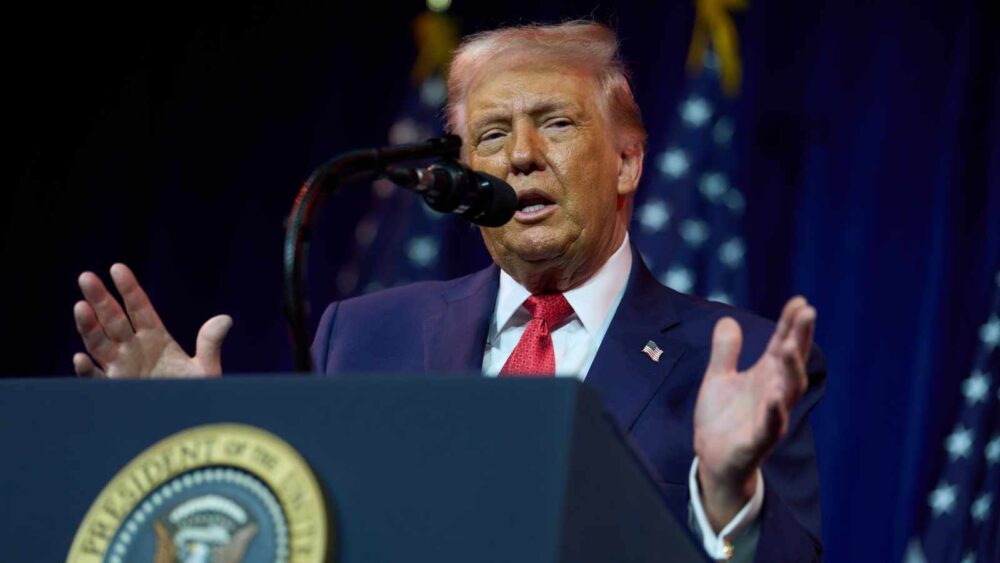
WASHINGTON — In a sweeping move that underscores a renewed shift toward unilateralism, the Trump administration has announced that the United States will withdraw from 66 international organizations, significantly scaling back American participation in multilateral institutions. The decision, formalized through an executive order signed by President Donald Trump on Wednesday, marks one of the most extensive rollbacks of U.S. engagement with global bodies in recent history.
According to a White House release, the executive order suspends U.S. support for dozens of international organizations, agencies, and commissions, following a comprehensive review of American involvement and funding across global institutions, including those linked to the United Nations. The move reflects the administration’s long-stated skepticism of multilateral frameworks and its belief that many such bodies no longer serve U.S. interests.
“This action is about putting America’s sovereignty and taxpayers first,” a senior administration official said, describing the withdrawals as part of a broader effort to reassess Washington’s global commitments.
UN Agencies Among the Most Affected
A substantial portion of the organizations targeted are UN-affiliated agencies and advisory panels, particularly those working in areas such as climate change, migration, labor rights, and population studies. Among the most prominent exits is the United Nations Population Fund (UNFPA), which focuses on reproductive health and family planning worldwide, as well as U.S. withdrawal from the UN climate treaty framework that underpins international climate negotiations.
The administration has repeatedly criticized these institutions as promoting policies it views as inconsistent with U.S. priorities. Officials argue that many programs emphasize diversity, equity, and inclusion initiatives — often labeled by the administration as “woke” — rather than core economic or security interests.
“These bodies have drifted far from their original mandates,” one administration aide said. “They now function as ideological platforms rather than neutral forums for cooperation.”
Non-UN Organizations Also Targeted
The list of withdrawals extends beyond the United Nations system. Several non-UN international organizations are also affected, including the Partnership for Atlantic Cooperation, the International Institute for Democracy and Electoral Assistance, and the Global Counterterrorism Forum. These institutions focus on transatlantic cooperation, democratic governance, and counterterrorism coordination, respectively.
Critics of the decision warn that pulling out of such forums could weaken U.S. influence in shaping global norms. Supporters, however, argue that the United States can pursue bilateral partnerships more effectively without being constrained by multilateral bureaucracy.
“America does not need to sit at every international table to lead,” a former Trump administration official said. “Leadership can also mean choosing where not to participate.”
Rubio Cites Sovereignty and Waste Concerns
In a strongly worded statement, Secretary of State Marco Rubio defended the decision, citing concerns over efficiency, accountability, and national sovereignty.
“The Trump Administration has found these institutions to be redundant in their scope, mismanaged, unnecessary, wasteful, poorly run, captured by the interests of actors advancing their own agendas contrary to our own, or a threat to our nation’s sovereignty, freedoms, and general prosperity,” Rubio said.
His remarks echo long-standing conservative critiques that international organizations dilute U.S. sovereignty while delivering limited tangible benefits to American citizens.
Global Reactions and Strategic Implications
The announcement is expected to trigger concern among U.S. allies and international partners, many of whom rely on American participation and funding to sustain multilateral initiatives. Diplomats familiar with global governance structures say the withdrawals could create leadership vacuums that other powers may seek to fill.
“Whether the U.S. likes it or not, stepping back creates space for others to shape the rules,” a former U.S. diplomat said. “That has long-term strategic consequences.”
Environmental groups, human rights advocates, and global health organizations have also expressed alarm, arguing that U.S. disengagement could undermine coordinated responses to climate change, migration crises, and humanitarian emergencies.
A Return to ‘America First’ Diplomacy
The decision aligns closely with President Trump’s “America First” foreign policy doctrine, which prioritizes national sovereignty, reduced foreign spending, and skepticism toward international agreements. During his previous term, Trump withdrew the U.S. from multiple global accords and organizations, arguing they disadvantaged American workers and taxpayers.
With this latest executive order, the administration appears intent on accelerating that approach. Supporters view it as a long-overdue correction, while critics see it as a retreat that could erode U.S. global influence.
As the United States formally exits dozens of international institutions, the broader question remains unresolved: can America maintain global leadership while stepping away from the very systems it once helped build? The answer may shape the future of international cooperation for years to come.