








Ambassador Sergio Gor highlighted the “limitless potential” of the bilateral relationship as Minister Jaishankar concluded a series of strategic meetings with top U.S. officials in Washington.
United States Ambassador to India Sergio Gor expressed strong optimism regarding the trajectory of bilateral relations following a series of high-level diplomatic exchanges in Washington, D.C. this week. On Thursday, February 5, 2026, Ambassador Gor welcomed the productive dialogue between Indian External Affairs Minister S. Jaishankar and senior members of the U.S. Cabinet, including Secretary of State Marco Rubio and Treasury Secretary Scott Bessent. The Ambassador’s remarks come at a pivotal moment for the two nations as they seek to formalize a new trade deal and deepen cooperation in emerging strategic sectors.
The visit by Minister Jaishankar was highlighted by his participation in the inaugural Critical Minerals Ministerial, an event convened by Secretary Rubio on Wednesday, February 4. During this forum, which brought together representatives from over 50 nations, Jaishankar emphasized India’s support for a structured international framework designed to de-risk global supply chains. The ministerial focused on securing reliable access to materials such as lithium, cobalt, and rare earth elements, which are essential for both national security and the global transition to clean energy. India’s engagement in this U.S.-led initiative reflects a significant shift toward industrial execution in the strategic minerals sector.
Beyond the ministerial forum, the diplomatic agenda included intensive bilateral discussions aimed at finalizing the “historic” India-U.S. trade agreement. This deal, announced earlier in the week following a conversation between President Donald Trump and Prime Minister Narendra Modi, includes a significant reduction in U.S. tariffs on Indian goods. The new reciprocal tariff rate has been set at 18 percent, down from previous highs that included punitive levies related to energy purchases. Minister Jaishankar noted that the deal is in its final stages of detailing and is expected to open a “new phase” in the relationship, with a formal joint statement anticipated in the coming days.
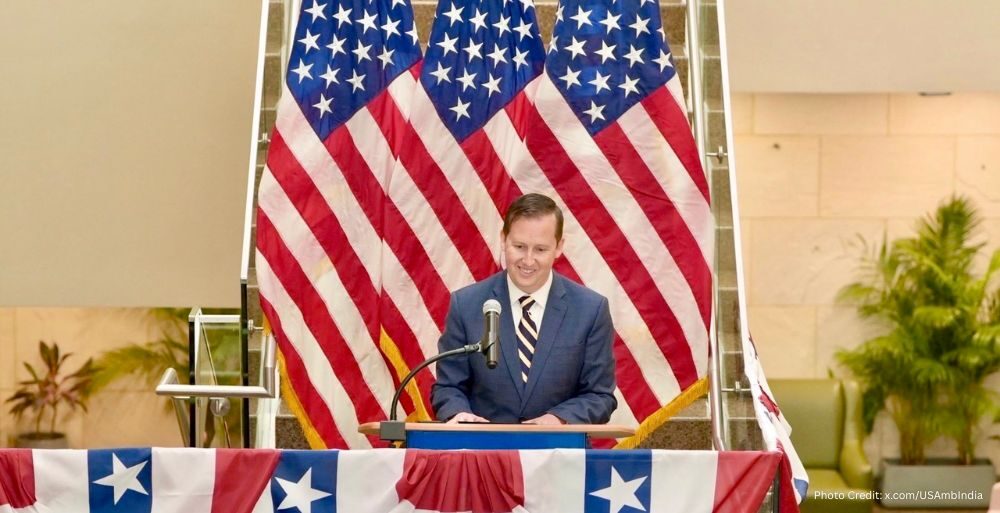
Ambassador Gor utilized social media to share documentation of these meetings, reinforcing the message that the United States is prepared to elevate the partnership to unprecedented levels. In his statements, Gor underscored the “limitless potential” of the engagement, pointing to the alignment of interests in trade, finance, and long-term strategic priorities. Since presenting his credentials in mid-January, Gor has been a vocal advocate for strengthening ties between what he describes as the world’s oldest and largest democracies, particularly in the domains of security and critical technology.
The discussions with Treasury Secretary Scott Bessent were particularly focused on the economic architecture of the partnership. Officials described these talks as crucial for translating political commitments into workable policy, focusing on trade facilitation and regulatory coordination. The emphasis on “papering” the details of the trade breakthrough suggests that both governments are moving quickly to ensure the agreement provides immediate macro predictability for exporters. Sectors such as manufacturing, pharmaceuticals, and renewable energy are expected to be the primary beneficiaries of the reduced tariff regime.
Strategic and defense cooperation also remained a core pillar of the Washington meetings. Jaishankar and Rubio reaffirmed their commitment to the Quadrilateral Security Dialogue (Quad) and discussed expanding bilateral cooperation in nuclear energy and defense technology. Both leaders acknowledged that a prosperous and stable Indo-Pacific region is vital to their shared interests. This broader strategic alignment provides the necessary context for the specific economic and mineral-related agreements being hammered out by the respective departments.
+1The timing of these meetings is significant as both nations navigate a complex global landscape marked by supply chain vulnerabilities and shifting trade dynamics. By focusing on critical minerals and technology-led growth, New Delhi and Washington are attempting to build a more resilient economic foundation that can withstand external disruptions. The “FORGE” initiative on critical minerals, which India has formally supported, is one such mechanism intended to move India from a primary consumer to a central node in the global mineral ecosystem.
Critics and supporters alike are watching the implementation of the 18 percent tariff agreement closely. While the Indian government has hailed the deal as a boost for its “Make in India” initiative and job creation, domestic political opposition has questioned the long-term impact of the negotiations. Nevertheless, the momentum in Washington suggests a period of intense activity as legal teams work toward a mid-March deadline for a finalized agreement. The engagement reflects a pragmatic approach to diplomacy where economic security is increasingly viewed as inseparable from traditional strategic interests.
As Minister Jaishankar concludes his three-day visit, the sentiment from both capitals is one of renewed vigor. The transition from strategic intent to concrete industrial and economic cooperation appears to be the defining characteristic of this new chapter in India-U.S. ties. Ambassador Gor’s public endorsement of these high-level meetings serves as a clear signal to the business and diplomatic communities that the current U.S. administration views India as an indispensable partner in its vision for global economic and security architecture.
The coming months will likely see a flurry of institutional meetings to advance these shared priorities. With the Quad leaders’ summit expected to be hosted by India later this year, the foundations laid during this week’s Washington visit will provide the framework for future executive-level agreements. For now, the successful conclusion of the Critical Minerals Ministerial and the progress on trade represent tangible milestones in a relationship that both sides are now characterizing as having limitless possibilities.