



The United States has deployed additional military forces, including the USS Tripoli and a contingent of Marines, to the Middle East. This move comes in response to Iran’s continued obstruction of maritime traffic through the critical Strait of Hormuz, a vital chokepoint for global oil shipments.
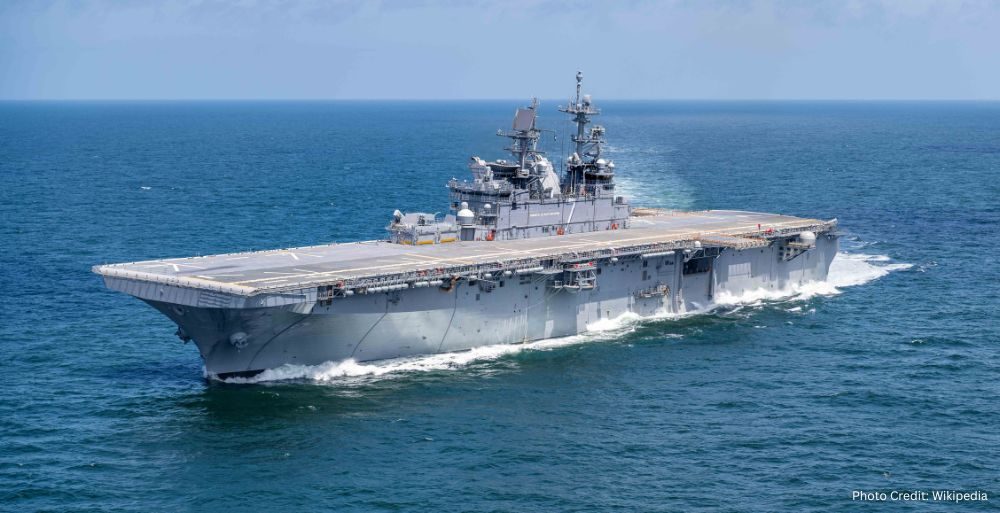
In a strategic maneuver aimed at counterbalancing Iran’s increasing assertiveness in the Middle East, the United States has dispatched the USS Tripoli, an amphibious assault ship, along with a contingent of Marines, to the region. This deployment underscores the escalating tensions surrounding the Strait of Hormuz, a narrow passage that serves as a conduit for nearly a fifth of the world’s oil exports.
The decision to send additional forces comes amid heightened concerns over Iran’s activities in the Strait, where it has been accused of obstructing the free passage of international shipping. The Strait of Hormuz is not only a critical artery for oil transport but also a flashpoint for geopolitical tensions, given its proximity to Iran and the Gulf states. Any disruption in this vital waterway can have far-reaching implications for global oil prices and energy security.
Rear Admiral Jim Kirk, the commander of the USS Tripoli, emphasized the importance of ensuring freedom of navigation in international waters. “The deployment of the USS Tripoli and our Marines is a clear signal of our commitment to maintaining open and secure maritime routes,” he stated. “We are here to support our allies and partners in the region and to deter any potential threats to the free flow of commerce.”
The presence of the USS Tripoli, equipped with advanced radar systems and capable of launching a variety of aircraft, adds a formidable element to the U.S. naval presence in the region. This move is seen as a direct response to Iran’s recent military exercises and its continued interference with commercial vessels traversing the Strait.
Iran’s actions have drawn widespread condemnation from the international community. The country has been accused of using the Strait as a bargaining chip in its broader geopolitical strategy, leveraging its control over the waterway to exert pressure on the United States and its allies. The Iranian government, however, has defended its actions as necessary measures to safeguard its national interests and territorial integrity.
Secretary of Defense Lloyd Austin reiterated the U.S. commitment to regional stability and security. “We will not tolerate any attempts to disrupt the flow of commerce in the Strait of Hormuz,” Austin declared. “Our forces are prepared to respond decisively to any provocations.”
The deployment of the USS Tripoli and Marines also highlights the broader strategic calculus of the United States in the Middle East. While the U.S. has been gradually reducing its military footprint in the region, the latest move indicates a willingness to reassert its presence when vital interests are at stake. The Strait of Hormuz, given its strategic importance, remains a key focal point for U.S. military planning.
This development comes at a time when diplomatic efforts to address tensions with Iran have stalled. The resumption of talks over Iran’s nuclear program has faced numerous hurdles, with both sides unable to reach a consensus on key issues. The deployment of additional U.S. forces may serve as a reminder of the military options available should diplomatic avenues fail to yield results.
In response to the U.S. actions, Iran has issued statements condemning what it perceives as provocative military maneuvers. Iranian officials have warned that any escalation could lead to unintended consequences, further complicating the already volatile situation in the region.
The international community is closely monitoring the situation, with calls for restraint and dialogue growing louder. The United Nations has urged all parties to engage in constructive negotiations to prevent a further deterioration of the situation.
As the USS Tripoli takes its position in the region, the world watches closely to see how this latest chapter in the longstanding U.S.-Iran standoff will unfold. The stakes are high, with the potential for significant economic and political repercussions should tensions continue to escalate.
In the meantime, the deployment serves as a stark reminder of the enduring complexities of Middle Eastern geopolitics and the critical role that strategic waterways like the Strait of Hormuz play in global stability and security.