









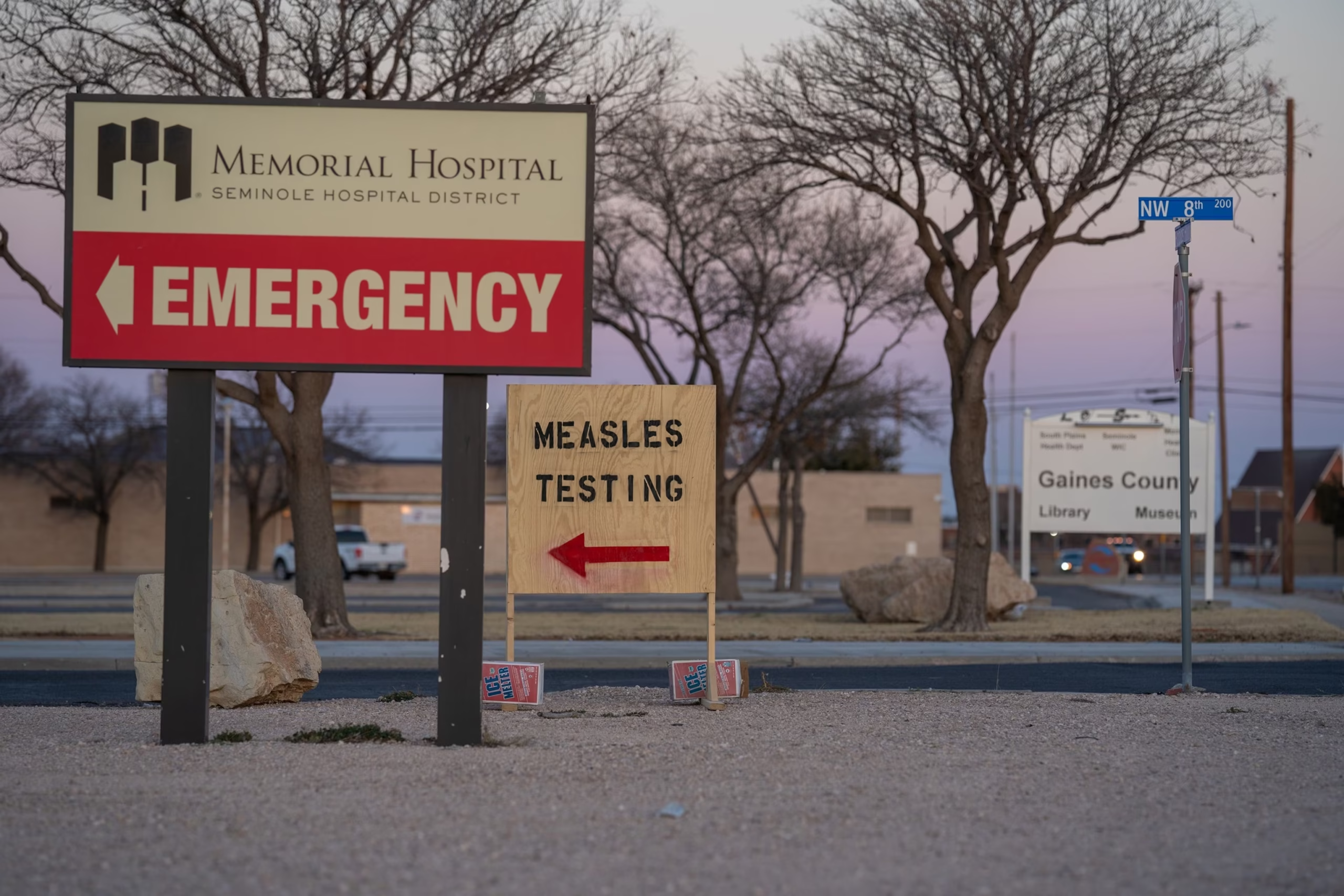
The United States is facing a rapid resurgence of measles, placing it on the brink of losing its long-held designation as a country where the disease has been eliminated. Public health experts warn that this setback is closely tied to declining vaccination rates and policy shifts under President Donald Trump’s administration, particularly the appointment of Robert F. Kennedy Jr. as Secretary of the Department of Health and Human Services (HHS).
In South Carolina alone, health officials have quarantined more than 250 individuals after confirming over two dozen measles infections. This situation reflects a broader national trend, making this year one of the most severe for measles outbreaks in recent U.S. history.
Texas has been especially hard hit. Since January, West Texas has recorded more than 700 confirmed cases, including the deaths of two children. The Centers for Disease Control and Prevention (CDC) reports that there have been 47 separate measles outbreaks across the country so far this year.
Health professionals say the resurgence highlights the long-term impact of vaccine misinformation. Fiona Havers, an adjunct associate professor at Emory School of Medicine and former CDC infectious disease expert, described the situation as a direct consequence of sustained anti-vaccine messaging.
“This is a stark illustration of how vaccine skepticism has undermined public health in the U.S.,” Havers said.
Before joining the administration, Kennedy was widely recognized as a leading critic of vaccines. Since taking charge of HHS, he has reshaped vaccine advisory panels and other public health bodies to align with his long-standing views.
A country is considered to have lost measles elimination status if the virus continues to spread without interruption for 12 consecutive months. Canada recently crossed that threshold and officially lost its elimination status, while Mexico has also seen a sharp rise in cases.
The U.S. declared measles eliminated in 2000, but January 20 of next year would mark a full year of continuous transmission if current trends persist. Many experts believe reaching that point is increasingly likely.
Havers called the potential loss of elimination status “deeply embarrassing” for the country,
She explained that years of misinformation about vaccine safety have reduced immunization coverage, making outbreaks harder to control.
She also noted that under previous administrations, federal health agencies would likely have taken a more aggressive public communication approach, including regular briefings, emergency funding for states, and widespread public awareness campaigns emphasizing vaccination.
Following the death of an eight-year-old girl from measles in Texas, Kennedy publicly acknowledged that the measles, mumps and rubella (MMR) vaccine is the most effective means of preventing the disease’s spread. This marked a notable shift in tone for a figure who previously questioned the vaccine’s safety and claimed it caused serious health issues—assertions not supported by scientific evidence.
Kennedy has also continued to suggest a possible link between the MMR vaccine and autism, despite extensive research finding no causal connection. Additionally, he has promoted alternative treatments such as vitamin A, cod liver oil, and the steroid budesonide. Medical experts say these treatments are unlikely to cause harm but do not replace vaccination or significantly improve outcomes.
Upon assuming office, Kennedy signaled that HHS would place greater emphasis on chronic disease rather than infectious disease prevention, a move that has concerned many in the public health community.
Michael Osterholm, director of the Center for Infectious Disease Research and Policy at the University of Minnesota, said the formal loss of elimination status is less important than the reality on the ground.
“We don’t need another official milestone to tell us what’s happening,” Osterholm said. “The problem is already severe.”
He pointed to Canada’s experience, where more than 5,000 cases have been reported this year in a population of about 41 million. Scaling those numbers to the U.S. population, he warned, suggests the situation could worsen dramatically over the next year to year and a half.
After losing its measles-free designation, Canada announced plans to work with the Pan American Health Organization to halt transmission. To regain elimination status, a country must stop the spread of the current measles strain for at least 12 months.
Osterholm acknowledged that rising measles cases may have occurred regardless of political leadership, but criticized current federal messaging.
“This administration isn’t just failing to slow the fire—it’s adding fuel,” he said.
Havers expressed skepticism that regaining elimination status is a priority for current HHS leadership.
“There is intense focus on perceived vaccine risks, but very little attention to the real and deadly risks of the diseases vaccines prevent,” she said, adding that the timing of uninterrupted transmission during this administration is “not a coincidence.”
In response, HHS spokesperson Andrew Nixon said the department does not believe the criteria for losing elimination status have yet been met.
“Secretary Kennedy has clearly stated that vaccination is the most effective protection against measles,” Nixon said. “Claims to the contrary are misleading. Individuals should speak with their healthcare providers to make informed decisions.”