

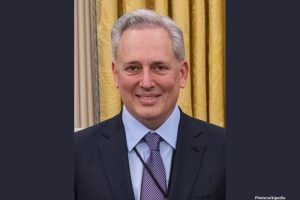




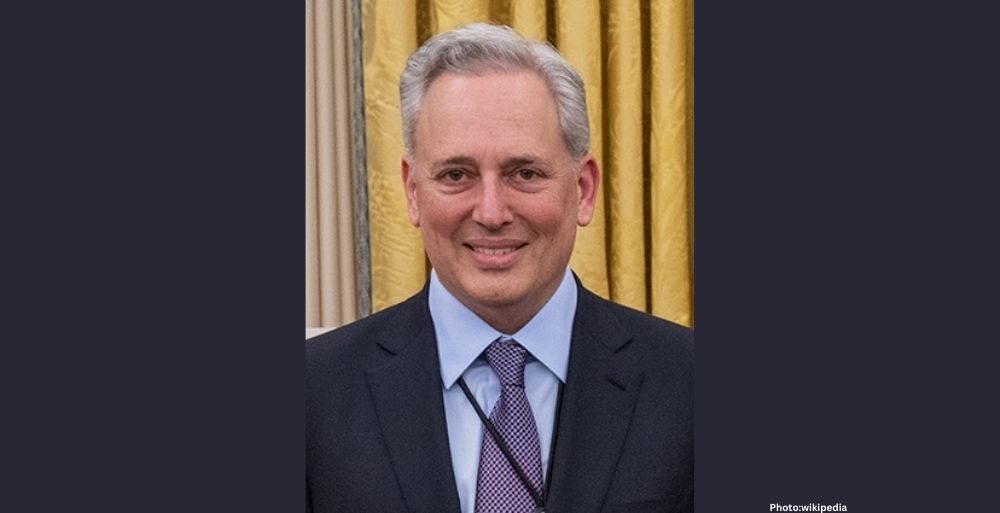
David Sacks, President Trump’s high-profile AI and crypto czar, has issued a stark warning regarding the catastrophic potential of continued conflict with Tehran, citing a “dead man’s switch” that could render the Gulf uninhabitable. As internal White House tensions rise between hawks and economic pragmatists, Sacks is calling for an “off-ramp” to prevent a regional humanitarian and economic collapse.
The Trump administration’s strategy in the Middle East faced a sophisticated internal challenge this week as David Sacks, the Silicon Valley venture capitalist recently appointed as the President’s AI and crypto czar, broke ranks to warn of a “truly catastrophic scenario” unfolding in the Persian Gulf. Speaking on the All-In podcast, Sacks argued that despite the tactical devastation of Iran’s military, the U.S. is nearing a point of no return that could trigger a regional “dead man’s switch,” destroying the economic and biological viability of the Gulf states.
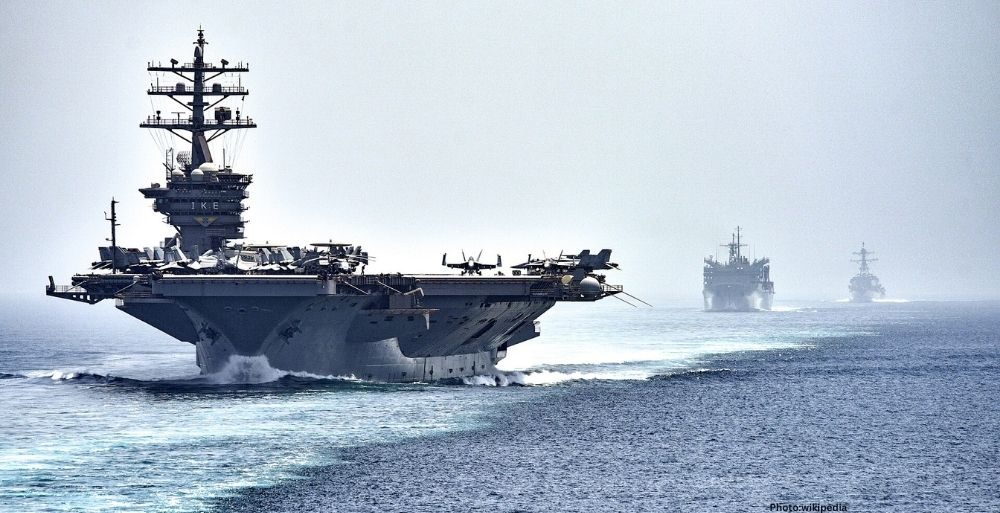
The intervention by Sacks comes at a precarious moment for the White House. Just two weeks into a direct conflict with Iran, the administration is caught between a President who initially signaled a desire for regime change and a growing chorus of economic advisers terrified by the spike in global energy prices. While President Trump has recently downplayed the goal of unseating the Iranian leadership, his military orders tell a more aggressive story: the targeting of Kharg Island, Iran’s primary oil-export node, and the deployment of 2,500 Marines from the Indo-Pacific theater to the Middle East.
The Desalination Disaster: A Region Uninhabitable
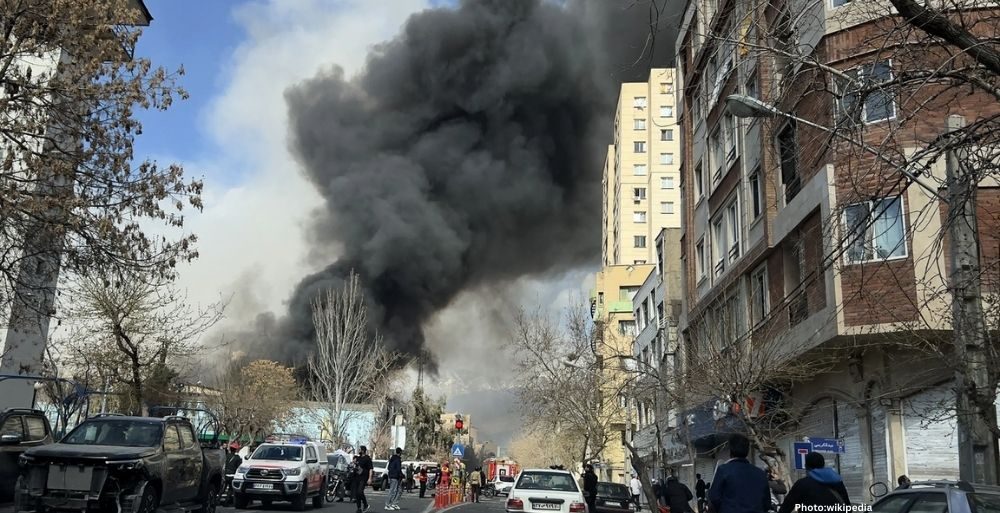
The most chilling aspect of Sacks’ warning centers on the fragile infrastructure of the Gulf. Unlike traditional theaters of war where land remains habitable post-conflict, the modern Gulf states—including U.S. allies like the UAE and Saudi Arabia—rely almost exclusively on desalination plants for fresh water. Sacks noted that these facilities have already been targeted and that their total destruction would create a humanitarian crisis of unprecedented proportions.
“You’re not going to have enough water for 100 million people,” Sacks explained, highlighting that the targeting of life-sustaining infrastructure effectively gives Iran a “dead man’s switch” over the region. Even if the U.S. and Israel achieve total military dominance, the resulting destruction of energy and water systems could render the entire Gulf “almost uninhabitable,” leading to a mass migration crisis and the total economic evaporation of the world’s most critical energy hub.
Sacks argued that even reopening the Strait of Hormuz would become a moot point if the production facilities themselves are reduced to rubble. “Restarting oil and gas production wouldn’t be possible,” he warned, suggesting that the “tit-for-tat escalation spiral” is rapidly approaching a terminal phase where there is no “victory” left to be won.
The Nuclear Shadow and Market Anxiety
The AI czar’s warning also extended to the survival of Israel. While acknowledging Israel’s military prowess, Sacks pointed out that the nation remains vulnerable to sustained Iranian strikes. He cautioned that if Israel faces an existential threat as the war drags into its second or third month, the risk of nuclear escalation becomes a statistical probability rather than a fringe theory.
This “horrifying direction” is what Sacks believes necessitates an immediate “off-ramp.” From his perspective, and that of the Silicon Valley elite he represents, the markets have already priced in a tactical win, and further aggression yields diminishing returns. “This is a good time to declare victory and get out, and that is clearly what the markets would like to see,” Sacks said.
The economic data supports Sacks’ anxiety. Sources close to the administration indicate that gasoline prices are beginning to erode domestic support for the conflict. For a President who campaigned on economic populism and “ending forever wars,” the optics of a $6-per-gallon national average and a humanitarian disaster in the Gulf present a significant political liability.
A Divided West Wing
The internal battle within the Trump administration is now a clash between two distinct worldviews. On one side, economic pragmatists and “America First” nationalists like Sacks and certain advisers to the President want to limit the scope of the war to protect the domestic economy. On the other side, a persistent hawkish faction—including high-ranking members of the Republican Party—is pushing for the total dismantling of the Iranian government and the permanent elimination of its nuclear program.
The President himself appears to be triangulating. “He is allowing the hawks to believe the campaign continues, wants markets to believe the war might end soon, and his base to believe escalation will be limited,” an anonymous Trump adviser recently told Reuters. However, as Sacks’ comments suggest, the luxury of ambiguity is fading.
If the U.S. military continues its current trajectory, the “dead man’s switch” described by Sacks may be tripped, transforming a regional skirmish into a global catastrophe. Sacks’ call for a negotiated settlement or ceasefire marks the first major public crack in the administration’s unified front, suggesting that the “AI and crypto” wing of the government sees the war not as a strategic necessity, but as a systemic risk to the global order.
Whether Trump will heed the warnings of his hand-picked tech visionary or follow the path of the hawks remains the most consequential question of 2026. For now, the “off-ramp” remains open, but Sacks’ testimony suggests the exit is approaching at a dangerously high speed.