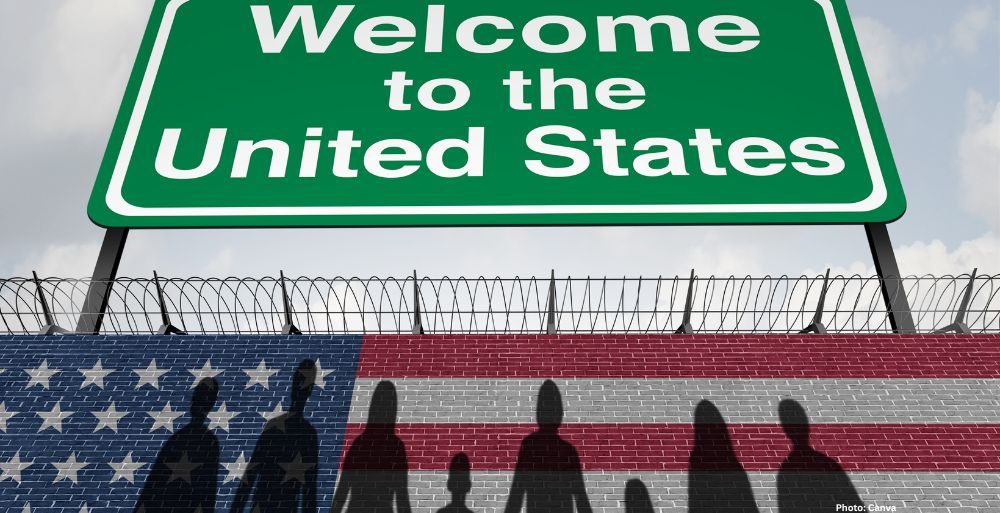








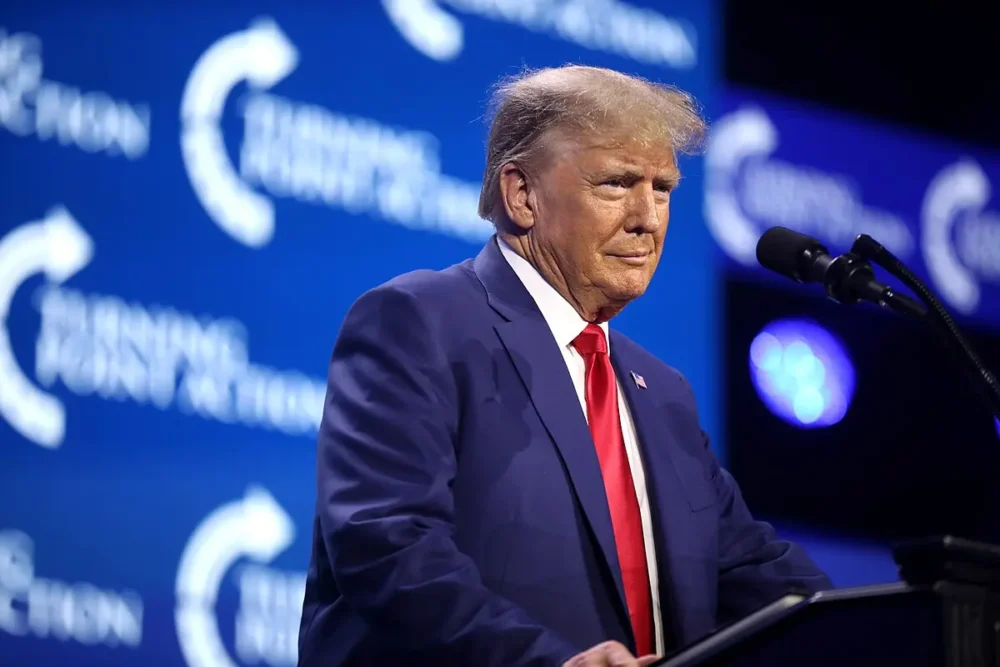
What once sounded like a provocation bordering on parody is now being treated as a serious geopolitical threat. President Donald Trump’s renewed fixation on Greenland—an autonomous territory of Denmark—has shifted from rhetorical bravado to a source of deep concern among U.S. allies, particularly in Europe. With Washington fresh from its forceful intervention in Venezuela, many leaders now fear that Trump’s ambitions extend far beyond posturing, hinting at a revival of 19th-century-style imperial expansion in the modern era.
During Trump’s first term, his interest in acquiring Greenland was widely dismissed as a joke. Even more recently, high-profile visits by Trump allies—complete with symbolic theatrics—were seen as political trolling rather than strategic signaling. Today, that interpretation has changed dramatically. European leaders have publicly reaffirmed Greenland’s sovereignty, while Denmark has made clear that the island is not for sale. Yet the White House has refused to rule out the use of force, a stance that has sent shockwaves through NATO capitals.
“This is no longer something we can laugh off,” a European diplomat said privately, noting that the administration’s language has grown markedly more aggressive. “The tone has shifted from curiosity to entitlement.”
A Strategic Prize in a Warming World
On the surface, Trump’s argument is framed around national security—and on that point alone, Greenland undeniably matters. The island has long been a strategic outpost in the North Atlantic. During World War II, it anchored Allied defenses against German U-boats, and today it hosts a U.S. base that plays a critical role in early-warning missile detection systems.
As Arctic ice melts, Greenland’s importance is only growing. New shipping routes are opening across the polar region, while global powers such as China and Russia are increasing their Arctic presence. “Whoever controls Greenland holds a commanding position over vital Atlantic sea lanes,” a former NATO official observed.
Yet critics argue that Trump’s security rationale is incomplete. Greenland is part of the territory of a NATO ally, and existing treaties already allow the United States wide latitude to expand military operations, bases, and personnel there. “If the concern is security, the U.S. already has everything it needs—without owning the island,” a defense analyst noted.
Resources, Power, and Prestige
Beyond military considerations, Greenland is rich in untapped resources. Offshore oil and gas reserves, as well as vast deposits of rare earth minerals essential for clean energy technologies and advanced weapons systems, make the island economically attractive. Danish and Greenlandic officials have repeatedly said they are open to partnership agreements to develop these resources.
But partnership may not satisfy Trump’s broader ambitions. The president increasingly resembles expansionist American leaders of the past—figures who used tariffs, force, and territorial acquisition to project power. “This administration doesn’t think in terms of shared control,” said one foreign policy expert. “It thinks in terms of ownership.”
Trump’s growing obsession with legacy reinforces that view. From plans for grand architectural projects in Washington to efforts to stamp his name onto national institutions, the president appears driven by a desire to be remembered as a transformative—if controversial—figure. Acquiring the world’s largest island would place him alongside Thomas Jefferson’s Louisiana Purchase or William McKinley’s annexation of Hawaii. As one former aide quipped, “He wouldn’t just want Greenland—he’d want it renamed.”
From Rhetoric to Reality
Recent developments have amplified fears that Trump’s imperial instincts are no longer theoretical. His statements following the capture of Venezuela’s leader, and subsequent moves to control Venezuelan oil revenues, have reinforced perceptions that he views sovereign nations as assets to be managed.
“This feels like a shift from rhetorical imperialism to practical imperialism,” a senior European official said. “That’s what has everyone alarmed.”
The consequences of any attempt to seize Greenland would be profound. Danish Prime Minister Mette Frederiksen has warned that such an act would effectively destroy NATO, shattering the alliance’s mutual defense guarantee. Retired Admiral James Stavridis, a former NATO Supreme Commander, echoed that concern, warning that a confrontation over Greenland could mark “the end of NATO.”
Europe on Edge
European leaders—including those of France, Germany, Italy, Poland, Spain, and the United Kingdom—have issued a unified statement affirming that “Greenland belongs to its people.” Canada, which shares maritime boundaries with Greenland, has announced a high-level diplomatic mission to the region.
Despite this show of solidarity, the power imbalance is stark. Europe’s reliance on U.S. defense capabilities gives Trump leverage few presidents have wielded so openly. “Nobody is going to fight the United States over Greenland,” a senior administration aide bluntly stated, reflecting the administration’s confidence.
Yet such confidence may come at a cost. Denmark, despite its size, has been one of America’s most steadfast allies, sacrificing soldiers in U.S.-led wars in Afghanistan and Iraq. “Allies treated with contempt may not answer the call next time,” a former NATO diplomat warned.
A Dangerous Gamble
Logistically and politically, purchasing Greenland would be enormously complex, requiring congressional approval, international agreements, and vast sums of taxpayer money. With Americans struggling over health care, housing, and food costs, the idea of spending hundreds of billions on territorial expansion remains deeply controversial.
Still, in an era defined by unpredictability, few are willing to dismiss the possibility outright. As Democratic Senator Chris Murphy cautioned, “This is not a distraction anymore. We need to seriously consider what’s driving the president’s thinking.”
For now, Greenland remains Danish, NATO remains intact, and diplomacy—however strained—continues. But in a White House emboldened by recent displays of power, restraint is no longer a given. What happens next may redefine not just America’s role in the world, but the future of the Western alliance itself.