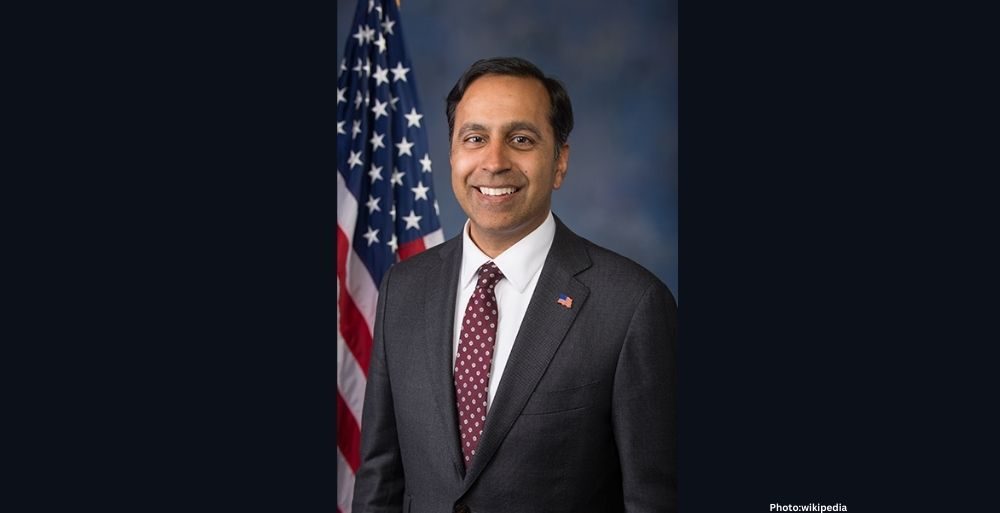








As Representative Raja Krishnamoorthi vies for an open Senate seat in Illinois, his campaign has become a focal point for the surging political influence of the South Asian diaspora. With a record number of Indian Americans serving in Congress and high-profile roles in the current administration, the community is transitioning from a fundraising powerhouse to a front-line electoral force.
The standard Democratic stump speech is often an exercise in universalism, but for Representative Raja Krishnamoorthi, the “American Dream” is articulated through a very specific lens of identity. When the five-term congressman addresses Illinois voters, he frequently references the 29 letters in his full name—Subramanian Raja Krishnamoorthi—using his personal narrative as a shorthand for the broader immigrant experience.
“Call me Raja,” his campaign slogan suggests, but the subtext is far more ambitious. In Tuesday’s high-stakes Democratic primary for the seat vacated by retiring Senator Richard Durbin, Krishnamoorthi is attempting to become only the second Indian American ever elected to the United States Senate, following in the footsteps of the former vice president.
The race is a microcosm of a shifting American electorate. While much of the media attention has focused on his opponents—Lieutenant Governor Juliana Stratton and Representative Robin Kelly, both of whom are vying to become only the sixth Black woman to serve in the chamber—Krishnamoorthi’s candidacy represents the “natural evolution” of a community that has historically dominated the sectors of technology and medicine but is now demanding a seat at the political table.
A Surge in Representation
The 2026 political cycle arrives at a moment of unprecedented visibility for Indian Americans. The community now boasts six members in Congress—a group Krishnamoorthi famously dubbed the “Samosa Caucus.” This cohort, which includes Representatives Ami Bera, Ro Khanna, Pramila Jayapal, Shri Thanedar, and Suhas Subramanyam, has moved beyond symbolic representation to influence core policy areas, from the U.S.-India strategic partnership to the expansion of H-1B visas.
The influence is bipartisan and spans branches of government. In the current executive branch, FBI Director Kash Patel and Usha Vance, the wife of the vice president, occupy high-profile roles. Meanwhile, on the left, New York City Mayor Zohran Mamdani has emerged as a prominent progressive voice, and Ro Khanna is increasingly discussed as a 2028 presidential contender.
The data supports this rapid ascent. According to Indian American Impact, the number of Indian American elected officials nationwide has jumped from roughly 50 to more than 300 in just ten years. This growth is fueled by a sophisticated donor network that has transformed South Asian candidates into fundraising “juggernauts.” Krishnamoorthi himself has spent years cultivating a base of immigrant donors, allowing him to launch a Senate campaign buoyed by millions of dollars.
Identity Politics and Racial Friction
In deep-blue Illinois, the primary is less a debate over ideology and more a contest of identity. The presence of two prominent Black women alongside Krishnamoorthi has sparked concerns among local leaders about a splintered Black vote, which could inadvertently pave the way for Krishnamoorthi to win.
However, the path upward has not been without significant resistance. As Indian Americans have moved into the crosshairs of national politics, they have faced a surge in xenophobic rhetoric. Krishnamoorthi noted that he regularly encounters racist taunts and calls for deportation—a sentiment he uses to fuel his opposition to the administration’s current immigration agenda.
“There’s a group of people who don’t want us to be here,” Krishnamoorthi said during a campaign stop in Chicago. “Being in the United States Senate is an exclamation point on the idea that we belong.”
This sense of belonging is a recurring theme. The South Asian population in the U.S. now sits at approximately 6 million, with 337,000 residing in Illinois alone. While this demographic has historically leaned Democratic, the rise of figures like Vivek Ramaswamy—now running for governor of Ohio—and former presidential candidates Nikki Haley and Bobby Jindal demonstrates a diversifying political appetite within the community.
The Seat at the Table
For strategist Raghu Devaguptapu, the Illinois primary is a harbinger of things to come. “This won’t be the last primary where the Indian American community stepped up to the plate and showed political power,” he noted, emphasizing the strength of “immigrant networks” in modern campaigning.
Krishnamoorthi views the Senate seat as a necessity rather than a luxury. Invoking a classic Washington adage, he remarked, “If you don’t have a seat at the table, you’re on the menu.” For a community that currently feels targeted by online threats and shifting immigration policies, the “Samosa Caucus” leader believes that representation is the only viable defense.
As voters head to the polls, the outcome will do more than just determine a likely successor to Dick Durbin. It will signal whether the “polysyllabic” names that Krishnamoorthi jokes about have finally become a permanent, influential fixture in the American political lexicon.
The Samosa Caucus Ascendant: Illinois Primary Marks New Era of Indian American Political Might