









Washington — The U.S. Supreme Court has agreed to review the legality of President Donald Trump’s executive order aimed at eliminating birthright citizenship, a longstanding constitutional guarantee that grants citizenship to nearly all individuals born on U.S. soil.
This marks the first time during Trump’s second term that the high court will directly evaluate one of his immigration initiatives on its legal merits. While previous immigration measures reached the Supreme Court, they did so only through emergency requests, not full constitutional review.
So far, every lower court that examined Trump’s order has rejected the administration’s interpretation of the 14th Amendment’s Citizenship Clause, which states:
“All persons born or naturalized in the United States, and subject to the jurisdiction thereof, are citizens of the United States.”
The Justice Department argues these decisions are incorrect and insists the clause does not grant citizenship to children of undocumented immigrants or temporary visitors.
ACLU: “No president can erase the 14th Amendment”
The American Civil Liberties Union, representing families affected by the order, strongly criticized Trump’s policy.
ACLU legal director Cecillia Wang stated:
“For more than 150 years, anyone born on U.S. soil has been a citizen. Courts have unanimously held that Trump’s order violates the Constitution, a 1898 Supreme Court ruling, and federal law.”
The executive order, issued on Trump’s first day back in office, would deny citizenship to children born in the U.S. to parents who are undocumented or temporarily present. This reverses over a century of legal understanding, which has only excluded children of foreign diplomats and occupying military forces.
The Supreme Court last ruled on this issue in 1898, affirming that birthplace—not the parents’ status—determines citizenship.
Policy Blocked Nationwide, But Supreme Court to Give Final Word
Trump’s order has been frozen since its announcement due to a series of lawsuits. Lower courts consistently found it unconstitutional, issuing nationwide injunctions. In a previous 6–3 ruling, the Supreme Court limited judges’ ability to issue universal injunctions but allowed class-action lawsuits to pursue broad protection.
Following that ruling, families affected by the order filed a class-action case in New Hampshire. A federal judge there certified a provisional nationwide class and ruled that Trump’s directive likely violates the 14th Amendment, blocking its enforcement for all affected families.
The Supreme Court agreed to take the case even before the 1st Circuit Court of Appeals reviewed it.
Another appeal—filed by Washington, Arizona, Illinois, and Oregon—remains pending. In July, the 9th Circuit ruled 2–1 that Trump’s executive order is invalid because it contradicts constitutional guarantees of birthright citizenship.
Justice Department Pushes Back
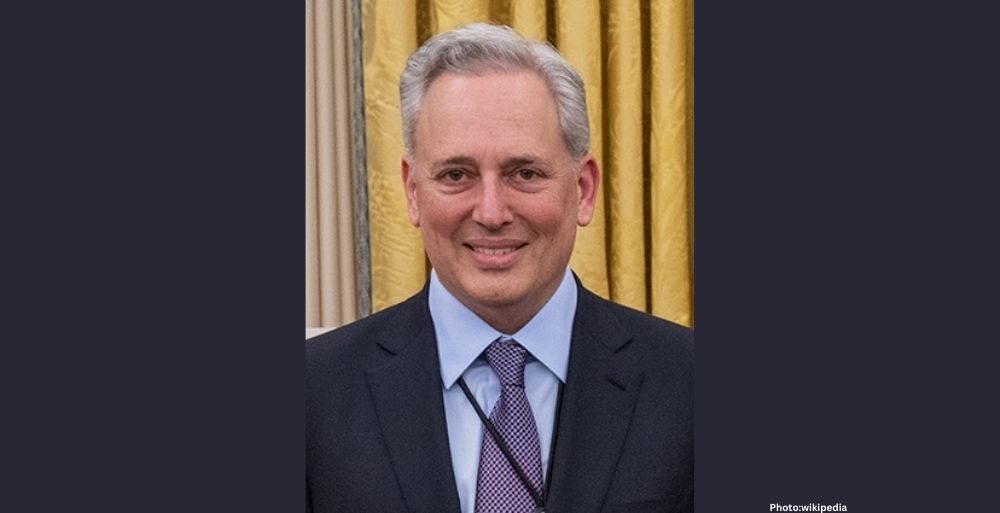
Solicitor General D. John Sauer urged the Supreme Court to resolve the issue once and for all, calling the traditional understanding of birthright citizenship a “mistaken view” with “destructive consequences.”
The ACLU counters that the administration is essentially asking the Supreme Court to rewrite the Constitution and undo more than a century of legal precedent and everyday citizenship practices.
What Happens Next?
Oral arguments are expected sometime next year.
A final decision is likely by June or early July, setting the stage for a landmark ruling on one of the most consequential constitutional questions of the era.