





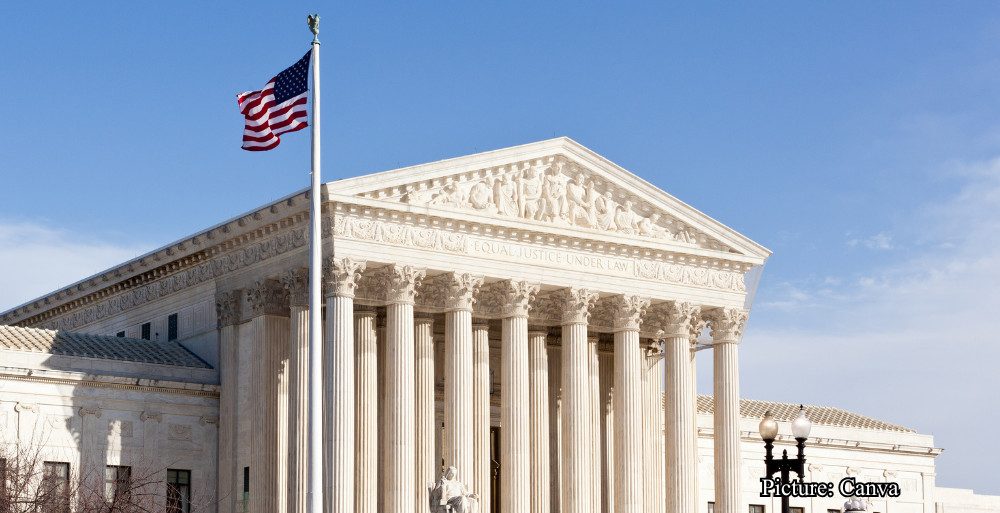
The United States Supreme Court appeared poised on Monday to fundamentally alter the landscape of federal elections, signaling a readiness to invalidate state laws that allow mail-in ballots to be counted if received after Election Day. During two hours of intense oral arguments, the Court’s conservative majority expressed skepticism toward a Mississippi statute that permits ballots postmarked by Election Day to be tallied up to five business days later. This shift follows a decade-long trend of the Court narrowing voter protections and could have immediate ramifications for the 2026 midterm elections, where control of Congress hangs in the balance. While liberal justices warned of massive voter disenfranchisement and pointed to the lack of evidence regarding fraud, the conservative wing focused on the literal interpretation of 19th-century federal statutes and the potential for post-election “chaos.”
The Mississippi Challenge and the 1845 Statute
WASHINGTON — The Supreme Court on Monday delved into a high-stakes legal battle that threatens to upend the voting procedures of approximately 30 states. At the center of the dispute is whether federal law mandates that all ballots be physically received by the time polls close on Election Day, or if the act of “voting” is completed once a citizen places their marked ballot in the mail.
The case, which arrives as the 2026 midterm cycle begins to intensify, pits the Republican National Committee (RNC) and the Trump administration against the State of Mississippi’s own Republican-led legislature. In an unusual legal alignment, Mississippi Solicitor General Scott Stewart found himself defending a state law against members of his own party, arguing that the “Election Day” statutes of 1845 do not explicitly bar states from counting timely postmarked mail.
Under the U.S. Constitution, states are granted the primary authority to manage the “times, places, and manner” of elections, though Congress holds the power to “make or alter” those regulations. The challengers, represented by veteran litigator Paul Clement, argue that by allowing ballots to arrive days or weeks after the first Tuesday after the first Monday in November, states are effectively extending “Election Day” beyond the window authorized by Congress nearly 180 years ago.
A Fractured Bench: Fraud Concerns vs. Voter Reliance
The atmosphere in the courtroom was marked by a sharp ideological divide that transcended mere legal theory, touching on the very mechanics of modern democracy. Conservative Justice Brett Kavanaugh repeatedly pivoted to concerns regarding the integrity of the vote, echoing arguments from the RNC that late-arriving ballots create a window for potential misconduct.
“Would you say that the states that require receipt by Election Day are disenfranchising voters?” Kavanaugh asked, challenging the notion that a strict deadline is inherently burdensome. Stewart replied that while a reasonable deadline is not disenfranchising, “practical barriers” remain for specific groups, such as overseas military personnel who rely on the postal system’s unpredictable timelines.
Justice Samuel Alito furthered the skeptical line of questioning, raising the specter of “radically flipped” election results. Alito noted that public confidence could be “seriously undermined” if an apparent winner on election night is overtaken by a “big stash of ballots” processed days later. Despite these concerns, Stewart noted that the challengers “haven’t cited a single example of fraud from post-Election Day ballot receipt in this century.”
On the other side of the bench, the Court’s liberal wing, led by Justice Sonia Sotomayor and Justice Elena Kagan, expressed profound frustration with the Court’s willingness to intervene in state administrative matters. Sotomayor argued that the “people who should decide this issue are not the courts but Congress,” suggesting that a judicial mandate to invalidate these laws would ignore the reliance of millions of voters—particularly the elderly, the disabled, and those in the military—who have spent years operating under the assumption that a timely postmark guarantees their vote will count.
Historical Context and the Diminishing Voting Rights Act
This case does not exist in a vacuum. It is the first of two major rulings expected this term that could reshape the American electorate. The second involves a challenge to a Louisiana congressional map, testing the reach of the 1965 Voting Rights Act (VRA). The Court is currently weighing whether “majority-minority” districts—designed to ensure Black and Hispanic voters have an opportunity to elect candidates of their choice—remain a constitutional necessity or have become an outdated form of race-conscious social engineering.
Historically, the Supreme Court has moved steadily toward a more restrictive interpretation of federal voting oversight. Since the 2013 landmark decision in Shelby County v. Holder, which gutted the “preclearance” formula of the VRA, and the 2021 decision in Brnovich v. DNC, which made it harder to challenge state voting laws, the conservative majority has signaled a preference for state-level autonomy—unless that autonomy conflicts with a strict, originalist reading of federal statutes.
The financial and political stakes are immense. In the 2022 midterms, mail-in ballots accounted for over 30% of all votes cast nationally. In states like California, Washington, and Colorado, that number is significantly higher. If the Court rules that receipt-by-Election-Day is a federal requirement, it could effectively nullify hundreds of thousands of ballots in the 2026 cycle, potentially shifting the margin in razor-thin battleground races.
The “Line-Drawing” Problem
The justices also struggled with the technicalities of where a “deadline” should exist if not on Election Day. Justice Alito pressed Stewart on the “line-drawing problems,” pointing out that some states accept ballots for up to two weeks after the polls close. “So there’s no limit?” Alito asked, suggesting that without a federal hard stop, the “election” could theoretically bleed into the date when presidential electors are appointed.
Clement, representing the RNC, argued that the current patchwork of state laws creates a “lack of uniformity” that the 1845 statutes were designed to prevent. He contended that the “truthful answer” to who won an election should not be “we don’t know yet” for weeks on end.
However, Justice Kagan countered that a ruling in favor of the RNC could have “significant preemptive effects” on other state practices that the Court has not yet considered. She questioned whether the Court was overstepping its bounds by interpreting silence in federal law as an affirmative prohibition against state-level flexibility.
As the arguments concluded, the tension between the two camps remained unresolved. A decision is expected by June 2026, just as primary season shifts into high gear. The ruling will likely serve as a definitive statement on whether the “Election Day” of the 19th century can coexist with the administrative realities of the 21st.
Tags: Supreme Court, 2026 Midterms, Voting Rights, Mail-in Ballots, Election Law, Mississippi, RNC, Voter Disenfranchisement, Voting Rights Act, Constitutional Law