






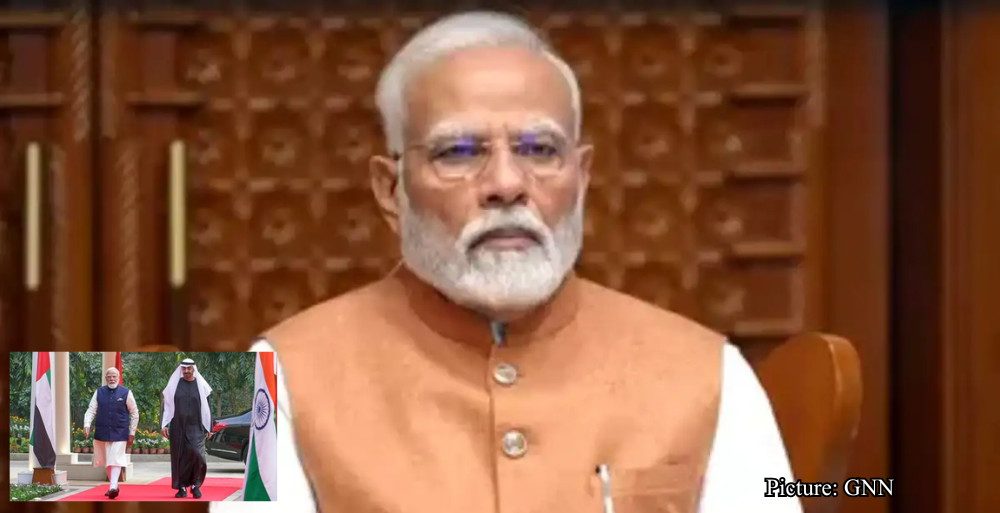
Recent claims in Indian media that Prime Minister Narendra Modi ranks as the world’s most popular leader are based on a survey by Morning Consult, a commercial polling firm. This report examines the methodology behind these claims and the implications of their findings.
In recent months, various Indian media outlets have asserted that Prime Minister Narendra Modi is the world’s most popular leader, referencing approval ratings derived from the Global Leader Approval Rating Tracker operated by Morning Consult. This tracker, which is a proprietary tool of the U.S.-based polling company, raises significant questions about the methodology used and the validity of the claims being made.
Who Runs the Survey?
The Morning Consult Political Intelligence tracker, which produces these approval ratings, is a commercial product of Morning Consult, a business intelligence and polling organization founded in 2014. The company, which operates as a privately held and venture-capital-backed entity, is led by CEO and co-founder Michael Ramlet. The tracker monitors leaders from over 20 countries, including India, and it publishes rolling approval and disapproval ratings derived from daily online surveys conducted with adults in each country.
Understanding the Modi Rating Mechanism
The claim that Modi is the world’s most popular leader arises from the Global Leader Approval Rating Tracker, which reports a seven-day rolling average based on responses to a standardized question regarding the leader’s job performance. Designed as a tool for corporate and political stakeholders, only a fraction of the data and methodology is publicly available. Morning Consult’s approach relies on large online surveys sourced from various panel providers, but these are non-probability samples. Respondents opt to join online panels rather than being randomly selected, which limits the representativeness of the data.
Criticism of the Popularity Claim
The assertion that Modi is the most popular leader globally involves two significant assumptions. Firstly, it extrapolates the results from a single commercial survey—a non-random sample of online, panel-accessible Indian adults—to suggest it reflects the views of the entire Indian populace. Given India’s substantial digital divide, this is a problematic interpretation. The sample may not accurately capture the sentiments of a vast and diverse population, which includes many individuals without internet access.
Secondly, the comparisons made across countries, such as placing Modi alongside leaders like Donald Trump and others, are flawed. They presume that the survey methodologies across different nations are uniform, ignoring the vast differences in internet access, panel quality, and political context. This makes the cross-country rankings methodologically unsound.
Moreover, the precise approval ratings—such as differentiating between 68% and 75%—are often misinterpreted as exact measures when the inherent uncertainty in non-probability online polling is considerably greater than suggested.
Methodological Concerns with Morning Consult
While Morning Consult is recognized for its data-driven approach, its methodologies have faced scrutiny, particularly in the context of U.S. elections. For instance, during the 2016 U.S. presidential election, its polling predicted a wider lead for Hillary Clinton than what was ultimately observed in the popular vote. Subsequent evaluations of its accuracy during midterm elections show that it often falls below the performance of traditional pollsters that utilize probability-based methods.
The Challenges of Non-Probability Online Polling
Experts have highlighted persistent issues with non-probability online polling, which are particularly pronounced in countries like India characterized by significant digital inequalities. Key concerns include:
- No True Sampling Error: Classical margins of error are based on random sampling; non-probability samples do not meet this criterion, leading to underreported uncertainty.
- Heavy Reliance on Weighting: Statistical weighting is used to adjust for imbalances in the sample. However, if the weighting variables do not account for critical political differences, biases may persist.
- Limited Transparency: The proprietary nature of the surveys means that detailed methodologies are not publicly available, restricting independent verification.
Specific Red Flags in the Modi Approval Ratings
Several factors raise red flags regarding the reported high approval ratings for Modi:
- Urban Bias: The online polling method may skew towards urban populations, smartphone users, and those with higher socioeconomic status, who typically have different political views compared to less connected individuals.
- Under-Representation of Marginalized Groups: Significant segments of the Indian population, including low-income, older, and rural individuals, are likely underrepresented, potentially biasing results towards more favorable views of Modi.
- Lack of Detailed Methodology: Morning Consult fails to publicly disclose comprehensive methodological details relevant to India, such as panel composition and language coverage, making it difficult to assess the representativeness of the sample.
- Opaqueness of Question Wording: The absence of transparency regarding question phrasing and survey structure can materially influence approval rates.
Conclusion
In summary, the claim that “Modi is the world’s most popular leader” should be approached with caution. A more accurate representation would state that, according to a U.S.-based, online, non-probability polling firm’s tracker—which is subject to significant methodological limitations—Modi currently has the highest reported approval rating among tracked leaders. This nuanced perspective highlights the complexities and uncertainties inherent in interpreting survey data, especially in a country as diverse as India.