









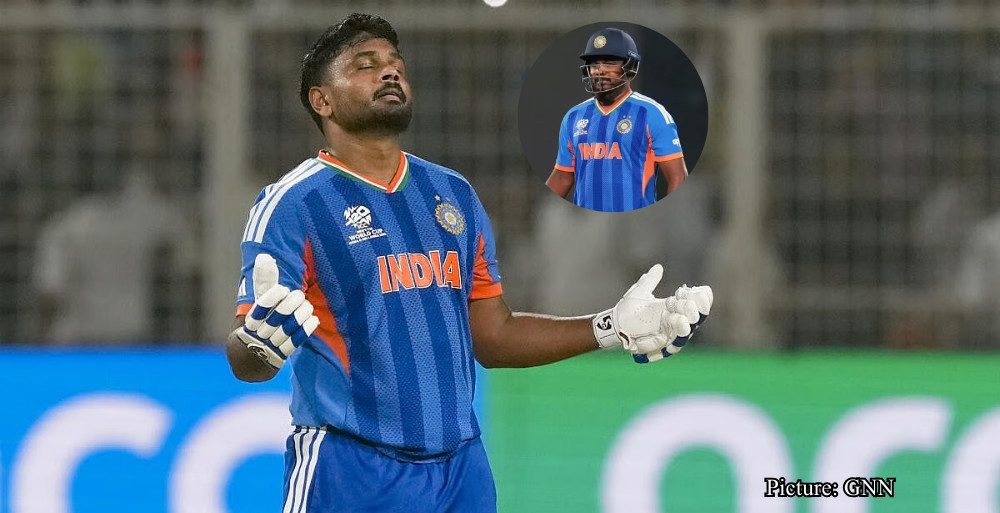
After being sidelined during the initial stages of the tournament, Sanju Samson delivered a historic string of performances to lead India to the T20 World Cup 2026 title. The wicketkeeper-batter secured Player of the Tournament honors after breaking long-standing records previously held by Virat Kohli and Marlon Samuels.
The trajectory of professional sports is rarely linear, but few arcs in modern cricket possess the cinematic resonance of Sanju Samson’s rise during the 2026 ICC Men’s T20 World Cup. For a player whose career has often been defined by intermittent flashes of brilliance and prolonged periods of exclusion, the scene in the aftermath of the final was one of total vindication. Holding the Player of the Tournament trophy, Samson stood as the undeniable pivot point upon which India’s championship aspirations turned.
The magnitude of Samson’s achievement is best understood through the lens of his late entry into the fray. He was not a preferred starter when the tournament commenced, watching from the dugout as India struggled with middle-order consistency. It was only after a bruising defeat to South Africa that the team management, facing mounting pressure and a stagnant run rate, turned to the 31-year-old Kerala native. What followed was a five-match blitz that redefined the expectations of a T20 anchor and finisher combined.
Samson finished the campaign with a staggering 321 runs, an achievement that borders on the statistical impossible given he played only five matches. To put that figure into context, he surpassed Virat Kohli’s iconic 2014 record of 319 runs, a mark that had stood for over a decade as the gold standard for Indian batting in a single T20 World Cup edition. Samson’s efficiency was not merely about volume; it was about the surgical precision with which he dismantled world-class bowling attacks under extreme duress.
The turning point for both Samson and his nation arrived in the virtual quarter-final against the West Indies. Chasing a daunting total in a high-pressure environment, Samson anchored the innings with a masterclass in controlled aggression. His unbeaten 97 was a statement of intent, characterized by a refusal to succumb to the “dot ball” pressure that had plagued India earlier in the month. He followed this with an 89 in the semi-final against a formidable England side, and then, in the grandest stage of all, another 89 against New Zealand in the final.
By scoring half-centuries in both the semi-final and the final, Samson joined an elite fraternity that includes only Shahid Afridi (2009) and Virat Kohli (2014). Furthermore, his 89 in the final established a new record for the highest individual score in a T20 World Cup final, eclipsing the 85-run marks set by Marlon Samuels in 2016 and Kane Williamson in 2021.
However, the raw numbers tell only half the story. The technical evolution of Samson’s game—specifically his ability to clear the boundary with ease—saw him smash 24 sixes throughout the tournament. This set a new record for the most maximums in a single edition, signaling a shift in his approach from a touch-player to a power-hitter capable of manipulating any field setting.
In his post-match reflections, a visibly emotional Samson spoke of the psychological toll of his journey. “I was broken after the New Zealand series,” Samson admitted, referring to a previous bilateral stint where his future with the national side seemed bleak. “My dreams were completely shattered. I was thinking, ‘What can I do?’ But God had different plans.”
The psychological fortitude required to transition from a “squad filler” in the 2024 World Cup—where he did not feature in a single game—to the tournament’s most valuable player in 2026 cannot be overstated. Samson revealed that his preparation involved intense mental visualization and a rigorous technical overhaul. Crucially, he sought the counsel of the game’s greatest practitioner, Sachin Tendulkar.
“For the last couple of months, I have been in constant contact with Sachin sir,” Samson revealed. “I reached out to him and had big, big conversations. Getting guidance from someone like him—what more can you ask for?” This mentorship appears to have instilled a sense of profound composure in Samson, allowing him to navigate the “nervous nineties” and the volatility of T20 cricket with a newfound stoicism.
For the Board of Control for Cricket in India (BCCI) and the national selectors, Samson’s performance serves as a mandate for a new era of selection philosophy. His success highlights the value of resilience and veteran experience in high-stakes tournaments. As the Indian team celebrates their title triumph, the narrative is no longer about Samson’s potential, but about his undisputed status as a modern great who saved his best for when his country needed it most.
As the dust settles on the 2026 World Cup, Samson remains focused on the present. “This itself is very big for me,” he said when asked about future goals. “I want to enjoy it right now, and then after a few days, I will figure out what more to do.” For now, the cricketing world is content to watch the man who was once “shattered” bask in the glow of a historic redemption.