







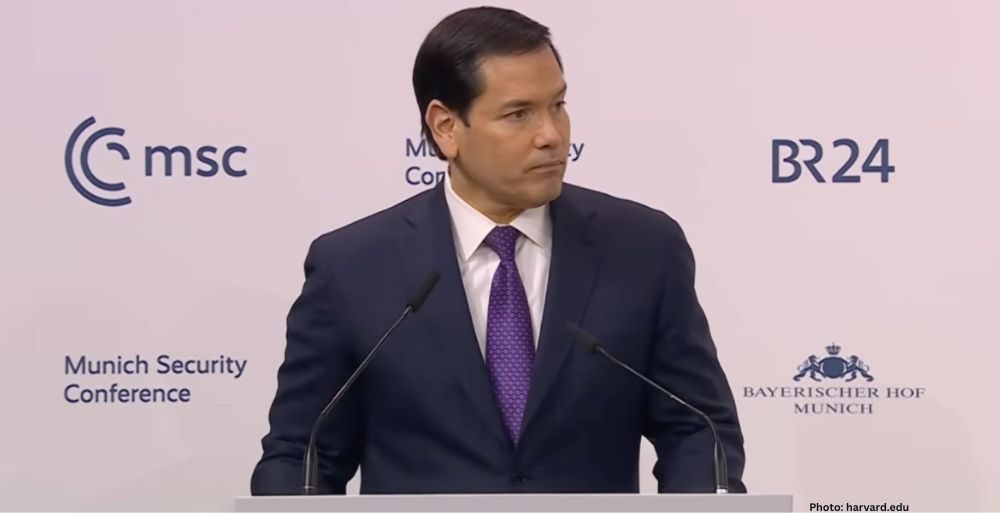
In a world where geopolitical tensions often simmer just below the surface, the Munich Security Conference stands as a pivotal arena for diplomatic discourse. This year, the spotlight fell on U.S. Secretary of State Marco Rubio, whose speech addressed the pressing concerns about a shared ‘Western civilization.’ Rubio’s remarks, delivered with the gravitas expected of such a high-profile event, touched on themes that resonate deeply in today’s global political climate.
Rubio’s speech at the Munich Security Conference was more than just a reflection on current geopolitical dynamics; it was a clarion call for unity among Western nations. He emphasized the importance of a collective identity, one grounded in shared values and mutual interests. This notion of ‘Western civilization,’ while often debated, serves as a cornerstone for the alliances that have long defined the post-World War II order.
Historically, the concept of Western civilization has been both unifying and divisive. Rooted in the Enlightenment ideals of democracy, human rights, and the rule of law, it has been a guiding principle for many nations. However, it has also been criticized for its exclusionary tendencies and the way it has been used to justify interventionist policies. Rubio’s speech acknowledged these complexities, advocating for a more inclusive understanding that respects diverse cultures while upholding fundamental values.
The timing of Rubio’s address is particularly significant. With the rise of populist movements and increasing skepticism towards traditional alliances, the notion of a cohesive Western front is under scrutiny. Rubio’s call for solidarity comes at a time when the very fabric of international cooperation is being tested. The speech was not just a defense of Western ideals but a strategic maneuver to reaffirm the United States’ commitment to its allies.
Rubio’s articulation of these themes also reflects broader trends in international relations. The past decade has seen a shift towards multipolarity, with emerging powers challenging the dominance of Western nations. In this context, the reaffirmation of a Western identity is as much about preserving influence as it is about promoting values. Rubio’s speech can be seen as an attempt to navigate this changing landscape, positioning the United States as a leader in a coalition of like-minded nations.
The cultural implications of Rubio’s speech are equally profound. In an era where global connectivity has blurred the lines between cultures, the idea of a distinct Western civilization may seem antiquated to some. Yet, it remains a powerful narrative that shapes policy and public perception. By invoking this concept, Rubio is tapping into a shared history and a common destiny that many in the West still hold dear.
Rubio’s speech also serves as a reminder of the enduring power of diplomacy. At a time when military might often overshadows dialogue, the Munich Security Conference provides a platform for nuanced discussions about the future of international relations. Rubio’s address was a testament to the importance of these conversations and the role they play in shaping a more stable and cooperative world order.
In conclusion, Marco Rubio’s speech at the Munich Security Conference was a masterclass in diplomatic rhetoric. By addressing concerns about a shared Western civilization, he not only highlighted the challenges facing the international community but also underscored the potential for collaboration and unity. As the world continues to grapple with complex geopolitical issues, the themes of Rubio’s speech will likely remain relevant, serving as a touchstone for future discussions about the role of the West in a rapidly changing world.