








For years, Sarah Monroe lived what many would consider a classic middle-class American life. She owned a home near Cleveland, earned a comfortable income, and relied on employer-sponsored health insurance. Everything changed four years ago when—pregnant with twins—she began fainting and experiencing unexplained symptoms.
Doctors eventually discovered a serious heart condition. While her babies were healthy, Monroe soon found herself facing a crushing obstacle: medical debt.
Within a year, as she balanced a new diagnosis and newborn twins, she owed more than $13,000—despite being insured.
The problem? Monroe had a high-deductible health plan (HDHP), a type of coverage that millions of Americans now depend on. These plans require patients to pay thousands of dollars upfront before insurance kicks in.
GOP Leaders Renew Support for High-Deductible Plans and HSAs
High-deductible plans are receiving renewed political attention as President Donald Trump and Republican lawmakers argue against expanding Affordable Care Act (ACA) subsidies. Instead, several GOP leaders propose giving Americans cash through health savings accounts (HSAs) paired with HDHPs—especially for people without employer-provided insurance.
Such an arrangement would allow consumers to pick cheaper monthly plans on ACA marketplaces, but these often carry deductibles that can exceed $7,000 per year for an individual.
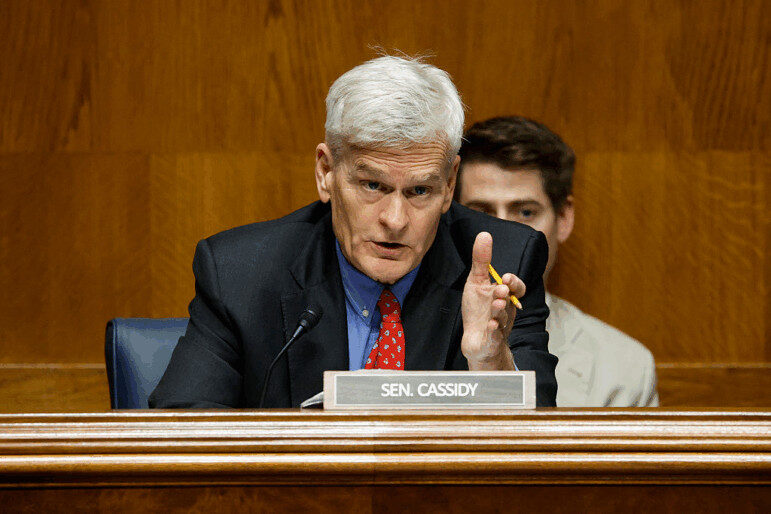
Sen. Bill Cassidy (R-La.) defended the approach, stating:
“It empowers the patient.”
Trump echoed this demand on Truth Social, writing that he supports plans where “the money goes directly back to the people.”
The Case for ‘Skin in the Game’—And Why It Hasn’t Worked
Two decades ago, conservatives promoted HDHPs as a way to make patients shop around for better prices. Employers embraced them as an escape from restrictive HMOs, and a tax-law change allowed patients to use HSAs for medical bills.
Shawn Gremminger of the National Alliance of Healthcare Purchaser Coalitions explained the original idea:
If patients pay more out of pocket, they will seek better value.
But real-world data shows the opposite.
- Deductibles have soared: the average worker now faces almost $1,700 annually, compared to $300 in 2006.
- Medical prices have skyrocketed—far faster than inflation.
- Even insured patients now hold over $100 billion in medical debt nationwide.
As Gremminger puts it:
“Unfortunately, that hasn’t been the case.”
Why Price Shopping Often Fails in Health Care
Monroe tried to save money in her HSA, but with expensive medical needs and the arrival of twins, she could never store enough. And when she needed specialized care during her pregnancy, price shopping was unrealistic.
She chose the largest health system nearby so she could be transferred easily in emergencies.
For most Americans, health care simply doesn’t work like buying a car or laptop.
- Emergencies prevent comparison shopping
- Treatments stretch over months or years
- Complex conditions require specialized providers
- Only 7% of health care spending is truly “shoppable,” according to the Health Care Cost Institute
Oncologist Dr. Fumiko Chino says expecting cancer patients to price-check surgeries or chemotherapy is absurd:
“You can’t do that when you’re facing a life-threatening diagnosis.”
The Real Impact: Debt, Trauma, and Poorer Health Outcomes
Patients with high deductibles often face overwhelming bills. Research presented at the American Society of Clinical Oncology found that cancer patients with HDHPs were more likely to die than similar patients with lower-deductible plans.
For Monroe, the financial toll was devastating:
- Her family downsized into a small apartment
- Her savings disappeared
- Her credit score collapsed
- Her car was repossessed
- Holidays and family trips became luxuries they can’t afford
Even today, she struggles to understand why policymakers would double down on a system that causes so much hardship.
“We owe it to ourselves to find a better way,” she said. “We cannot keep treating people like this.”