








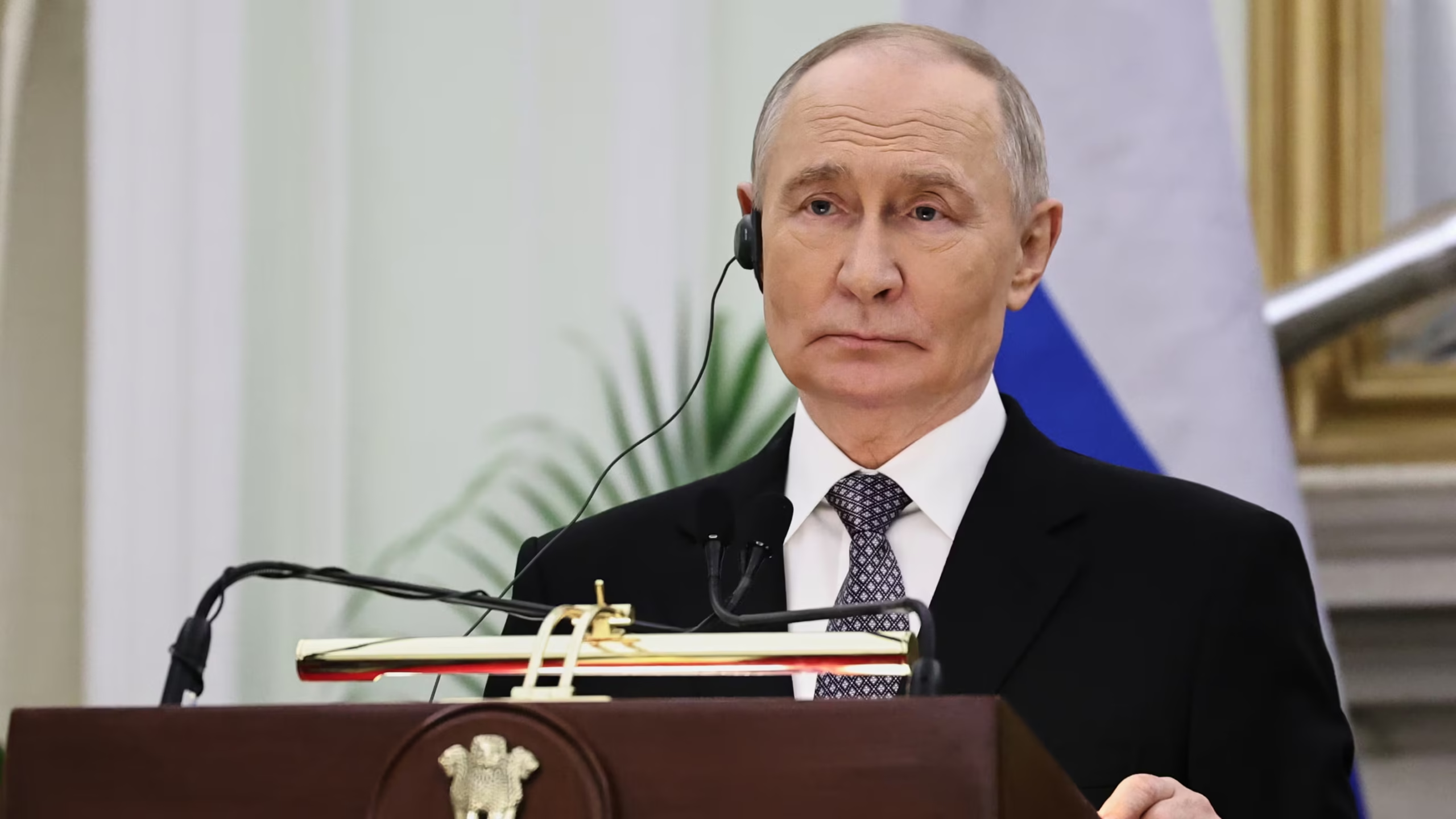
Russian President Vladimir Putin has issued a stark warning that Moscow is prepared to achieve its objectives in Ukraine through “military means” if diplomatic negotiations with the West do not meet Russia’s demands, underscoring the fragile state of ongoing efforts to end the nearly three-year war.
Speaking on Wednesday at the annual meeting of the Russian Defense Ministry Board, Putin said he remained open to diplomacy but made it clear that Russia would not abandon what he described as its core objectives in Ukraine. Those objectives, he said, include the “liberation of historical lands,” a phrase the Kremlin has repeatedly used to justify its invasion of Ukrainian territory.
“The goals of the special military operation will certainly be achieved,” Putin said, according to Russia’s state-run news agency TASS. “We would prefer to resolve the root causes of the conflict through diplomacy, but if the opposing country and its foreign patrons refuse to engage in substantive discussions, Russia will achieve the liberation of its historical lands through military means.”
Military Escalation Remains on the Table
Putin’s remarks were reinforced by Russian Defense Minister Andrei Belousov, who outlined plans during the meeting for expanding Russian military advances into Ukrainian-controlled territory, according to The Associated Press. While details of the strategy were not made public, the comments signal that Moscow is preparing for the possibility of a prolonged or intensified conflict.
Security analysts say the language used by Putin reflects a familiar Kremlin strategy: pairing calls for diplomacy with explicit threats of escalation. “This is a pressure tactic,” said a Europe-based defense analyst. “Russia wants to shape the terms of any negotiation by making clear that military force remains its preferred option if talks stall.”
Peace Talks Under Renewed U.S. Push
The warning comes as the Trump administration has intensified diplomatic efforts to broker a ceasefire or peace agreement in recent weeks. President Donald Trump has repeatedly said he believes Putin is interested in a negotiated settlement. However, senior U.S. officials have expressed skepticism about Moscow’s true intentions.
In an interview published this week, U.S. Secretary of State Marco Rubio questioned whether the Kremlin is genuinely committed to ending the war.
“There are offers on the table right now to basically stop this war at its current lines of contact,” Rubio said, referring to proposals that would leave Russia in control of substantial Ukrainian territory, including Crimea, which Moscow annexed in 2014. “And the Russians continue to turn it down.”
Rubio added, “You do start to wonder, well, maybe what this guy wants is the entire country.”
Sticking Points: Territory and Security Guarantees
U.S., European, and Ukrainian officials have held several rounds of talks this week to review a draft peace proposal prepared by Washington. Ukrainian President Volodymyr Zelensky has said a document could be finalized within days for presentation to the Kremlin, but major disagreements remain unresolved.
At the heart of the impasse is territory. Russia is demanding that it retain control over four regions it has partially occupied, as well as Crimea, along with additional areas in eastern Ukraine that it has not fully captured. Zelensky has firmly rejected Moscow’s demand that Ukrainian forces withdraw from territories still under Kyiv’s control.
“Ukraine will not surrender land simply to freeze the war,” a Ukrainian official said privately, reflecting Kyiv’s position that territorial concessions would reward aggression and undermine national sovereignty.
NATO and Security Concerns
Another major obstacle involves Ukraine’s future security arrangements. Russia has demanded that Ukraine abandon its ambition to join NATO, framing any expansion of the alliance as a direct threat to Russian security. Moscow has also warned that any deployment of NATO troops in Ukraine would be considered a “legitimate target.”
Zelensky has indicated a willingness to reconsider NATO membership under certain conditions, suggesting Kyiv could forego joining the alliance if it receives binding security guarantees from the United States and other NATO members. However, Western officials remain divided on what form such guarantees could take without provoking further escalation.
“This is where the negotiations become exceptionally difficult,” said a former NATO diplomat. “Ukraine wants ironclad security. Russia wants long-term strategic dominance. Those positions are fundamentally incompatible.”
White House Optimism, Despite Tensions
Despite Putin’s latest warning, the White House struck a cautiously optimistic tone. Anny Kelly, a spokesperson for the Trump administration, said the president believes progress is being made.
“Over the past few weeks, the President’s team has made tremendous progress with respect to ending the war between Russia and Ukraine,” Kelly said in an emailed statement. “As the President stated, he believes we are closer now than we have ever been.”
Analysts, however, warn that such optimism may be premature. “Russia’s public rhetoric does not suggest compromise,” said an international relations expert. “It suggests a willingness to negotiate only if the outcome aligns with Moscow’s strategic goals.”
A Conflict at a Crossroads
Putin’s comments highlight a critical moment in the conflict. As diplomatic channels remain open, the gap between Russia’s demands and Ukraine’s red lines continues to pose a formidable challenge. With military escalation still on the table, the coming weeks could determine whether negotiations yield a breakthrough—or whether the war enters a more dangerous phase.
“The Kremlin is sending a message,” said the defense analyst. “If diplomacy doesn’t deliver what Russia wants, it believes force will.”