






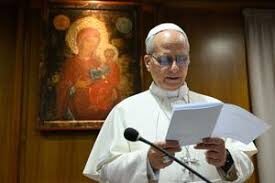
In his first major act of governance, Pope Leo XIV this week convened an extraordinary consistory of cardinals at the Vatican, signaling a clear intent to lead the Catholic Church through collaboration, listening, and shared responsibility rather than unilateral decision-making. The closed-door gathering, held over two days, brought together around 170 cardinals and set the tone for a papacy seeking unity amid deep internal and global divisions.
Opening the meeting in the Synod Hall, Pope Leo framed the consistory not as a formal exercise of authority but as a moment of collective discernment. “I am here to listen,” the pope told the cardinals. “This day and a half together will point the way for our path ahead.”
It was the first time the cardinals had assembled since Leo’s election in May, and his decision to call an extraordinary consistory so early in his pontificate was widely seen as symbolic. While his predecessor, Pope Francis, relied heavily on a small advisory council and convened only one such extraordinary gathering during his 12-year papacy, Leo chose to involve the broader College of Cardinals at the outset.
Addressing a Divided Church
Pope Leo acknowledged directly that he has inherited a Church marked by polarization and ideological tension, mirroring fractures in wider society. “While unity attracts, division scatters,” he said, thanking the cardinals for joining him on what he described as a “collegial journey.”
Rather than dictating priorities, Leo invited the cardinals themselves to shape the agenda. He proposed four major themes and asked them to select two for focused discussion:
- The mission and evangelization of the Church as articulated in Evangelii Gaudium
- Reform of the Roman Curia
- The Synod on Synodality as a method and culture of governance
- The often-contentious question of liturgy
After deliberations in language-based groups, a clear majority chose to focus on the Synod on Synodality and the Church’s mission of evangelization, according to Vatican spokesperson Matteo Bruni.
A Strongly “Synodal” Approach
The structure of the meeting itself reflected the pope’s priorities. Cardinals were divided into 21 language-based groups, with strict time limits to ensure that everyone had an opportunity to speak. This format, pioneered under Pope Francis, contrasts with earlier synods where lengthy speeches by senior prelates often dominated proceedings.
The Synod on Synodality, launched by Francis, emphasizes dialogue, shared discernment, and listening — not only among clergy but also with laypeople. It promotes what is often described as “conversations in the Spirit,” encouraging participants to speak briefly, listen attentively, and reflect prayerfully.
Observers noted that Leo’s choice to foreground synodality suggests continuity with Francis’ vision, but also an effort to deepen collegial trust after years of tension. “Even the way in which we learn to work together, with fraternity and sincere friendship, can give rise to something new,” Leo told the cardinals.
Evangelization Rooted in Presence
The second priority chosen by the cardinals — evangelization — draws heavily from Evangelii Gaudium, Pope Francis’ 2013 apostolic exhortation that called for a Church defined by joy, proximity to the poor, and engagement with real human concerns.
The document famously urged pastors to be close to their people, even to have the “smell of the sheep,” as Francis put it. That vision resurfaced repeatedly during the consistory, as cardinals reflected on how the Church can remain credible and compassionate in a rapidly changing world.
While the issues of liturgy and curial reform were not selected for primary focus, Vatican officials stressed that they were not sidelined. Instead, they will be addressed within the broader conversations on mission and synodality.
Facing Global and Internal Storms
Before discussions began, the cardinals heard an introduction from Cardinal Giovanni Battista Re, dean of the College of Cardinals, and a meditation by Cardinal Timothy Radcliffe. Drawing on the biblical image of Christ walking on stormy waters, Radcliffe offered a stark assessment of the world’s condition.
“We live in a time of terrible storms,” he said, pointing to rising violence, widening inequality, the breakdown of global order, and uncertainty around artificial intelligence. “If we are not nervous, we ought to be.”
Radcliffe also addressed the Church’s own crises, including sexual abuse scandals and ideological divisions, urging cardinals not to retreat into caution. “We are called to sail out into these storms, and face them truthfully, not timidly waiting on the beach,” he said.
A Papacy Defined by Listening
At the end of the first day, Pope Leo spoke informally with the cardinals, emphasizing his reliance on them. “I feel the need to be able to count on you,” he said. “You are the ones who called this servant to this mission.”
He encouraged cardinals to approach him directly with concerns and stressed that the purpose of the consistory was not procedural reform for its own sake, but the effective proclamation of the Gospel.
On Thursday morning, Leo celebrated Mass with the cardinals in St. Peter’s Basilica, using his homily to underline the importance of unity in diversity. “The cardinals,” he said, “are not called, first of all, to be a team of experts, but a community of faith.”
As Pope Leo begins his papacy, the first consistory has offered a clear signal: the path ahead will be one shaped not by solitary authority, but by listening, dialogue, and shared discernment in service of a fractured world.