




Global equity markets plummeted Monday as crude oil prices breached the $100 threshold following a weekend of intensified military exchanges between the United States, Israel, and Iran. Despite growing economic anxiety over energy costs, President Trump has dismissed the financial fallout as a “small price to pay” for the dismantling of Tehran’s nuclear capabilities.
The global economy entered a period of profound uncertainty this week as the geopolitical landscape in the Middle East shifted from targeted skirmishes to a broader regional conflict. Investors, already on edge after a series of U.S. and Israeli air strikes targeting Iranian nuclear and military infrastructure, hit the sell button on Monday morning. The primary driver of the panic is the sudden and sharp constriction of global energy supplies, a direct consequence of the Islamic Republic’s retaliatory maneuvers in the Persian Gulf.
Shortly after the opening bell, West Texas Intermediate (WTI) crude, the American benchmark, climbed to $100.25 per barrel, representing a staggering 10% surge in a single trading session. Its international counterpart, Brent crude, followed a similar trajectory, trading at $101.71 per barrel. These figures, while alarming, actually represent a slight cooling from the weekend’s chaotic “shadow market” spikes, where Brent reportedly touched $120 during peak hours of uncertainty surrounding the Strait of Hormuz.
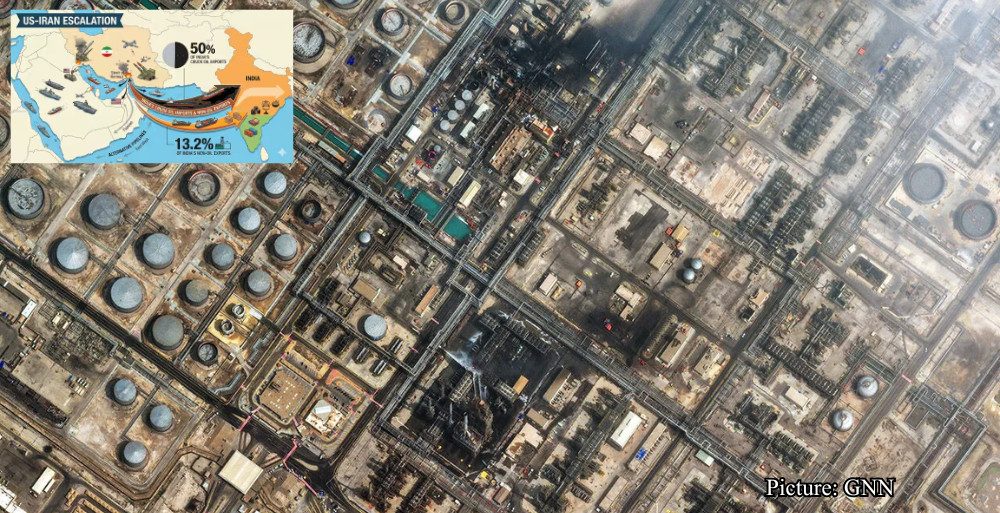
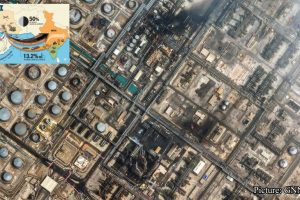
The strategic waterway, through which roughly a fifth of the world’s daily oil consumption passes, has become the epicenter of the economic fallout. Iran’s Revolutionary Guard has effectively shuttered maritime trade through the strait, citing the need for “defensive perimeters” following the air strikes. This blockade, combined with reported drone strikes on key processing facilities in neighboring Gulf states, has paralyzed the logistics of the energy sector. Export terminals that typically move millions of barrels a day are now idling, forcing major producers to scale back production as storage capacities reach their limits.
For the American consumer, the abstractions of geopolitical maneuvering are rapidly becoming tangible at the pump. National gasoline averages have begun a steep ascent, with analysts predicting a rise of 30 to 50 cents per gallon within the week if the blockade persists. However, the concern for economists extends far beyond the local gas station. The industrial backbone of the United States—manufacturing, logistics, and heavy transport—is uniquely sensitive to energy volatility. A sustained period of oil prices above $100 could act as a regressive tax on the entire economy, potentially stalling the GDP growth that has been a hallmark of the current administration’s platform.
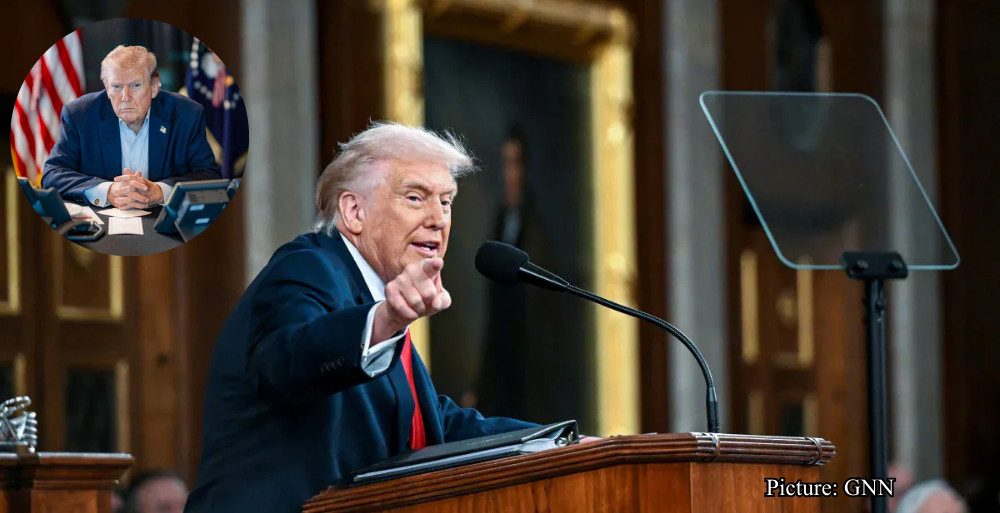
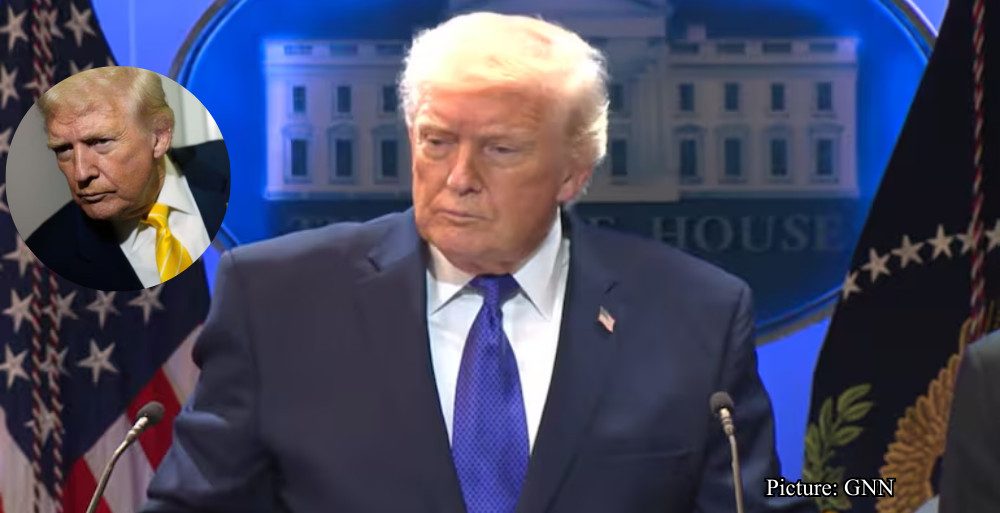
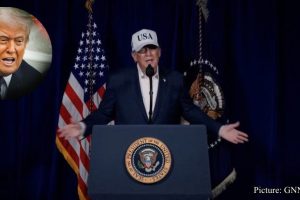
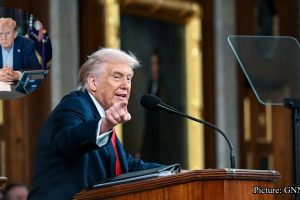
Despite these flashing red lights on the economic dashboard, President Donald Trump has maintained an unwavering stance on the necessity of the military campaign. In a series of communications over the weekend, the President framed the current market turbulence as a fleeting inconvenience in the face of a historic security imperative. Writing on his Truth Social platform on Sunday evening, the President took aim at critics who have questioned the timing and the cost of the intervention.
“Only fools would think the costs of toppling the Iranian regime were not worth it,” the President wrote, adopting a tone of defiance that has characterized his approach to Middle Eastern policy. He argued that the spike in energy costs is a purely transitory phenomenon. “Short term oil prices, which will drop rapidly when the destruction of the Iran nuclear threat is over, is a very small price to pay for U.S.A., and World, Safety and Peace,” he added.
The administration’s “maximum pressure” campaign, which has now transitioned into direct kinetic action, is predicated on the belief that the Iranian government can be neutralized before the economic contagion becomes irreversible. However, Wall Street analysts are less certain about the timeline. The S&P 500 and the Dow Jones Industrial Average both opened deep in the red, with energy-dependent sectors like airlines and automotive manufacturing bearing the brunt of the sell-off. Conversely, defense contractors and domestic shale producers saw a momentary uptick, though not enough to offset the broader market malaise.
The White House National Security Council has signaled that the strikes were a response to “imminent threats” and a necessary step to prevent Tehran from achieving a nuclear breakout. Yet, the Iranian response—launching ballistic missiles at American military bases and deploying fast-attack craft in the Gulf—suggests a regime that is prepared for a protracted struggle rather than a swift collapse. This discrepancy between the administration’s “short-term” projection and the reality of a widening war is what is fueling the VIX volatility index, which jumped to its highest level in months.
The political stakes are equally high. While the President’s base has largely rallied around the “Safety and Peace” narrative, moderate lawmakers on Capitol Hill have expressed concern over the lack of a clear exit strategy and the potential for a global recession. If oil remains above $100 for a fiscal quarter, the inflationary pressure could force the Federal Reserve into a difficult corner, potentially requiring interest rate hikes at a time when the economy is struggling to absorb the shock of a war.
As the smoke clears from the latest round of strikes, the world looks to the Persian Gulf. The ability of the U.S. Navy to reopen the Strait of Hormuz will likely be the deciding factor in whether Monday’s market drop is a temporary shudder or the beginning of a prolonged downturn. For now, the administration remains committed to its course, betting that the geopolitical dividends of a neutralized Iran will eventually outweigh the high price of crude.