








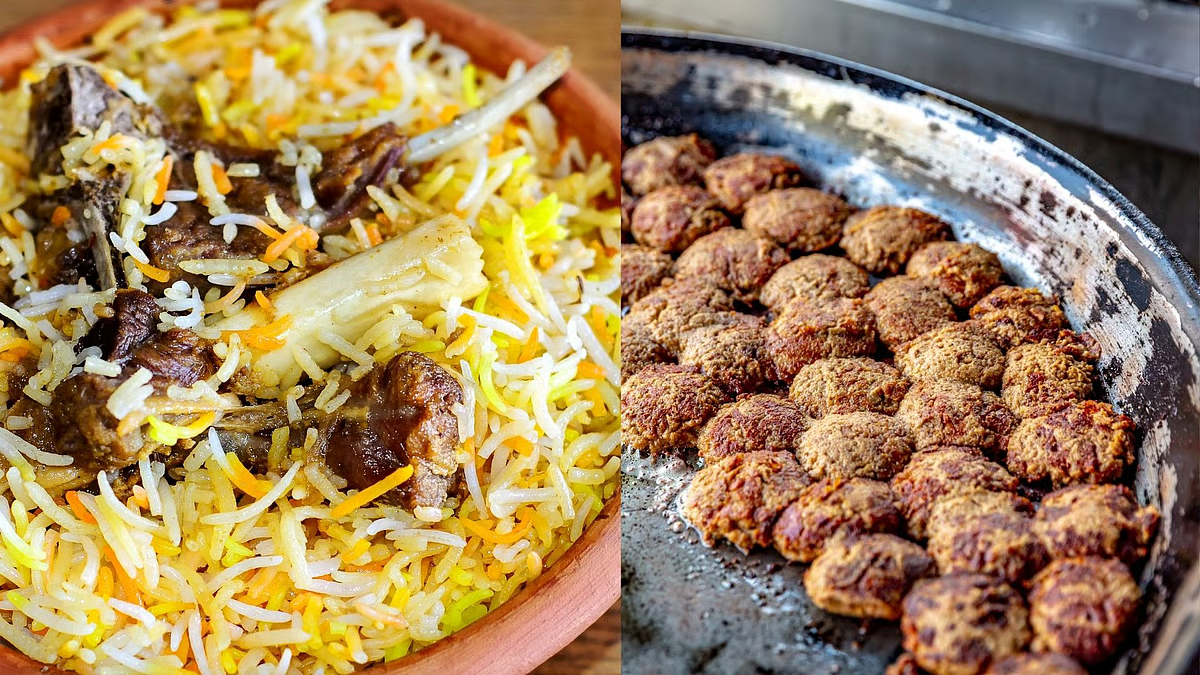
Mouth-watering kebabs that dissolve on the tongue, fragrant biryani sealed with dough, and cloud-like desserts whipped by winter dew — for generations, food lovers have sworn by the cuisine of Lucknow. Now, the world has officially taken notice.
Last month, UNESCO recognised Lucknow as a Creative City of Gastronomy, placing it among a select group of global cities celebrated for culinary excellence. The honour integrates Lucknow into UNESCO’s Creative Cities Network — a collective of 408 cities across more than 100 countries committed to using creativity as a driver of sustainable urban development.
Calling the recognition a milestone, Tim Curtis, Director and Representative of UNESCO’s Regional Office for South Asia, said the designation “is a testament to Lucknow’s deep-rooted culinary traditions and vibrant food ecosystem.” He added that it “honours the city’s rich cultural legacy while opening new avenues for international collaboration.”
Lucknow is only the second Indian city to receive this honour, following Hyderabad, which was inducted in 2019. For residents and food connoisseurs, however, the recognition feels long overdue. Celebrity chef Ranveer Brar, himself a native of the city, summed up popular sentiment succinctly: “Better late than never. It should have come before.”
Often described as chaotic yet elegant, eclectic yet deeply traditional, Lucknow — the capital of India’s most populous state, Uttar Pradesh — has always worn its love for food as a badge of honour. According to Madhavi Kuckreja, founder of the Sanatkada Trust, which is documenting the Kitchens of Lucknow, food in the city is a constant conversation. “What will be cooked and how it will be cooked is discussed from morning till night in most homes,” she told the BBC. “You are judged by the quality of food that comes out of your kitchen.”
That obsession with flavour dates back centuries. Known as the City of Nawabs after its wealthy Muslim rulers of the 18th and 19th centuries, Lucknow became the epicentre of Awadhi cuisine. Royal kitchens served as laboratories of innovation, blending Persian techniques with local Indian ingredients to create dishes that remain iconic today.
Among the most famous are the legendary galouti kebabs. Culinary lore says they were devised for an ageing nawab who had lost his teeth — minced mutton was tenderised with papaya, perfumed with saffron and spices, and cooked until it required no chewing at all. Equally transformative was the Dum Pukht technique, perfected during the reign of Asaf-ud-Daulah. Food was slow-cooked on a gentle flame in sealed pots, allowing flavours to mature gradually.
The technique, born during a famine-era work-for-food programme, later found modern champions. It was revived and popularised nationally by the late Imtiaz Qureshi, whose culinary legacy lives on through iconic restaurants such as Bukhara and Dum Pukht, both regularly ranked among Asia’s finest.
Yet Lucknow’s food story is not confined to meat and royalty. The city is equally celebrated for its vegetarian traditions, shaped by the Baniya community’s strictly plant-based cuisine. Seasonal produce, intricate sweets, and tangy street foods like chaat define daily life. From dawn queues at Sharmaji Tea Stall in Hazratganj for milky masala chai and butter-laden buns, to the century-old Netram shop in Aminabad serving kachoris and jalebis, food here is both ritual and memory.
Seasonal delicacies like makkhan malai — a winter dessert aerated by night dew — underline the craftsmanship involved, even as vendors worry that younger generations may not carry the traditions forward.
For Chef Brar, the true value of UNESCO’s recognition lies ahead. “It will matter only if it shines a light on the lesser-known eateries,” he has said, arguing that Lucknow sits at the pinnacle of India’s street food experience.
As Kuckreja notes, every dish in Lucknow tells a story — of families, of patience, of history simmered slowly over time. With international acclaim now secured, the hope is that more travellers will arrive not just to eat, but to listen — and to understand why, in Lucknow, food has always been the soul of the city.