






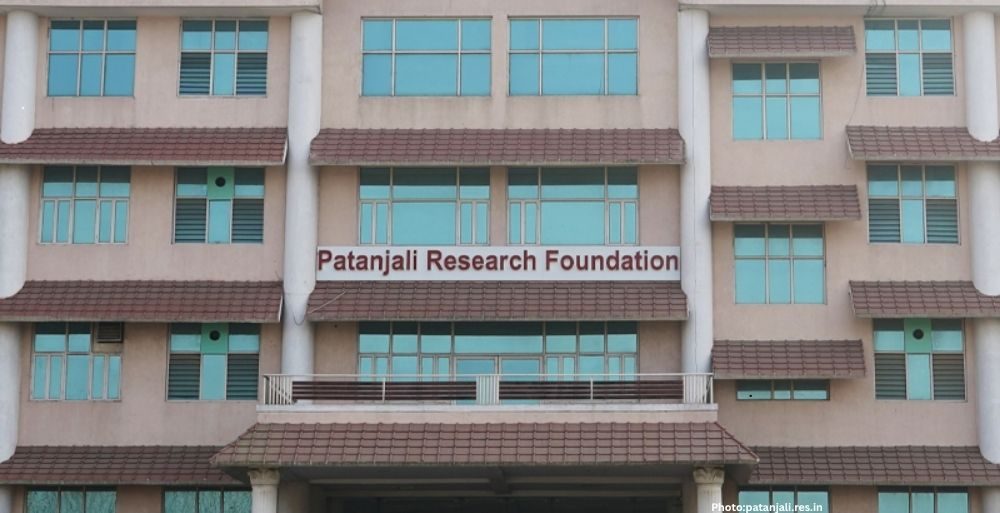
Across the sprawling campus of the Patanjali Research Foundation in Haridwar, the traditional boundaries between ancient Ayurvedic philosophy and contemporary molecular biology are being methodically dismantled. Under the leadership of Acharya Balkrishna, the foundation has evolved from a grassroots traditional medicine initiative into a Scientific and Industrial Research Organization (SIRO) recognized by the Government of India. With a 111-volume World Herbal Encyclopedia documenting over 50,000 species and a suite of NABL-accredited laboratories, the institution is attempting to provide a rigorous, evidence-based framework for a 5,000-year-old healing system. This transformation aims to move Ayurveda from the periphery of “alternative” medicine into the global mainstream through clinical validation and standardized pharmacological research.
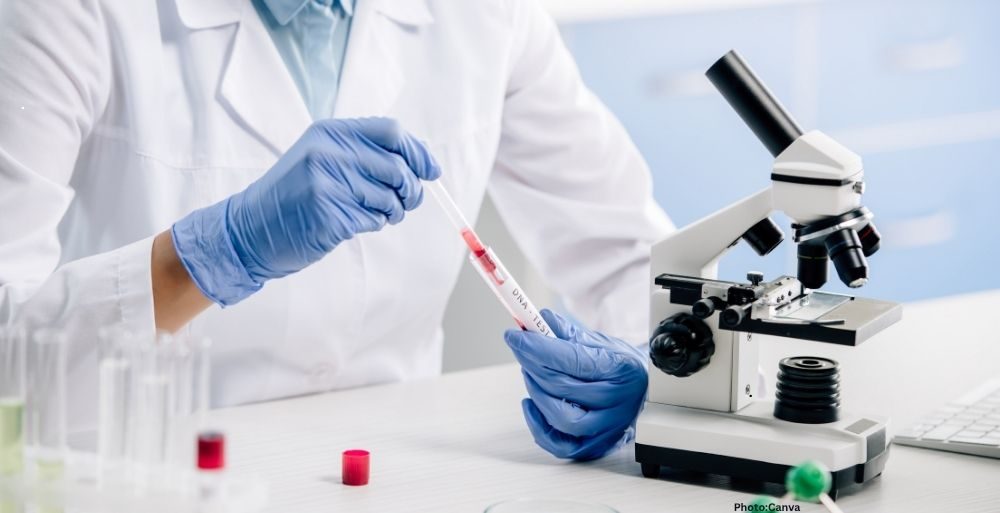
HARIDWAR, Uttarakhand — In a climate-controlled laboratory on the Delhi-Haridwar National Highway, a team of researchers in white coats monitors a high-performance liquid chromatography (HPLC) machine. They are not testing synthetic compounds, but the molecular profile of Tinospora cordifolia, known traditionally as Giloy. This scene captures the core mission of the Patanjali Research Foundation (PRF): the systematic reimagining of Ayurveda through the lens of 21st-century science.
Founded with the intent to bridge the gap between Vedic intuition and empirical data, the PRF has grown into a massive enterprise. It currently employs over 300 scientists—many with international experience—who are tasked with validating traditional Indian Medicine (TIM) using modern methodologies. The objective is no longer just to preserve the past, but to translate it into a language that global regulatory bodies and the international scientific community can accept.
The World Herbal Encyclopedia: A Monumental Database
The most visible symbol of the foundation’s commitment to documentation is the World Herbal Encyclopedia (WHE). Conceptualized and authored under the guidance of Acharya Balkrishna, this 111-volume compendium is perhaps the largest modern undertaking in the field of ethnobotany.
The scale of the project is supported by staggering data points:
- 50,000 plant species documented across the globe.
- 1.2 million vernacular names captured in over 2,000 languages.
- 600,000 bibliographic references, ranging from 2,000-year-old manuscripts to current peer-reviewed journals.
- 35,000 botanical line drawings and 30,000 hand-painted canvas paintings for precise morphological identification.
“Only knowledge can be treasured for eternity,” Acharya Balkrishna remarked during a recent lecture series, his tone measured but firm. “Our goal is to ensure that the wisdom of our ancient sages is not lost to time or dismissed as myth, but is instead seen as a precursor to modern pharmacology.”
Evidence-Based Validation and Clinical Trials
The transition from “anecdotal” to “evidence-based” requires more than just documentation; it requires rigorous testing. The PRF operates through several specialized divisions, including Drug Discovery and Development, In-Vivo Biology, and Clinical Research.
The foundation’s laboratories hold certifications from the National Accreditation Board for Testing and Calibration Laboratories (NABL) and the Department of Scientific and Industrial Research (DSIR). This infrastructure allows for “Reverse Pharmacology,” a process where traditional formulations are studied to identify their active chemical constituents and then put through randomized, placebo-controlled trials.
During the height of the COVID-19 pandemic, the foundation published a pilot clinical trial in the journal of the American Medical Association (and later in PMC) involving 72 participants. The study reported that an Ayurvedic treatment regime, when compared to a placebo, showed a 100% recovery rate within seven days for asymptomatic and mildly symptomatic patients, with a viral clearance rate of 67% within three days. While such studies have faced intense scrutiny from the global medical establishment, they represent a significant shift in how Ayurvedic institutions engage with the scientific method.
Conservation and the Patanjali Herbarium
Parallel to its clinical work, the foundation serves as a massive repository for botanical conservation. The Patanjali Research Foundation Herbarium (PRFH), accredited by the New York Botanical Garden, houses over 14,000 herbarium sheets.
The foundation’s field scientists conduct extensive vegetation surveys across India’s floral hotspots, including the Himalayan regions and the Gangetic Plains. These surveys have led to the discovery of new plant records for India, such as Premna micrantha Schauer and Sterculia euosma W.W. Smith. By identifying and preserving these species, the PRF ensures a sustainable supply of raw materials for future research and production, addressing the growing “green pharmacy” demand that has seen a 15% to 20% annual increase in global herbal markets.
The Political and Global Landscape
The rise of the PRF cannot be separated from the broader political shift toward “Atmanirbhar Bharat” (Self-Reliant India). The foundation was inaugurated by Prime Minister Narendra Modi, signaling a high-level state endorsement of the integration of traditional systems into the national healthcare infrastructure.
Critics, however, often point to the tension between traditional faith and scientific skepticism. The PRF addresses this by hosting a continuous Research Lecture Series, inviting professors from institutions like the University of Pennsylvania and the International Centre for Genetic Engineering and Biotechnology (ICGEB). By fostering these academic exchanges, the foundation seeks to mitigate the “outsider” status of Ayurveda.
The financial commitment is equally significant. As a nonprofit trust, the PRF benefits from 100% income tax exemptions under Section 35(1)(ii) of the Income Tax Act, allowing it to reinvest millions of dollars into high-end analytical equipment like stereomicroscopes, DNA sequencers, and BOD incubators.
Looking Ahead: The Future of Holistic Health
As the PRF continues its work, the focus is expanding into Nutrigenomics—the study of how diet and herbal supplements interact with the human genome. Recent publications in 2025 and early 2026 have explored the role of Ayurvedic interventions in treating Polycystic Ovarian Syndrome (PCOS) and managing the “Circadian Body Clock.”
The foundation’s mission remains a dual one: to serve as a guardian of the past and a pioneer of the future. By maintaining a library of rare ancient manuscripts alongside a state-of-the-art animal house and microbiology lab, the PRF is betting that the future of global medicine is not just synthetic, but a synthesis of the old and the new.