






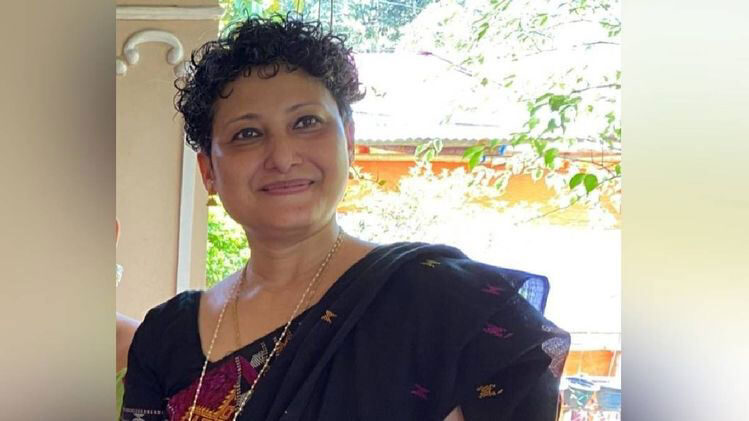
In a landmark moment for Indian journalism, the Press Club of India (PCI) on Sunday elected Sangeeta Barooah Pisharoty as its first-ever woman president, breaking a 68-year-old glass ceiling at the country’s most influential association of journalists.
The results of the annual elections were announced in the evening at the Press Club lawns by Election Commissioner MMC Sharma and his team. Pisharoty, who until recently served as National Affairs Editor at digital news platform The Wire, registered a resounding landslide victory, securing 1,019 votes out of the 1,237 polled.
Her panel achieved a clean sweep, winning all five office-bearer posts and all 16 managing committee positions, underlining strong support for a leadership change among the club’s members.
“This election reflects a collective aspiration for inclusion, credibility, and renewed institutional strength,” a senior Press Club member said after the results were declared. “The mandate is historic and unequivocal.”
A First for Women at the Helm
Pisharoty’s election marks the first time a woman has been chosen to lead the Press Club of India since its establishment in 1957. Her victory is being widely seen as a significant step forward for gender representation in Indian media institutions, which have traditionally been male-dominated at the top.
Alongside her, Jatin Gandhi was elected vice-president and Afzal Imam as general secretary. Aditi Rajput was elected treasurer and P R Sunil Kumar joint secretary—both unopposed. Rajput’s election is also historic, making her the first woman treasurer in the club’s history.
A Career Rooted in Reporting and Research
A native of Assam and based in New Delhi, Sangeeta Barooah Pisharoty is widely respected for her long and rigorous journalistic career. She has earned critical acclaim for her debut book, Assam: The Accord, The Discord, which documents the Assam Movement, the Assam Accord, and the complex insurgencies that have shaped the northeastern state.
She began her journalism career in 1995 at the national news agency United News of India (UNI), a year after graduating from Guwahati University. She went on to become the first woman from Northeast India to work at UNI’s New Delhi headquarters, a milestone that mirrored the trailblazing nature of her latest achievement.
She later worked as a special correspondent with The Hindu, before joining The Wire, where her work focused on politics, governance, and social justice.
Since 2011, she has also been a recipient of a Centre for Development Studies fellowship for her investigative reporting on the loss of livelihoods caused by severe soil erosion on Majuli island, one of Assam’s most ecologically fragile regions.
In 2017, she was awarded the Ramnath Goenka Excellence in Journalism Award for her in-depth reportage on housing segregation between Hindus and Muslims in New Delhi, a series that was widely cited for its nuance and ground-level detail.
“She brings both editorial integrity and institutional memory,” said a former colleague. “That combination is crucial at a time when journalism itself is under intense pressure.”
Personal Life and Support System
Pisharoty is married to Mohan Pisharoty, a former colleague from UNI. The couple has a daughter who currently lives in Canada. Friends and colleagues say her personal journey—balancing reporting, research, and family life—has resonated with many young journalists, particularly women navigating the profession.
Legacy of the Press Club of India
The Press Club of India, headquartered in New Delhi, is one of the country’s most influential platforms for journalists and media professionals. It was founded by legendary editor Durga Das, then editor of the Hindustan Times, on December 20, 1957.
Das, who frequently visited London in the 1930s as a reporter for the Associated Press of India, was inspired by the London Press Club model and sought to replicate it in India. The club was incorporated on March 10, 1958, and formally inaugurated on February 2, 1959 by then Home Minister Govind Ballabh Pant, with just 30 members.
Durga Das became the founding president, while D R Mankekar served as the first secretary-general.
Nearly seven decades later, the election of its first woman president is being viewed as a defining chapter in the institution’s history—one that reflects evolving newsroom realities and the growing demand for diversity and accountability in media leadership.